Vienna surprised me in the best way. As the second stop on my 30th birthday trip, right after Prague, it felt both familiar and completely different. There’s a calm confidence to Vienna—you feel the history immediately, but it never feels overwhelming. Grand buildings, quiet streets, people sitting for hours in cafés like it’s second nature. It felt lived-in, not staged.
I spent my days walking without much of a plan, lingering in coffeehouses, wandering through museums longer than I intended, and letting the city set the pace. Vienna isn’t loud or flashy—it’s subtle, thoughtful, and incredibly easy to fall into. In this guide, I’m sharing the places that stood out to me most—from cafés and cultural spots to moments that made the city feel real—so you can experience Vienna in a way that feels unhurried, intentional, and genuinely memorable.
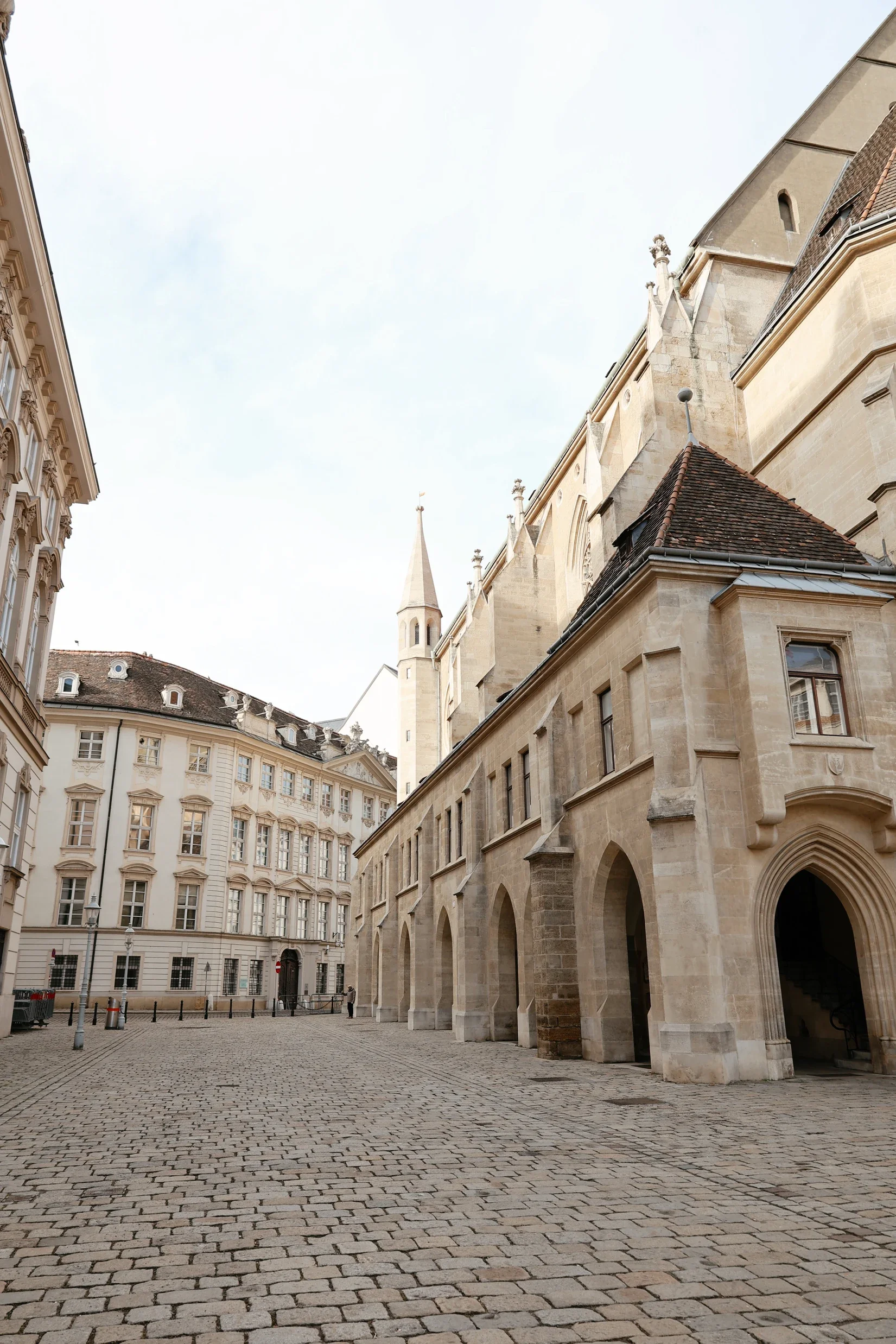
Getting to Vienna, Austria
By Air
I took a short flight from Prague to Vienna, and the whole process was quick and seamless. If you’re flying in from elsewhere, you’ll arrive at Vienna International Airport (VIE), located about 20 km (12 miles) from the city center. It’s modern, efficient, and very easy to navigate. The fastest way into the city is the City Airport Train (CAT), which gets you to Wien Mitte in just 16 minutes. Tickets cost €14 one-way or €24 round-trip.
Other options from the airport:
S-Bahn (S7) + U-Bahn – A great budget-friendly alternative to the CAT. Take the S7 to Wien Mitte or Praterstern, then transfer to the metro. Travel time is about 25 minutes. Ticket: €4.40.
Vienna Airport Lines Bus – Direct routes to major hubs like Westbahnhof and Hauptbahnhof. Tickets start at €9.
Taxi / Uber / Bolt – Taxis typically cost €36–€45 and take around 20–30 minutes. Uber and Bolt are usually a bit cheaper and very easy to book.
Helpful tip: If you’re staying near the city center, CAT or the S-Bahn is the easiest option. If you have heavy luggage or land late at night, Uber or Bolt is worth the extra cost.
By Train
Vienna is a major rail hub, with easy connections to cities like Prague, Budapest, Munich, and Salzburg. If you enjoy scenic travel, trains are a great option—especially RegioJet and ÖBB Railjet services, which take about four hours from Prague.
Vienna Hauptbahnhof (Hbf) – The main station, well connected to metro lines, trams, and buses.
Wien Westbahnhof – Used for some international and regional routes.
Tip: Book tickets early through ÖBB or RegioJet for the best prices.
By Bus
If you’re traveling on a budget, long-distance buses like FlixBus and RegioJet offer very affordable routes into Vienna from nearby cities. Most buses arrive at Erdberg (VIB), which is connected to the U3 metro line.
Tip: FlixBus usually offers Wi-Fi and power outlets, but some routes make multiple stops—so it’s worth double-checking schedules if you’re on a tight timeline.
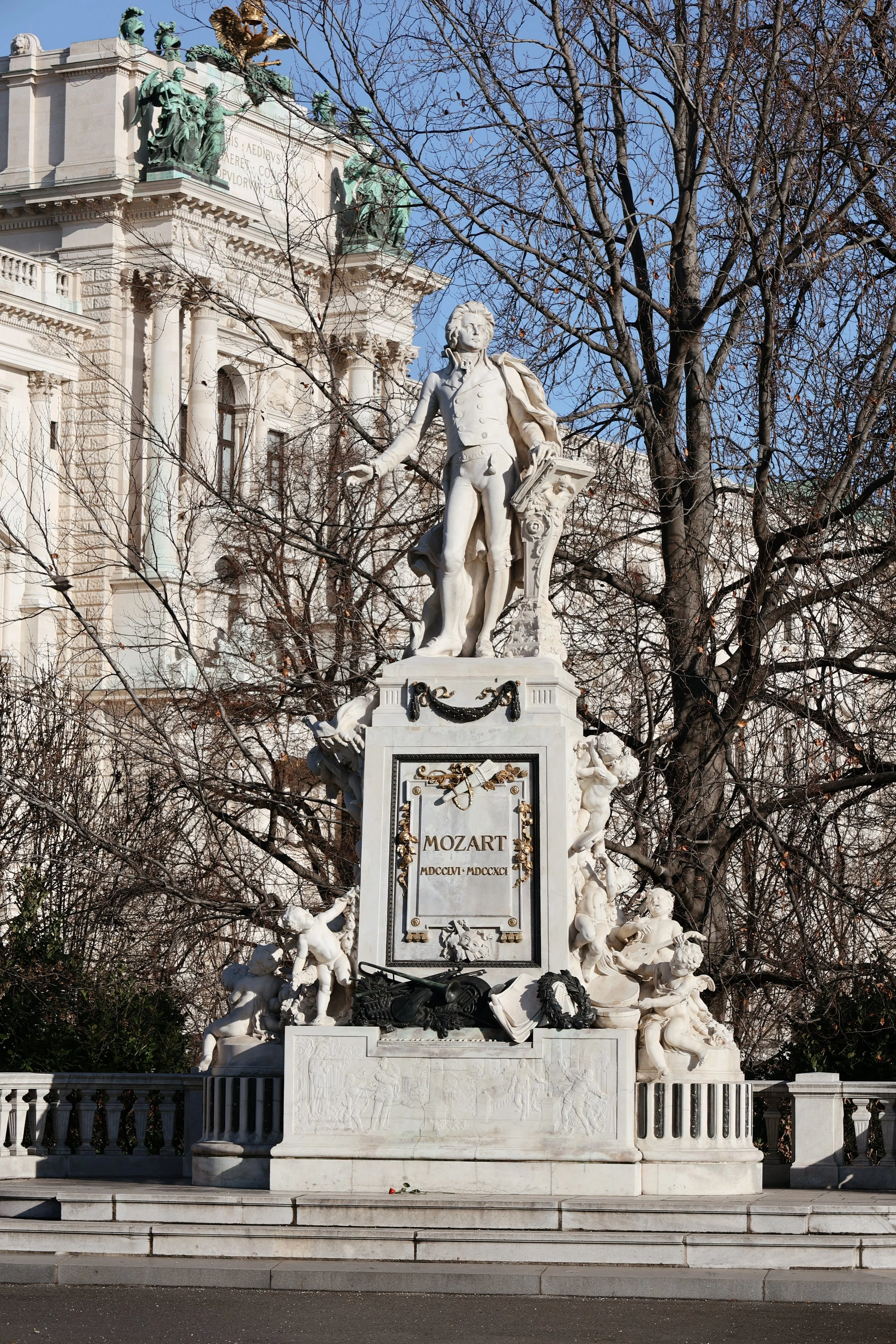
Getting Around Vienna, Austria
Honestly? Vienna is a walker’s dream. The city feels made for exploring on foot—compact, clean, and full of beautiful architecture no matter which direction you turn. I spent most of my time walking and never got tired of it, but for longer distances, Vienna’s public transport made everything incredibly easy.
Public Transport
Vienna has an excellent network of trams, buses, and the Vienna U-Bahn (subway). It’s reliable, safe, and very straightforward to use, even if it’s your first time in the city. If you plan on using public transport frequently, the Vienna City Card is a great option—it offers unlimited rides plus discounts at major attractions.
Public transport ticket prices:
24-hour pass: €8
48-hour pass: €14.10
72-hour pass: €17.10
Single ride: €2.40
Tickets are valid on trams, buses, and the U-Bahn. You can buy them at ticket machines, tobacconists, or through the WienMobil app.
A few things to know:
The U-Bahn runs 24/7 on weekends, which is perfect if you’re out late.
Tram lines 1 and 2 loop around the Ringstrasse, passing landmarks like the Vienna State Opera, Hofburg Palace, and Austrian Parliament Building—it’s basically sightseeing while you ride.
Important tip: Always validate your ticket before boarding. Vienna uses an honor system, but inspectors do random checks, and fines start at €105 if your ticket isn’t validated.
Taxis, Uber & Bolt
Taxis are easy to find but noticeably more expensive than ride-share options. They operate on a metered system, with a base fare of €3.80 plus €1.42 per kilometer.
Uber – Reliable and usually cheaper than taxis.
Bolt – Often the most affordable option and very easy to use.
Helpful tip: If you do need a taxi, book it through an app like Free Now instead of hailing one on the street—this helps avoid overcharging and keeps things straightforward.
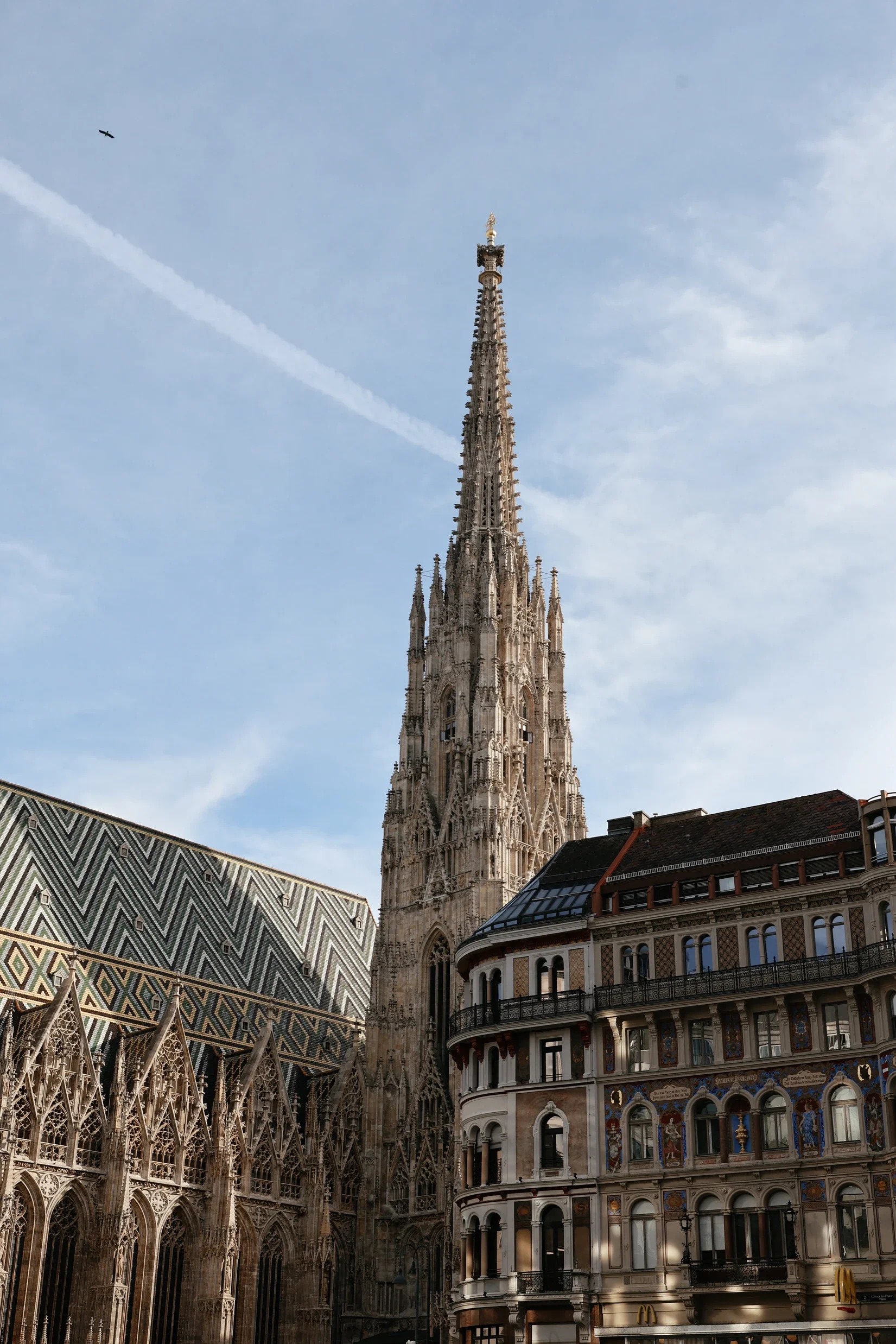
Things to Do in Vienna, Austria
Schönbrunn Palace
If there’s one place that truly captures Vienna’s sense of grandeur, it’s Schönbrunn Palace. Once the Habsburgs’ summer residence, this UNESCO World Heritage Site feels expansive and elegant without ever being overwhelming. Between the ornate interiors and the perfectly kept gardens, it’s easy to spend hours here and still feel like there’s more to discover. Walking through the palace gives you a real sense of how imperial life once looked—and just how carefully it’s been preserved.
The State Rooms offer a glimpse into the private apartments of Emperor Franz Joseph and Empress Elisabeth (Sisi), moving from grand formal spaces into more personal rooms that make the history feel tangible. Outside, the walk up to the Gloriette is absolutely worth it for one of the best panoramic views over the palace grounds and the city beyond. The Maze and Palm House are also worth seeking out—easy to miss, but fun, peaceful additions that feel like little hidden gems tucked within the gardens. Schönbrunn is one of those places that feels undeniably grand yet surprisingly calm, especially if you take your time and explore beyond just the main rooms.
Hofburg Palace
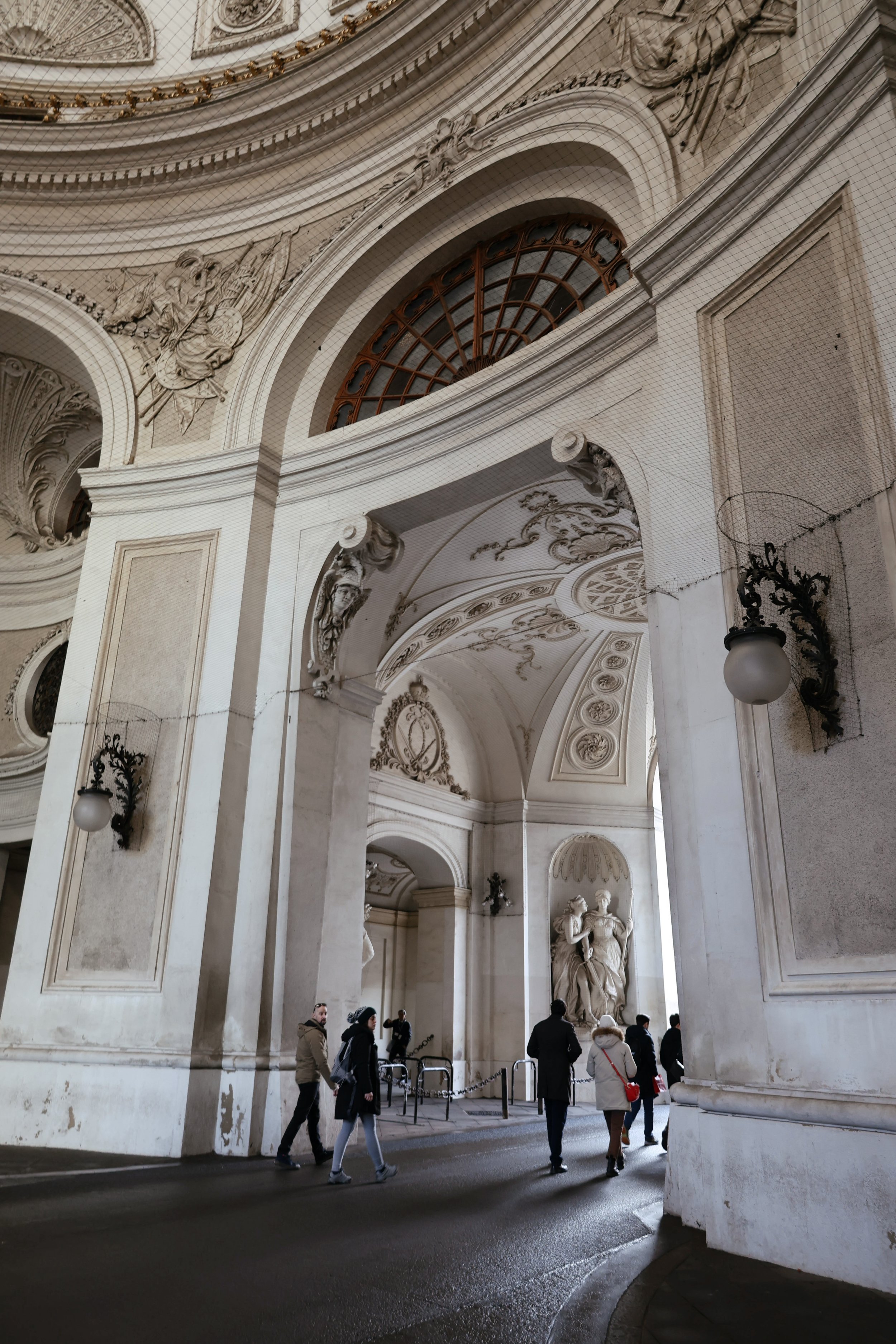
Located right in the heart of Vienna, Hofburg Palace served as the imperial winter residence of the Habsburg dynasty for more than 600 years. Walking through the complex, it’s hard not to feel the weight of history—this isn’t just one palace, but an entire city within a city. Today, Hofburg functions as both a cultural and political hub, housing museums, historic apartments, and important institutions, all woven together through grand courtyards and passageways.
Exploring Hofburg offers a deep look into Austria’s royal past, from the lives of the emperors to the traditions that shaped the empire for centuries. The sheer scale of the palace is impressive, and it’s easy to lose track of time moving from one section to another.
Important tip: the Hofburg complex is massive. If you plan on visiting multiple attractions inside, set aside at least half a day so you don’t feel rushed and can really take it all in.
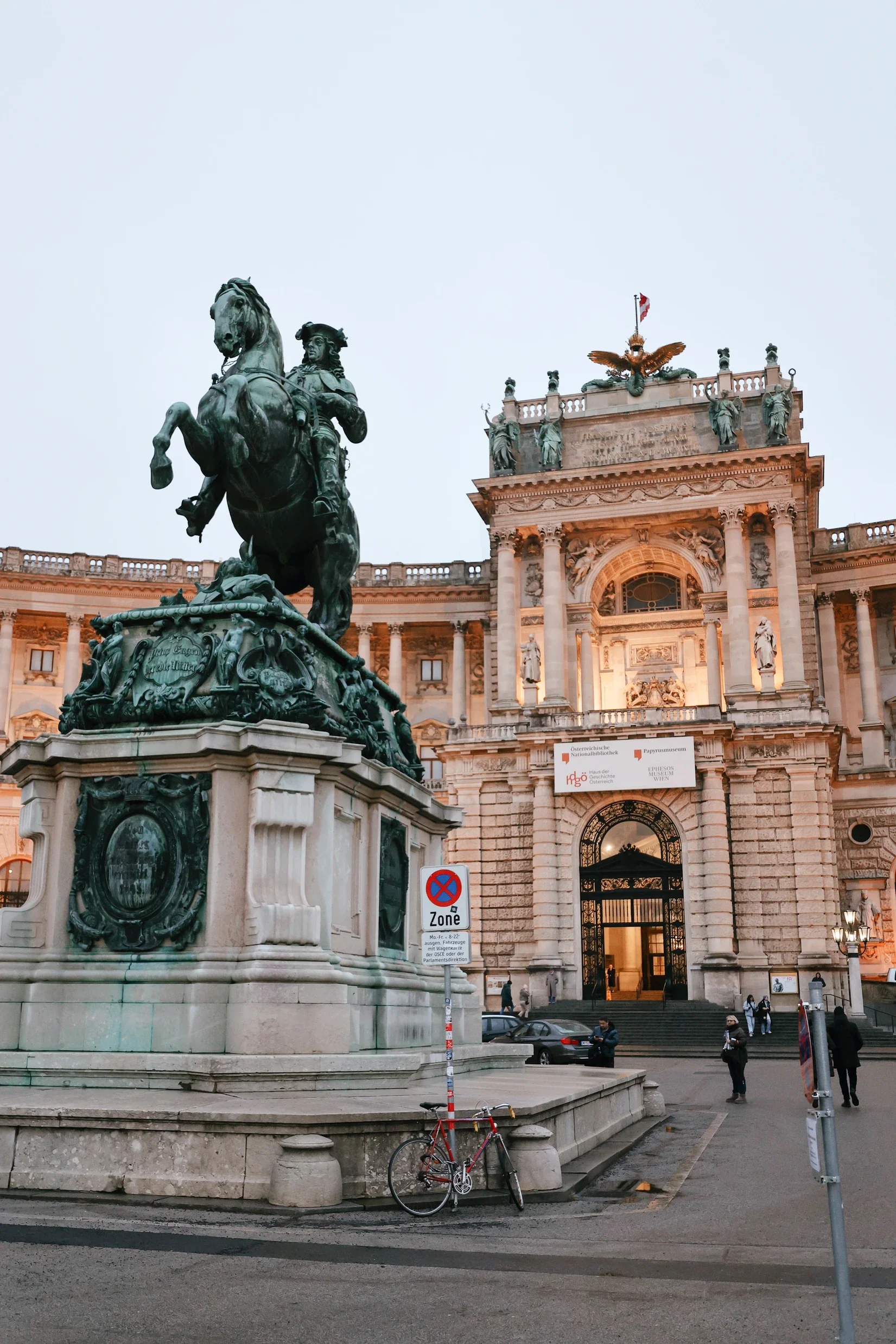
Sisi Museum
The Sisi Museum offers a surprisingly intimate look into the life of Empress Elisabeth, one of Austria’s most fascinating and misunderstood historical figures. Known for her beauty, independence, and tragic fate, Sisi was admired from afar yet deeply conflicted behind the scenes. The museum explores this contrast through personal belongings, elaborate gowns, and handwritten letters, giving insight into her restless spirit, struggles with court life, and desire for freedom.
Just next door, you can walk through the Imperial Apartments, once the private residence of Emperor Franz Josephand Empress Elisabeth. The rooms are lavish and beautifully preserved, offering a clear picture of the formality and opulence that defined life at the Austrian court. Together, the museum and apartments feel deeply personal, adding an emotional layer to Vienna’s imperial history that really stays with you.
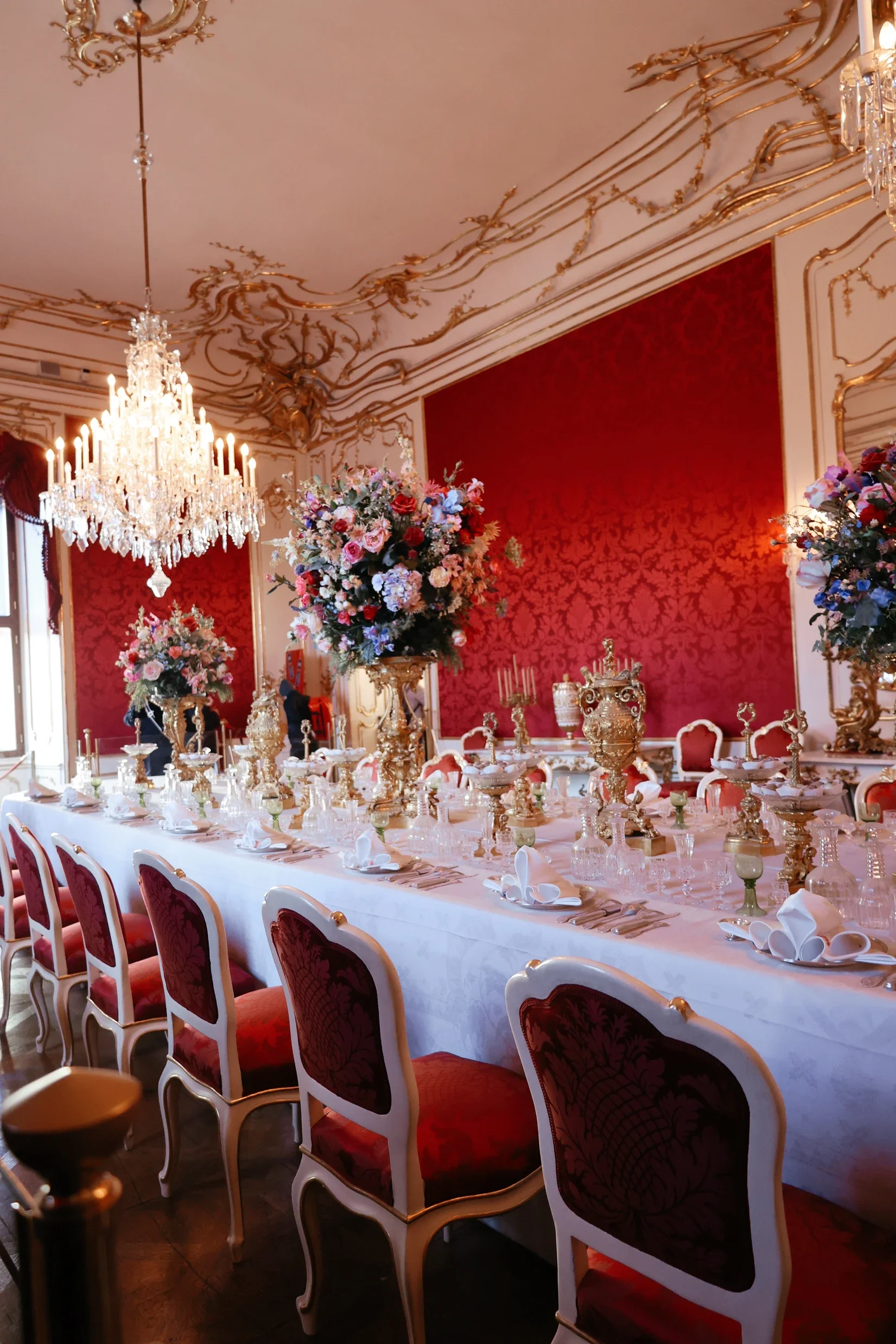
Austrian National Library
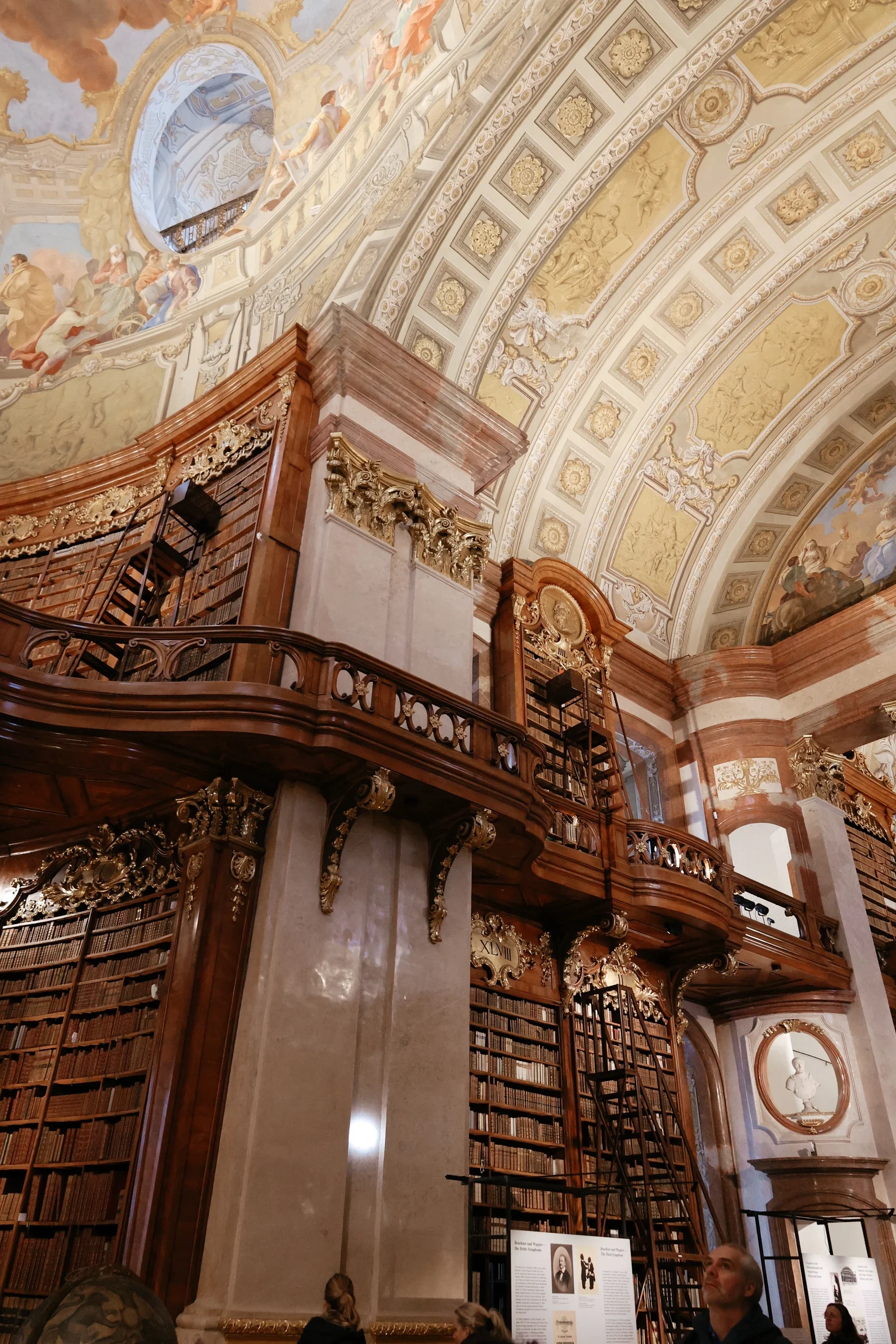
Often called one of the most beautiful libraries in the world, the Austrian National Library truly lives up to the reputation. Tucked within the Hofburg Palace complex, this Baroque masterpiece feels more like a work of art than a traditional library. The highlight is the State Hall (Prunksaal), completed in 1723, and it’s breathtaking the moment you step inside.
Towering wooden bookshelves hold more than 200,000 historic volumes, while ornate statues of Habsburg rulers and intricate carvings line the space. Above it all, the ceiling frescoes draw your eye upward, adding to the sense of grandeur and quiet awe. The blend of architecture, art, and literary history makes this one of Vienna’s most memorable stops—and a true hidden gem within the palace grounds.
Important tip: Photography is allowed, but flash is prohibited. Visiting in the morning is your best bet for fewer crowds and softer light if you want to take photos.
Spanish Riding School
For horse lovers—or anyone curious about Austria’s traditions—the Spanish Riding School is a truly unforgettable experience. This world-famous institution is home to the elegant Lipizzaner stallions, known for their discipline, grace, and centuries-old dressage techniques that have been passed down through generations.
One of the best ways to experience it is by attending the morning training sessions, where you can watch riders and horses practice inside the stunning Winter Riding Hall. It feels intimate and educational, offering a behind-the-scenes look at the precision, patience, and deep partnership required for classical dressage. If you’re looking for something more theatrical, the Gala Performances are a full showcase of the stallions’ most impressive movements—beautiful, controlled, and genuinely awe-inspiring.
Important tip: Tickets sell out quickly, especially for performances. If seeing the Lipizzaners in action is on your list, it’s best to book in advance.
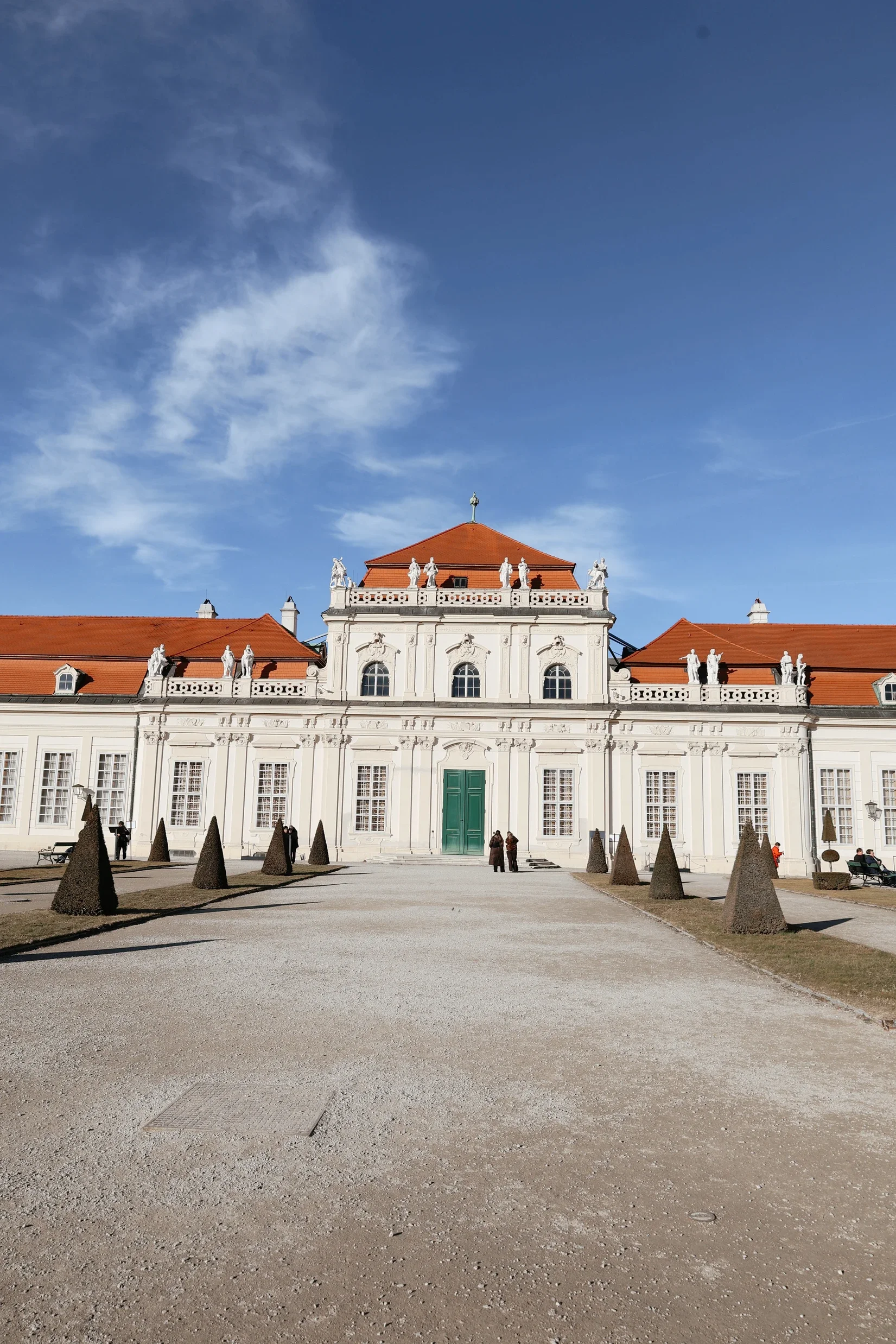
Belvedere Palace
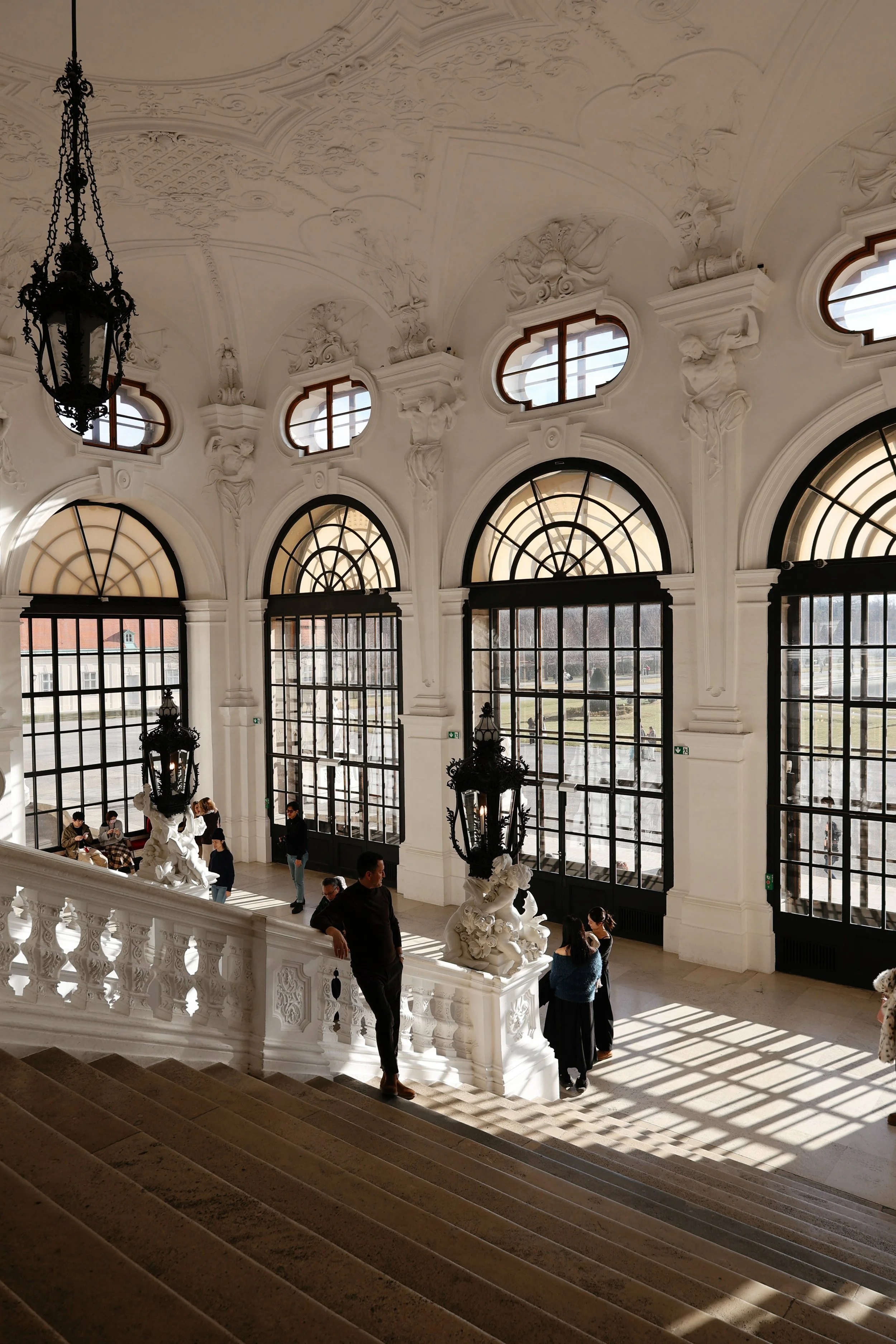
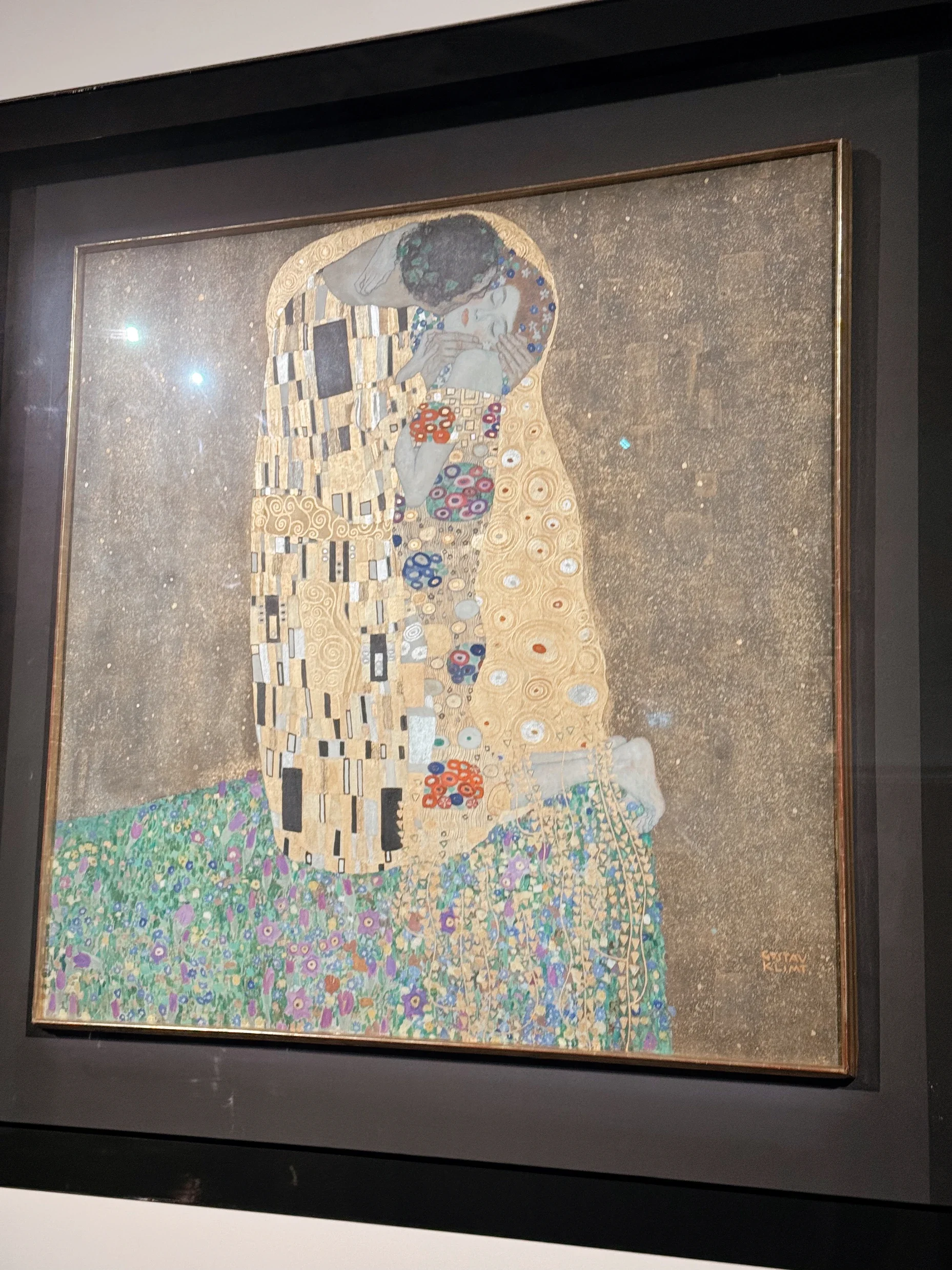
If you love art, history, and beautiful architecture, Belvedere Palace is an absolute must. This Baroque masterpiece is home to Austria’s most celebrated painting, The Kiss by Gustav Klimt, which alone makes the visit worthwhile. Seeing it in person felt surreal—quiet, emotional, and far more powerful than any photo. The Upper Belvedere houses the main art collection, featuring iconic works by Egon Schiele and Oskar Kokoschka, alongside other important Austrian masterpieces. The Lower Belvedere offers rotating exhibitions and beautifully preserved palace rooms that give a glimpse into the elegance of the Habsburg era.
Outside, the Belvedere Gardens are just as memorable. Perfectly manicured hedges, fountains, and sculptures create a peaceful setting that’s ideal for a slow stroll and a moment to take it all in. Whether you’re there for the art, the architecture, or simply the atmosphere, Belvedere Palace is one of those places that stays with you long after you leave.
Kunsthistorisches Museum Wien (Museum of Art History)
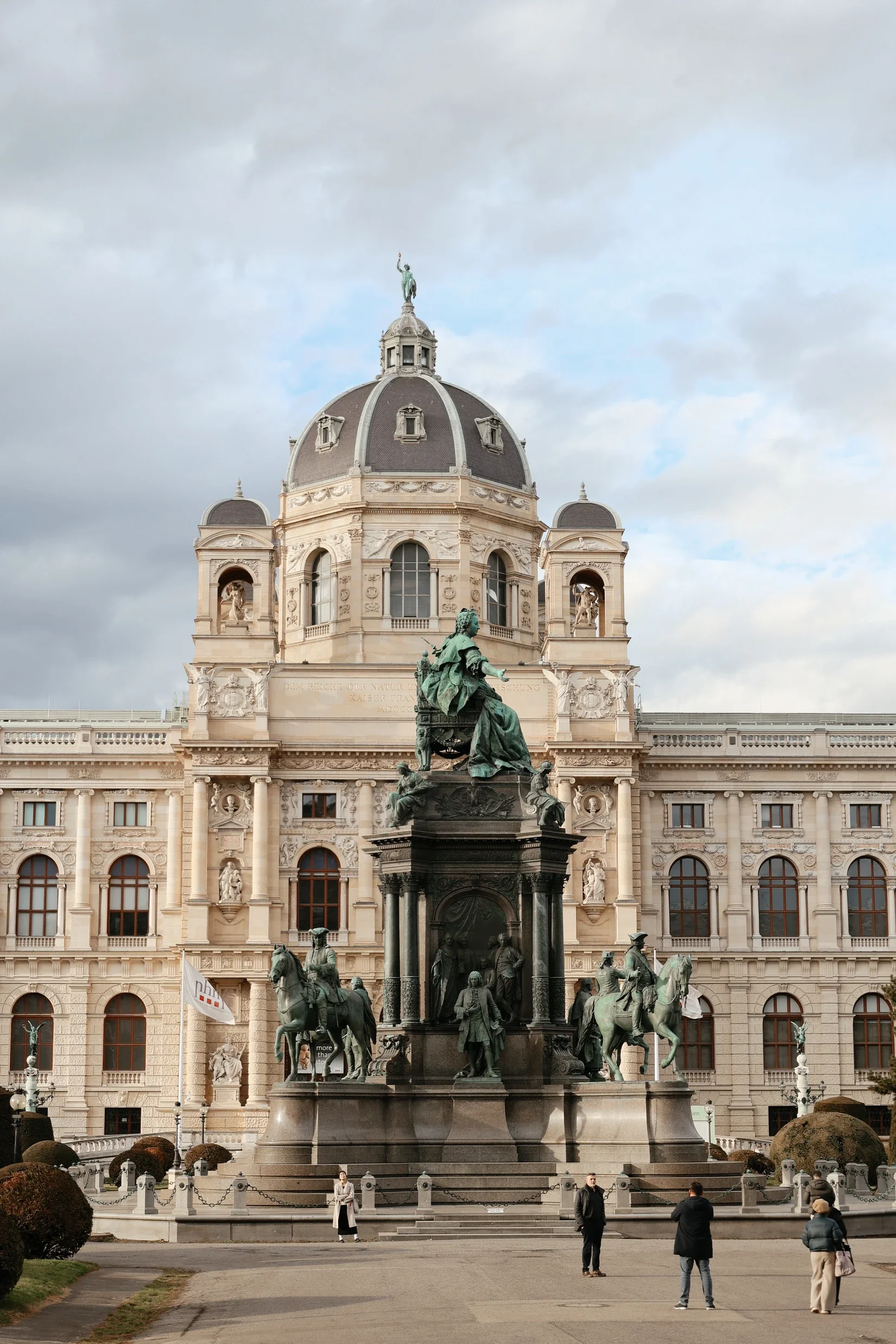
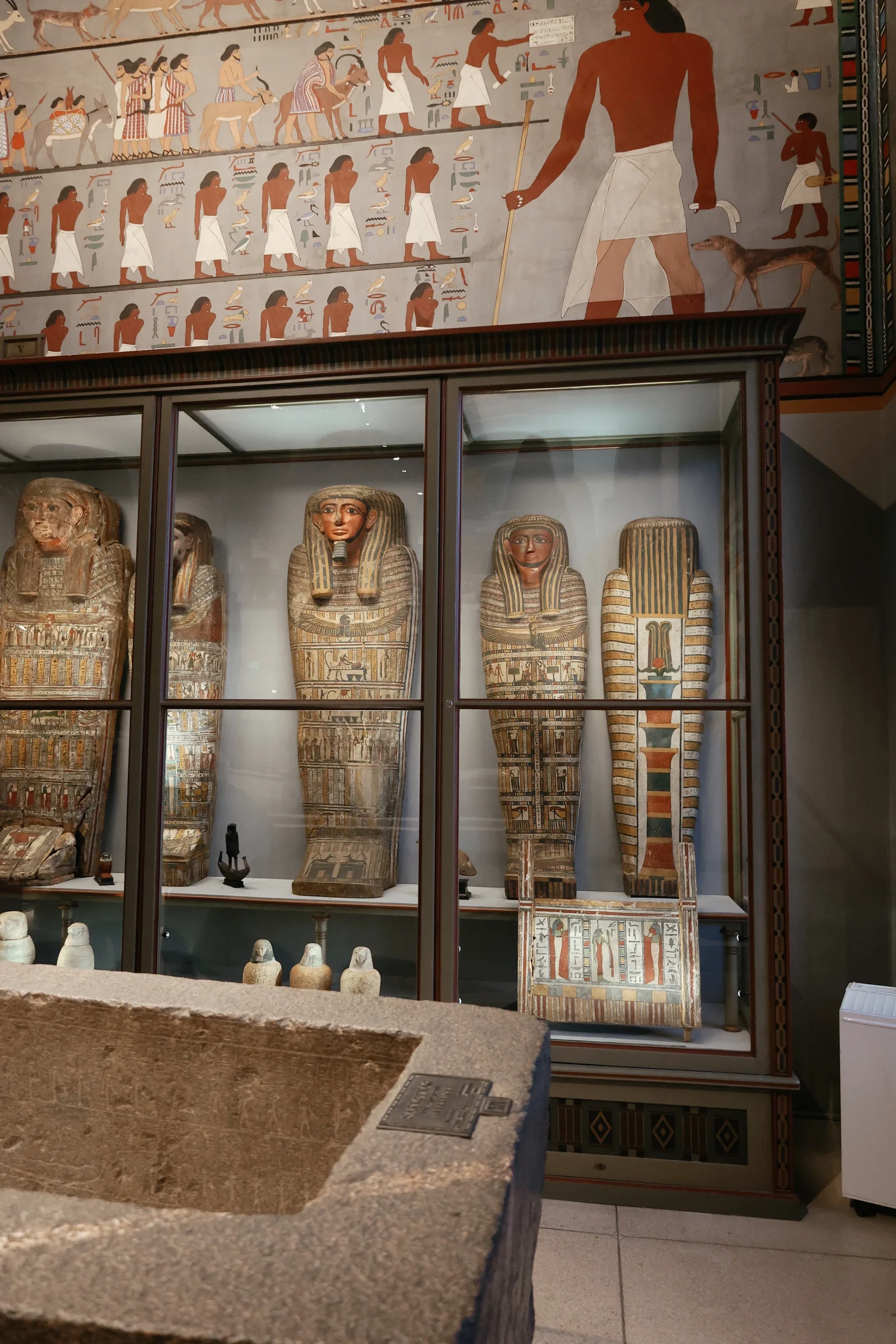
Vienna is deeply rooted in culture, and its museums are some of the best in Europe—both for what they hold and how they’re experienced. The Kunsthistorisches Museum is the city’s most celebrated art museum, and it lives up to that reputation in every way. Inside, you’ll find an extraordinary collection of works by masters like Rembrandt, Johannes Vermeer, Peter Paul Rubens, Caravaggio, and Titian—the kind of names you usually only see in textbooks, suddenly right in front of you.
What surprised me just as much as the art, though, was the building itself. The museum feels incredibly grand, with sweeping marble staircases, gilded ceilings, and richly decorated halls that make the entire visit feel immersive. It’s one of those places where you’re just as captivated by the space as you are by what’s on the walls, and it easily becomes a highlight even if you’re not usually someone who rushes to museums.
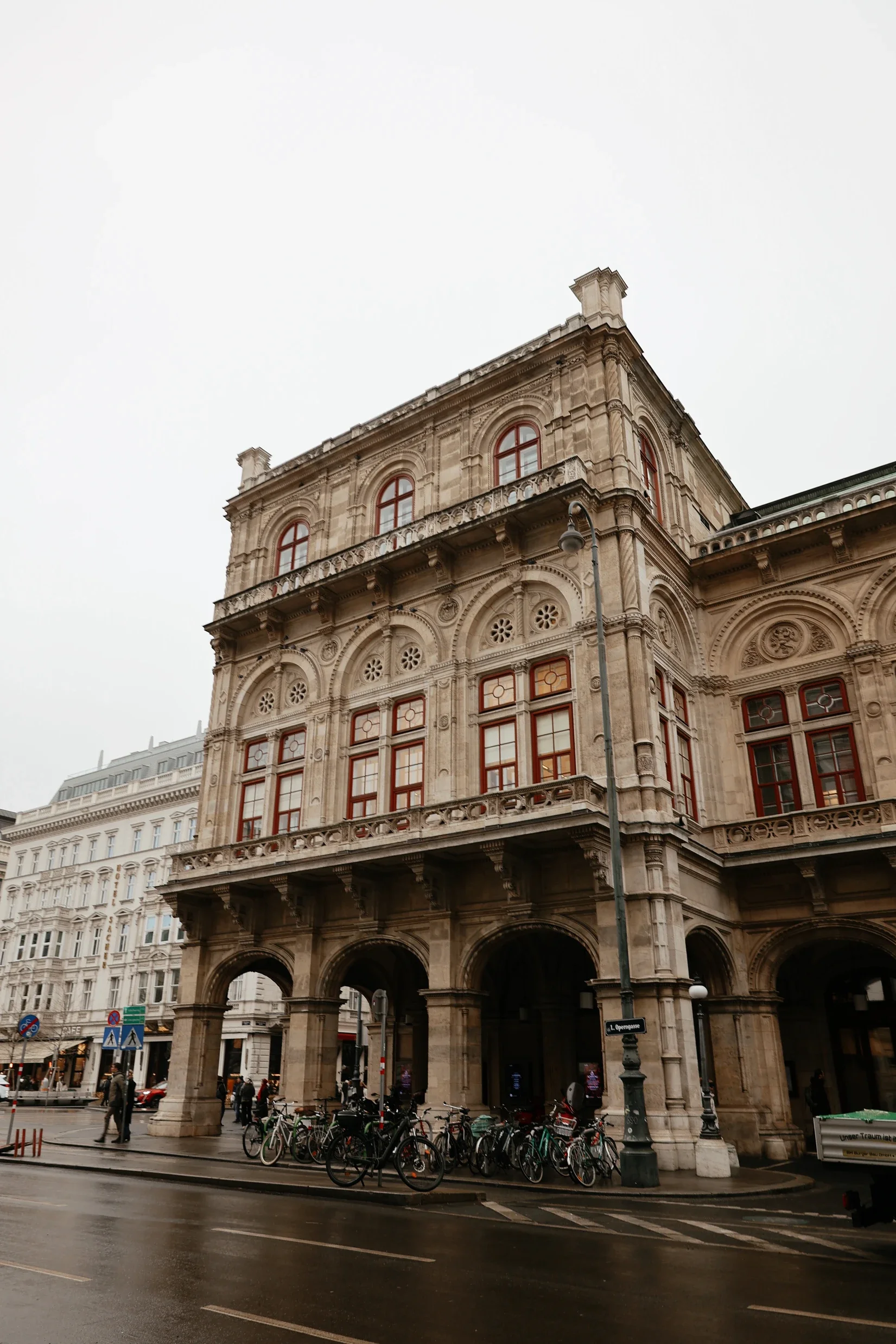
Vienna State Opera
For music lovers, the Vienna State Opera is truly unmissable. As one of the most prestigious opera houses in the world, it has been hosting legendary performances since 1869, and you can feel that legacy the moment you step inside. The acoustics are remarkable, and the richly detailed interiors—from the grand staircases to the elegant auditorium—make the experience feel just as special visually as it is musically.
If you’re able to attend a performance, it’s an unforgettable way to experience Vienna’s classical music culture firsthand. Even if a show doesn’t fit into your schedule, guided tours are well worth it and give you access to the auditorium, ornate halls, and behind-the-scenes spaces that bring the opera house’s history to life.
Important tip: If you want to experience a world-class performance without spending much, look into standing-room tickets. They’re surprisingly affordable and offer an incredible opportunity to enjoy the opera on a budget.
Wien Museum
If you want a deeper understanding of Vienna beyond its palaces and grand façades, the Wien Museum is a great place to start. The museum traces the city’s evolution from its Roman beginnings through the Habsburg era and into modern times, offering context that really helps tie everything together. Inside, you’ll find a thoughtful mix of historical maps, everyday artifacts, and works connected to Vienna’s artistic and musical legacy, including pieces by Gustav Klimt. What I appreciated most is how the exhibits don’t just focus on emperors and monuments, but also on daily life—how people lived, worked, and experienced the city across different centuries.
Important tip: the Wien Museum regularly hosts special exhibitions that dive into specific themes or moments in Vienna’s cultural history, so it’s worth checking what’s on display during your visit.
Palais Daun-Kinsky
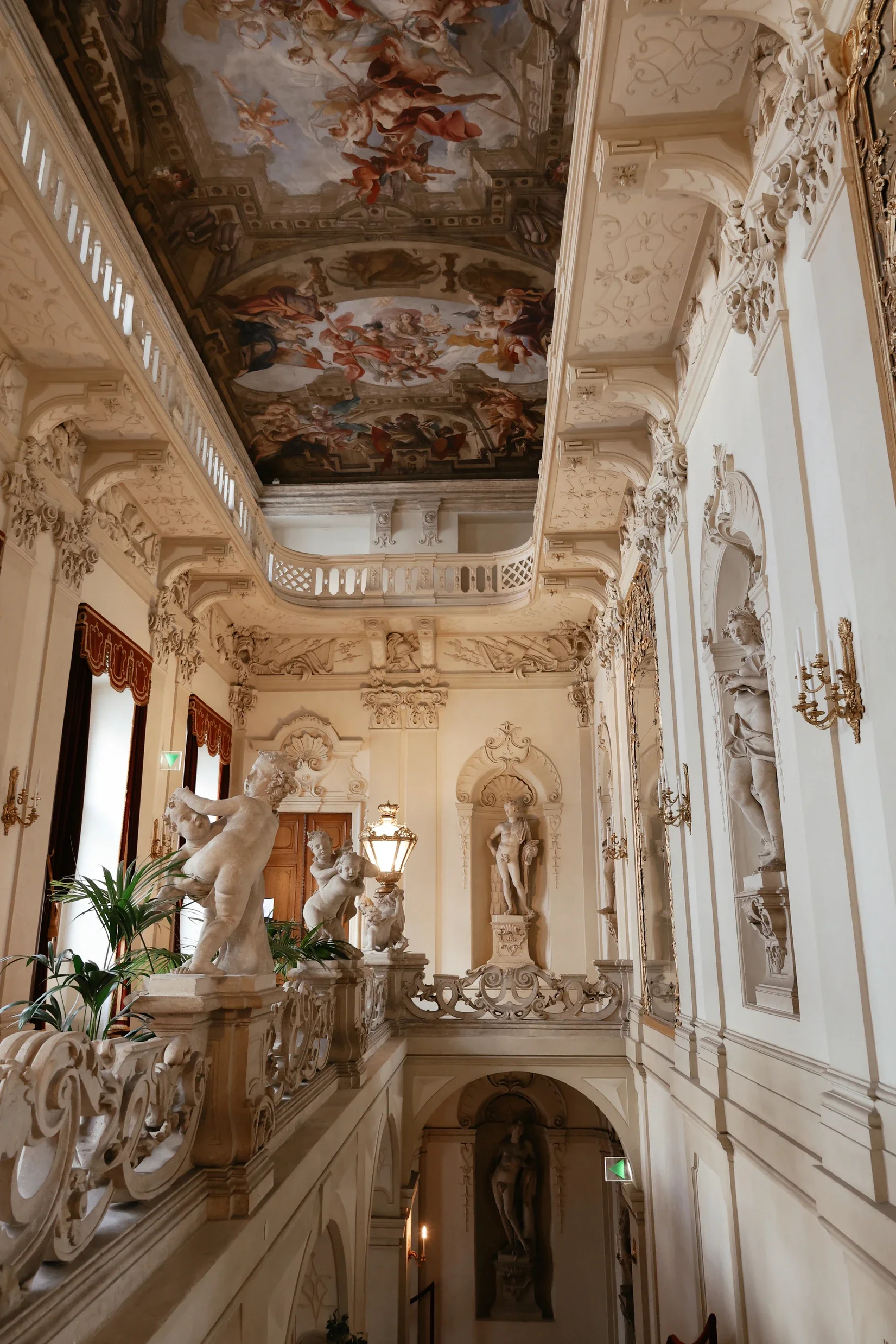
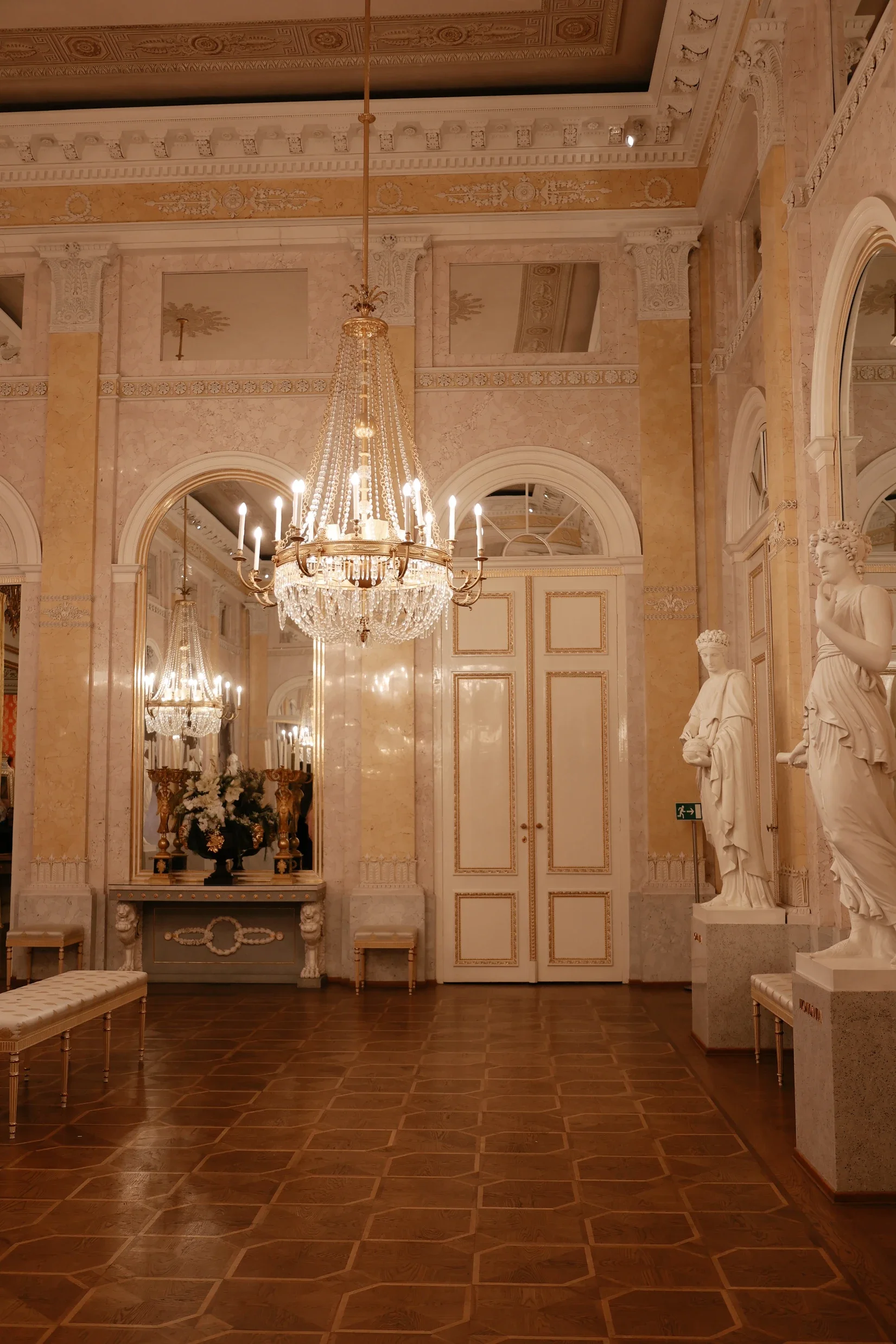
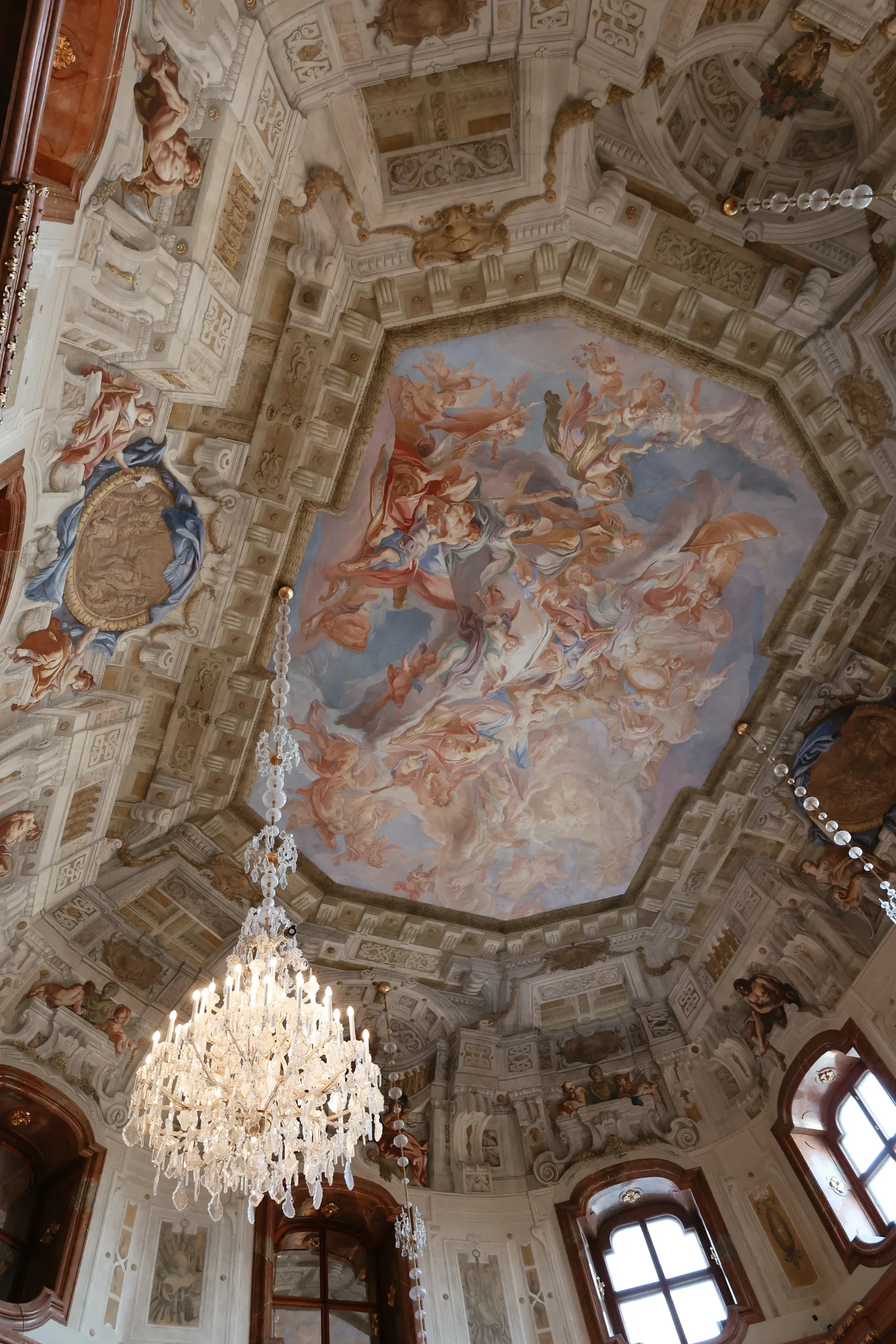
Palais Daun-Kinsky is one of those places that feels like a true hidden gem. Built in the early 18th century, this stunning Baroque palace perfectly captures Vienna’s aristocratic elegance, from its ornate frescoed ceilings and intricate stucco details to the grand chandeliers that light up its lavish rooms.
Today, the palace is mainly used for private events and special functions, which adds to its exclusivity. When it is open to the public—through select tours or concerts—it offers a rare chance to step inside and experience its opulent halls and grand ballrooms up close. It feels intimate and refined, like getting a glimpse behind the curtain of Vienna’s noble past.
Important tip: If public tours aren’t available during your visit, consider attending a classical concert or event held inside the palace. It’s one of the best ways to experience the space in a way that feels both authentic and unforgettable.
Weltmuseum Wien
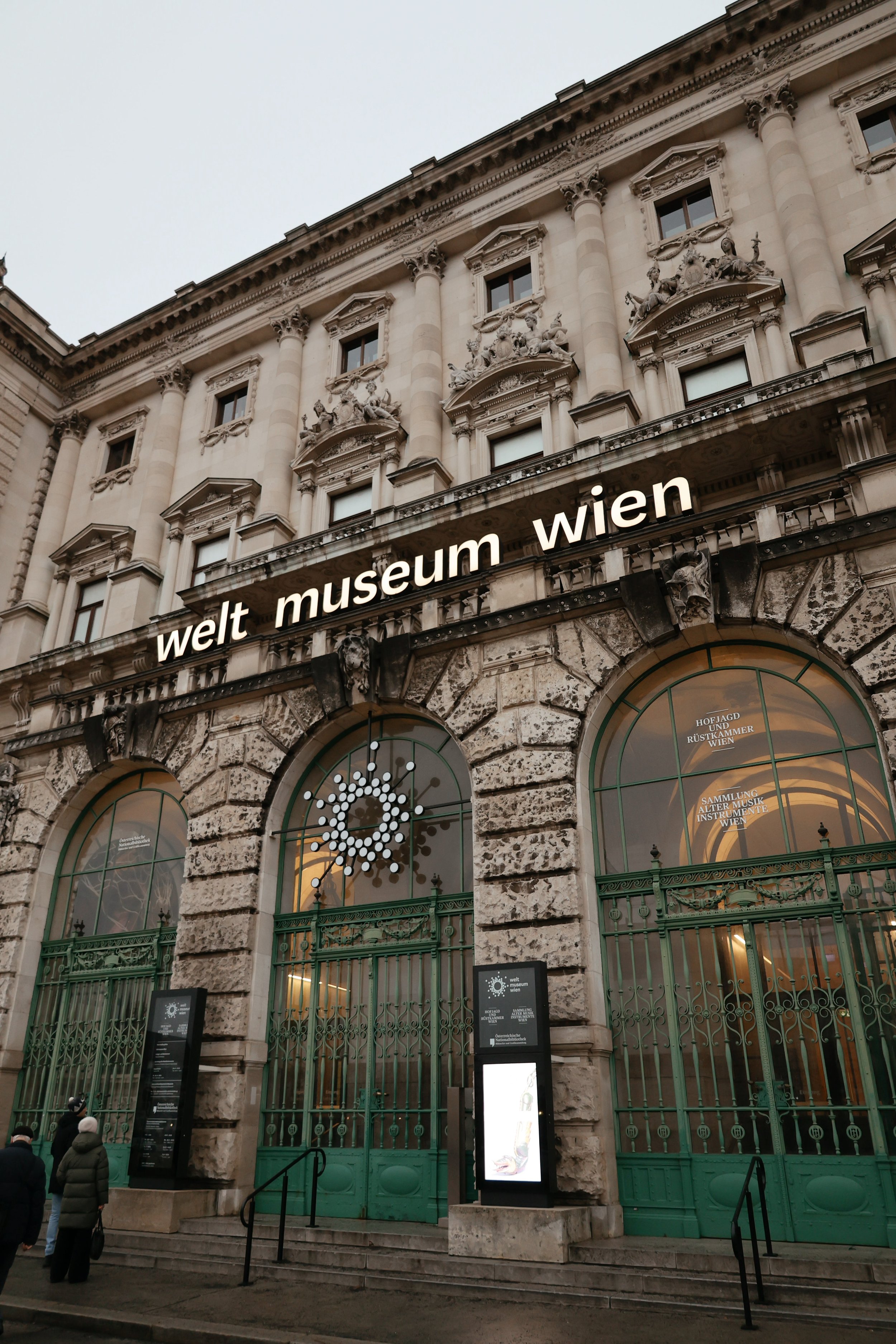
For anyone interested in global cultures and ethnography, the Weltmuseum Wien is one of Vienna’s most thought-provoking museums. Located within the Hofburg Palace, it houses one of the world’s most significant collections of non-European artifacts. The museum’s exhibits span Asia, Africa, and the Indigenous cultures of the Americas, offering a deep and carefully presented look at cultural traditions, craftsmanship, and history. One of the most notable pieces is the famous feathered headdress of Montezuma II, which alone draws visitors from around the world. Beyond individual objects, the museum also explores themes of cultural exchange, colonial history, and globalization, encouraging reflection as much as admiration.
Weltmuseum Wien feels both educational and immersive, making it a meaningful stop if you’re interested in understanding Vienna’s global connections and the broader stories behind the artifacts on display.
Albertina Museum
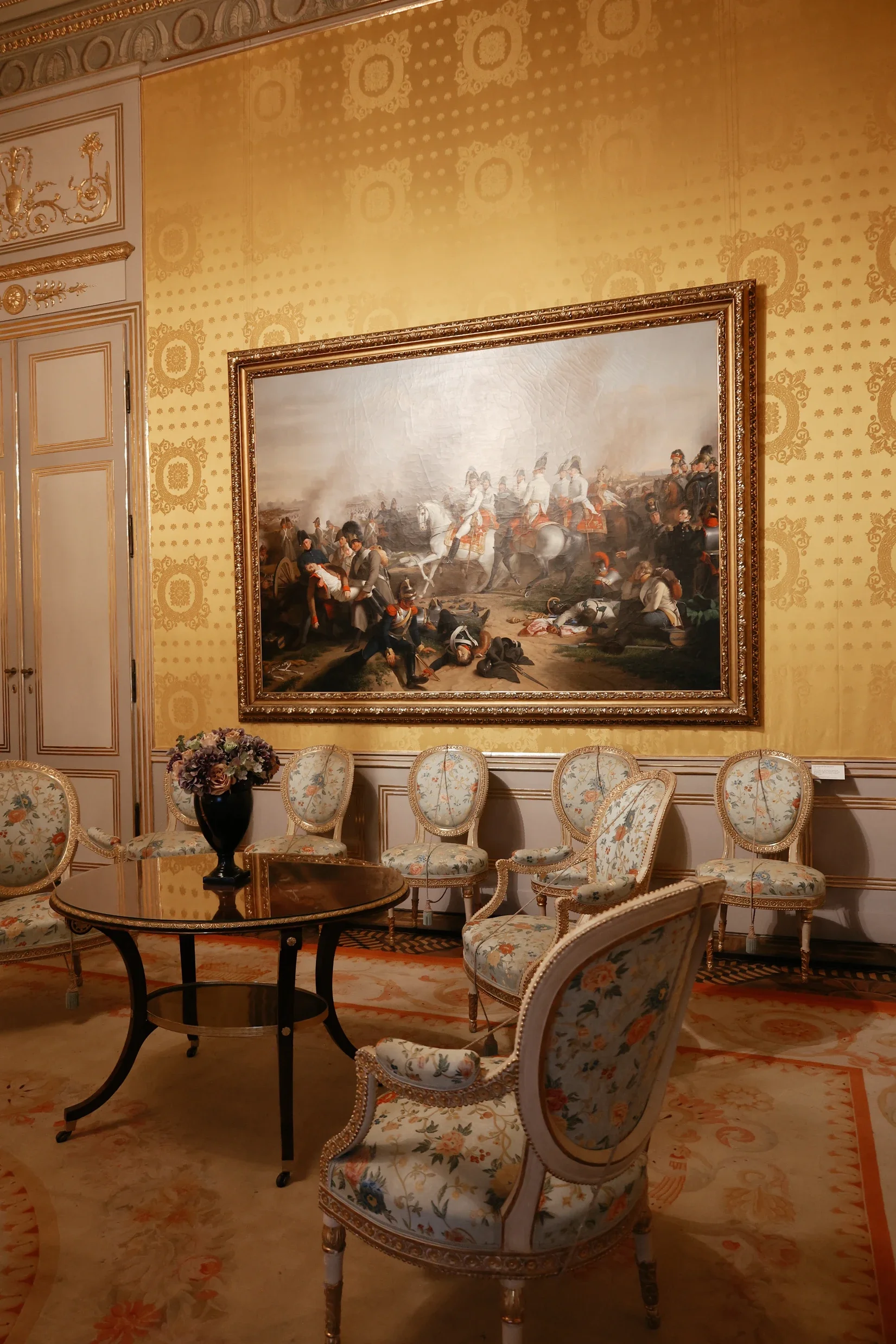
For art lovers, the Albertina Museum is an essential stop in Vienna. Housed in a former Habsburg palace, the setting alone is impressive, but it’s the collection inside that really stands out. The museum brings together an incredible range of classical and modern works, including pieces by Claude Monet, Pablo Picasso, Edgar Degas, and Gustav Klimt.
One of the museum’s greatest highlights is its graphic art collection, considered one of the most important in the world. Seeing Young Hare by Albrecht Dürer in person is a memorable experience and a must for art history lovers.
Important tip: If contemporary art is more your style, don’t miss Albertina Modern, the museum’s sister location nearby, which focuses on modern and contemporary works and is well worth the extra stop.
Where to Eat in Vienna, Austria
Melker Stiftskeller
Tucked away in the heart of Vienna, Melker Stiftskeller is a wonderful place to experience classic Austrian cuisine in a historic setting. The atmosphere feels warm and traditional, the kind of place where you know you’re about to get something authentic. I tried two staples of Austrian cooking here: the Wiener Schnitzel and the Tafelspitz. The schnitzel was perfectly breaded and fried—crisp on the outside and tender inside—while the Tafelspitz was rich and comforting, served the traditional way with horseradish and apple sauce. It was one of those meals that feels deeply rooted in place, simple but incredibly satisfying.
Salm Bräu
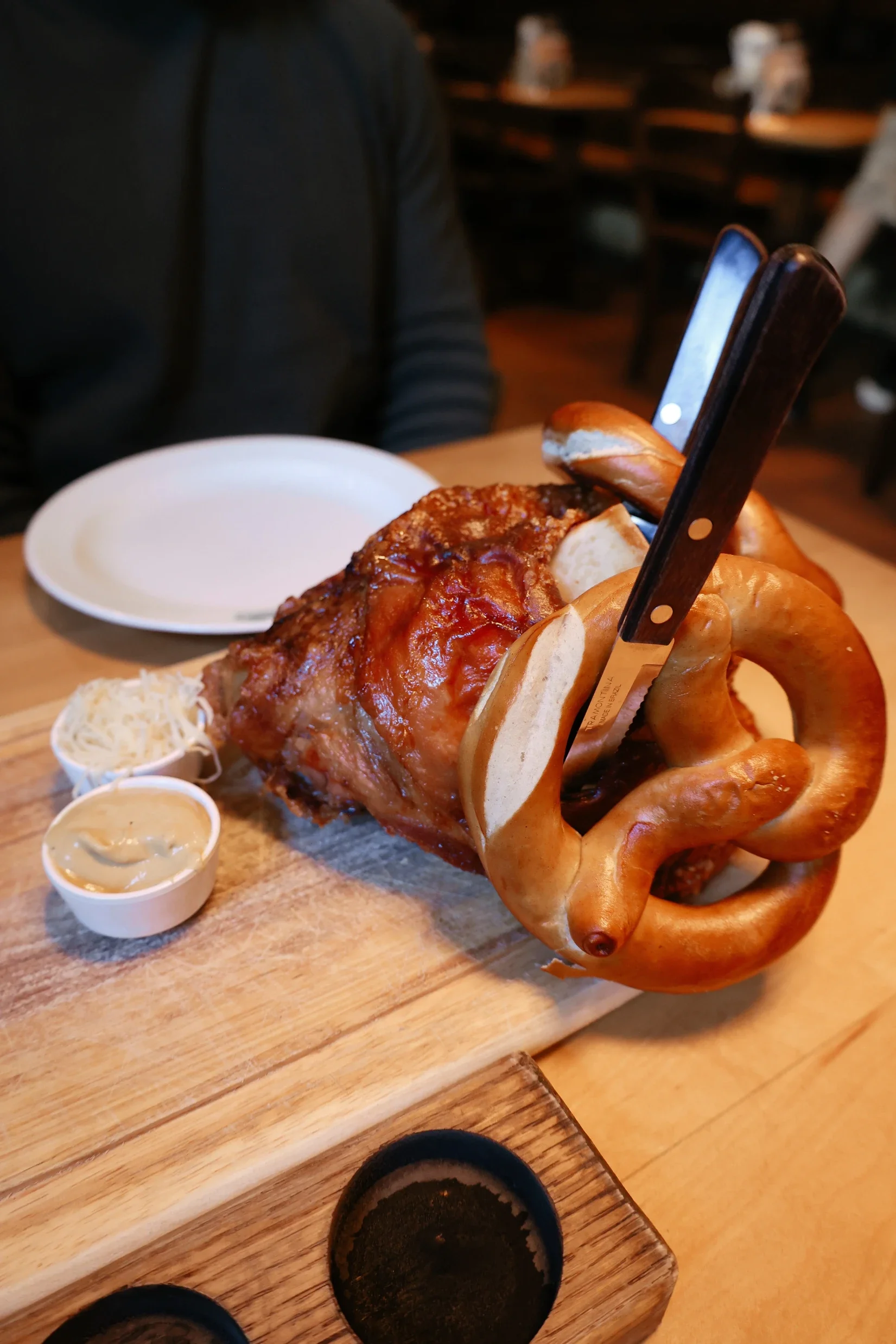
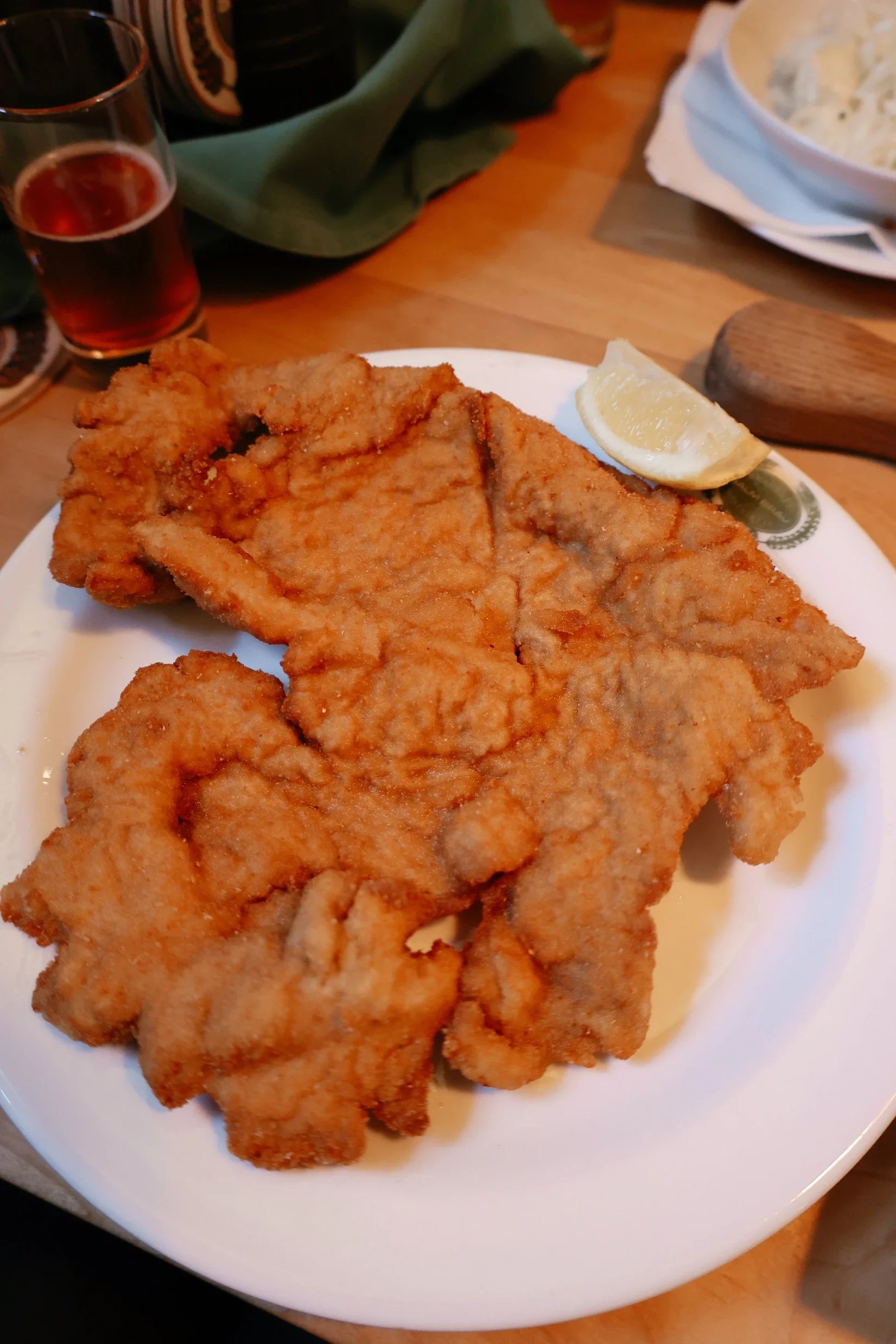
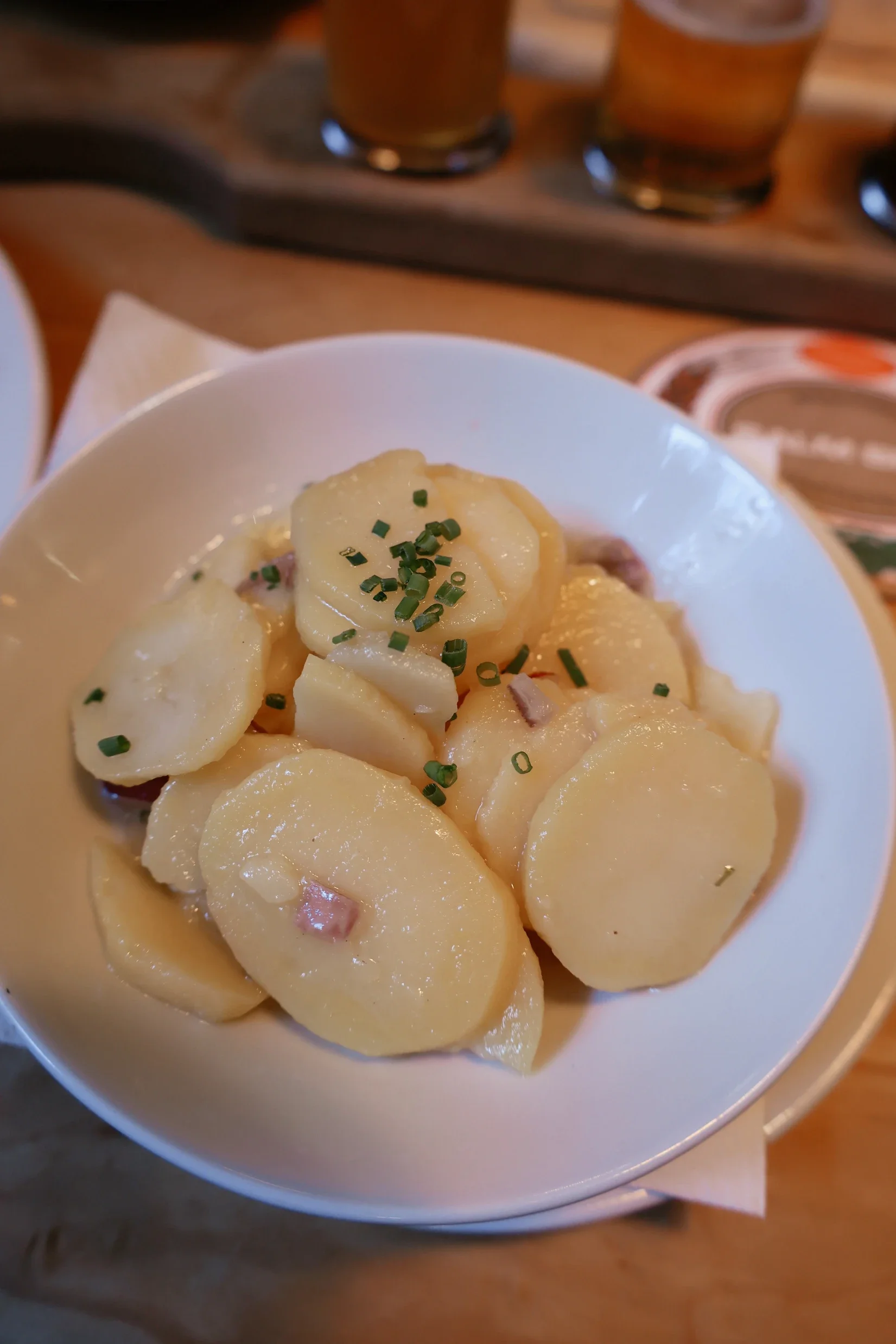
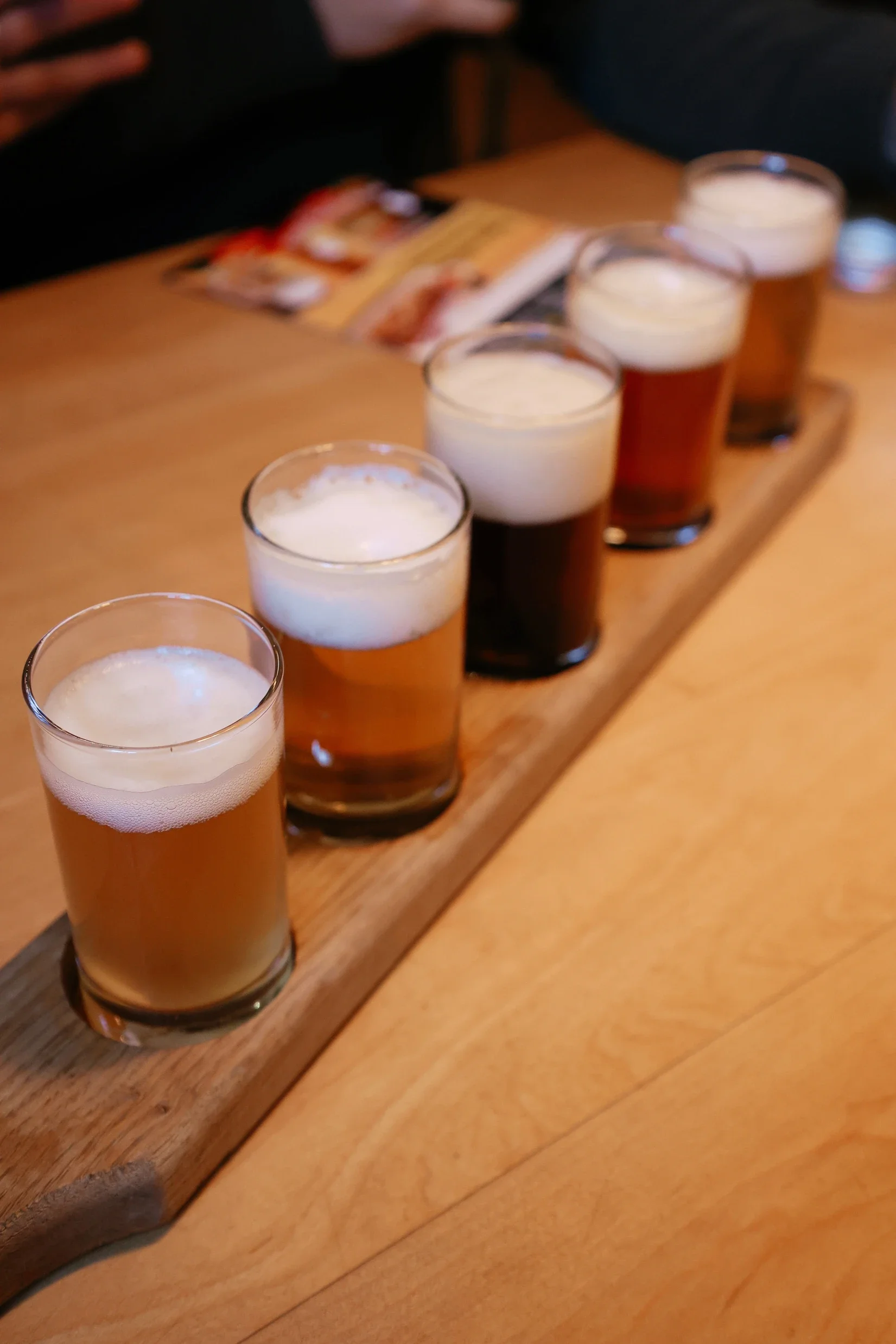
Salm Bräu is the kind of place you go when you want hearty Austrian food and freshly brewed beer under the same roof. Known for its in-house brewery, the atmosphere is lively and traditional, with that classic beer hall energy that feels very Vienna. I ordered the Schweinsbraten, and it did not disappoint—succulent, flavorful roast pork that paired perfectly with their house-brewed beers. I also tried the schnitzel and their traditional Erdäpfelsalat (Austrian potato salad), which was light, tangy, and the perfect contrast to the richer dishes. To top it off, I went for a beer flight so I could sample a few different Austrian brews, and it was such a fun way to experience what they’re known for.
If you’re looking for a relaxed spot to try classic comfort food and local beer in one sitting, Salm Bräu is a solid choice.
Pürstner
Pürstner feels like stepping into old Vienna. This cozy, rustic tavern has a warm, traditional atmosphere that instantly makes you want to settle in and take your time. I couldn’t leave without ordering Kaiserschmarrn, the classic fluffy shredded pancake dessert, and it was exactly what I hoped for—light, comforting, and just sweet enough. Paired with the inviting, old-world charm of the space, it felt like the perfect way to slow down and soak in a more traditional side of Vienna.
Meissl & Schadn
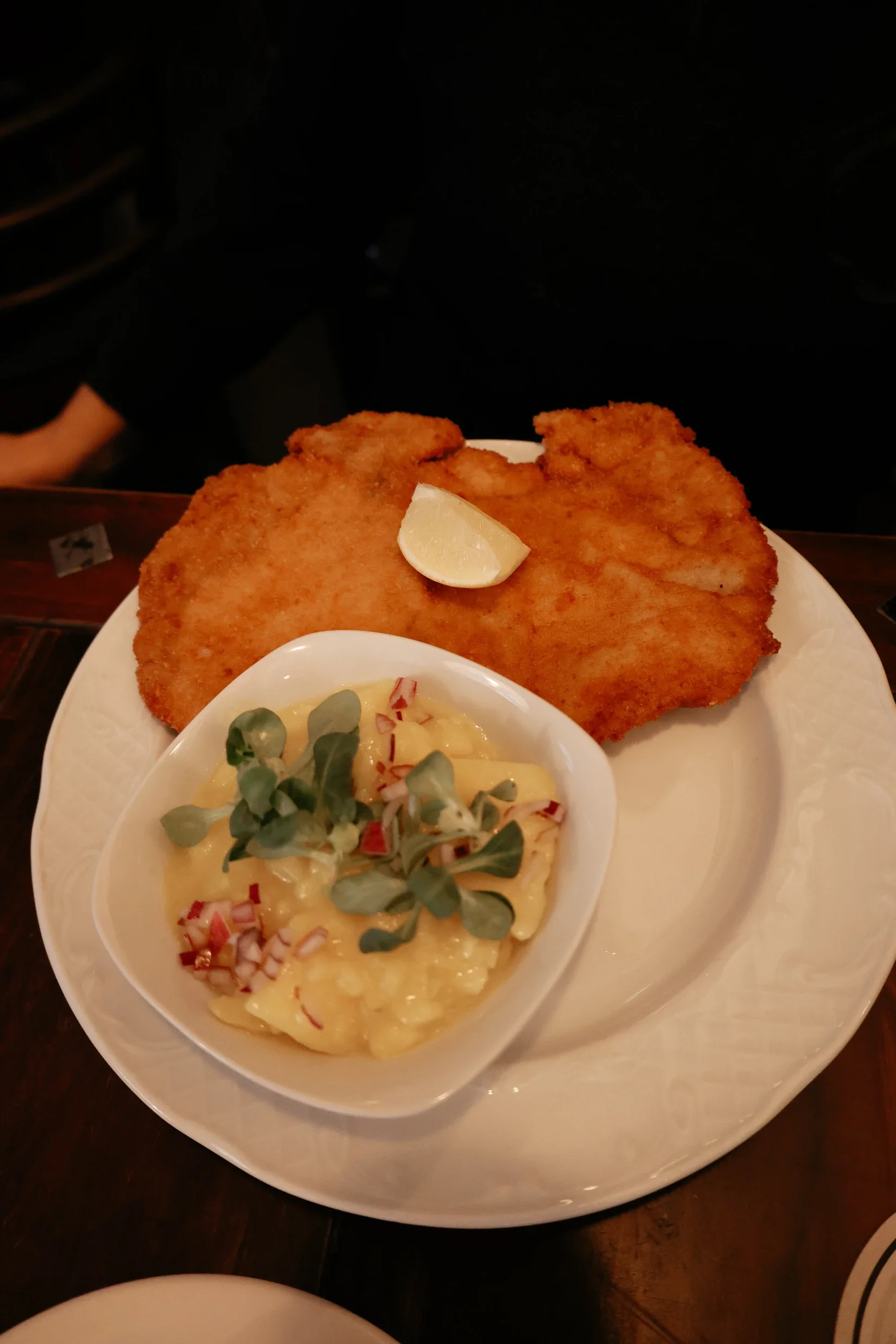
If you’re looking for a more refined take on Wiener Schnitzel, Meissl & Schadn is the place. This restaurant is all about honoring the classic dish while elevating the experience. The setting feels elegant without being stiff, and the service is attentive in that quiet, polished Viennese way. It’s the kind of place where schnitzel feels special—crispy, beautifully prepared, and clearly treated as the star of the menu.
Servus Wien Hohenstaufengasse
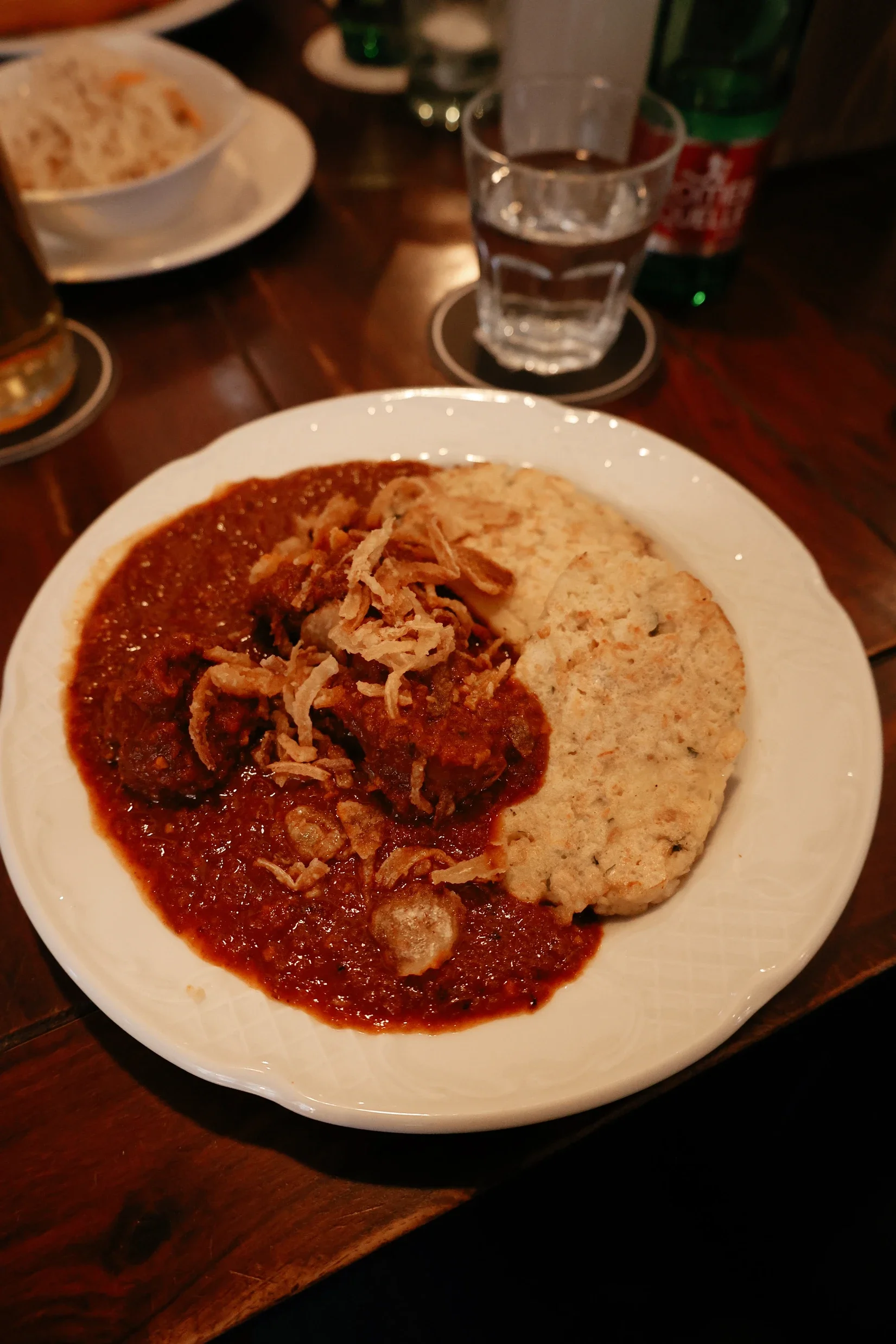
Warm, welcoming, and deeply traditional, Servus Wien Hohenstaufengasse feels like a spot you’d come back to again and again. The atmosphere is cozy and relaxed, making it perfect for a comforting meal after a day of exploring. I ordered the gulasch, and it was exactly what I wanted—rich, hearty, and full of flavor. Simple, satisfying, and very much rooted in Viennese comfort food traditions.
Bier & Bierli
If you love beer, Bier & Bierli is a great spot to experience Austria’s brewing culture in a relaxed, no-frills setting. They offer an impressive selection of Austrian beers, making it easy to try something new or stick with a classic. I tried both the goulash and the schnitzel here, and they were exactly what you want from traditional pub fare—hearty, comforting, and satisfying. Paired with a good beer, it felt like the kind of place locals would settle into for an easy evening, which made the experience even better.
Cantinetta Antinori
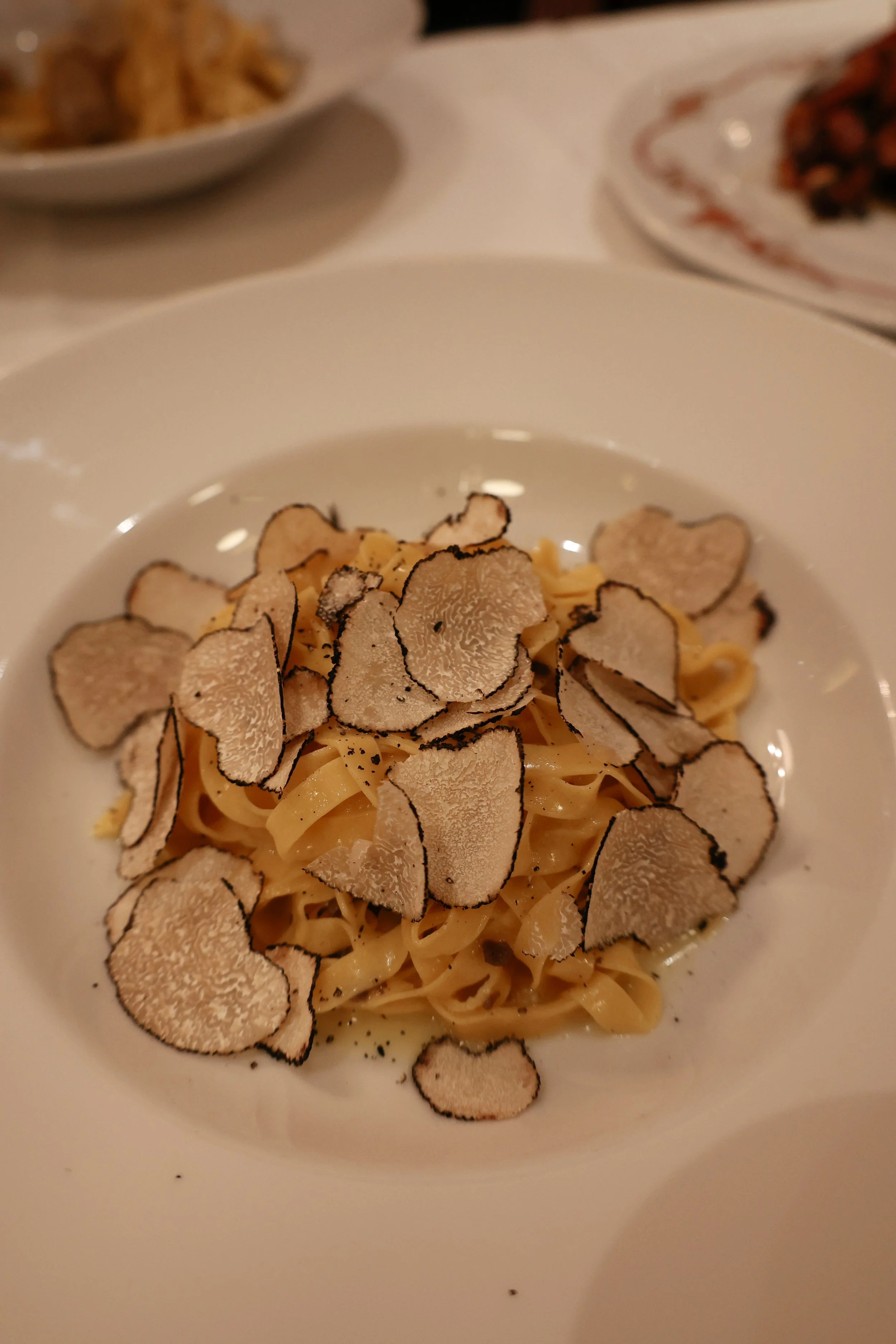
After eating my fair share of goulash and schnitzel, Cantinetta Antinori was such a welcome (and delicious) change of pace. The moment you sit down, it feels refined but comfortable—the kind of place where you know the food is going to be good. I ordered the linguine with truffle, grilled calamari, and the truffle risotto, and every dish was incredible. Rich, balanced, and full of flavor without feeling heavy. To end the meal, I couldn’t resist dessert, and both the chocolate cake and the crème brûlée were worth it—classic, indulgent, and perfectly done.
If you’re craving a break from traditional Austrian dishes or just want an excellent Italian meal while in Vienna, this spot delivers. Everything I tried was memorable, and honestly, it ended up being one of my favorite meals of the trip.
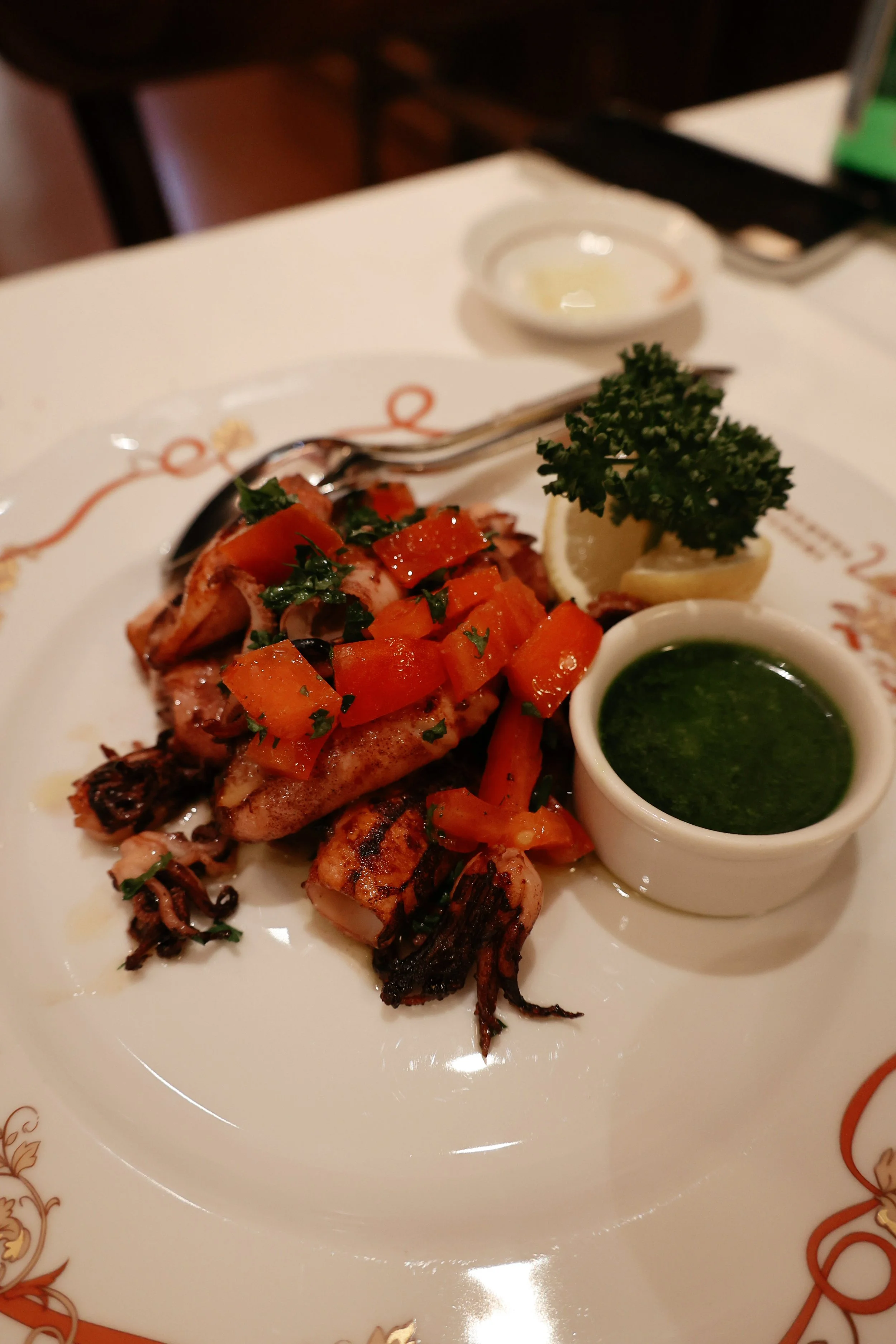
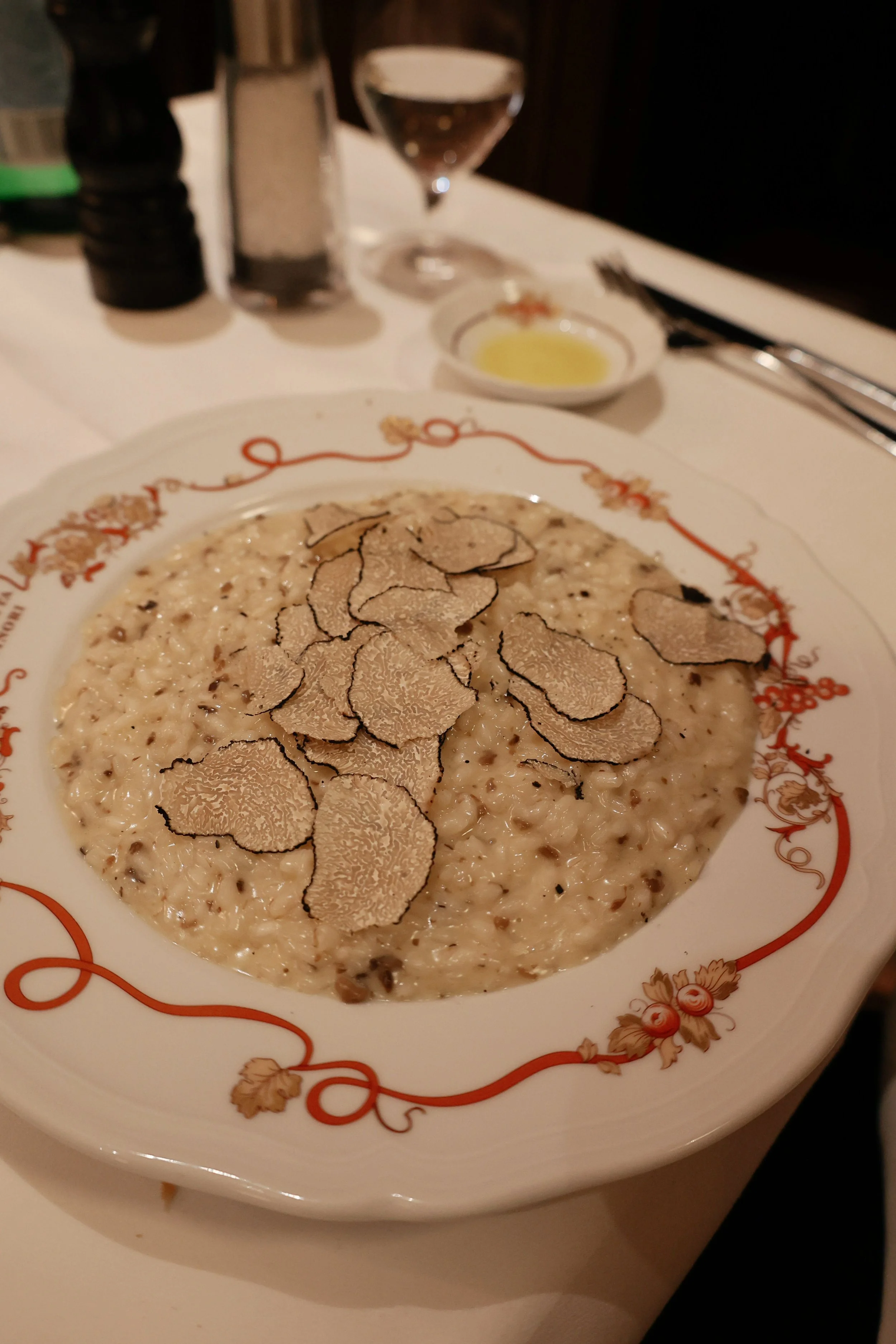
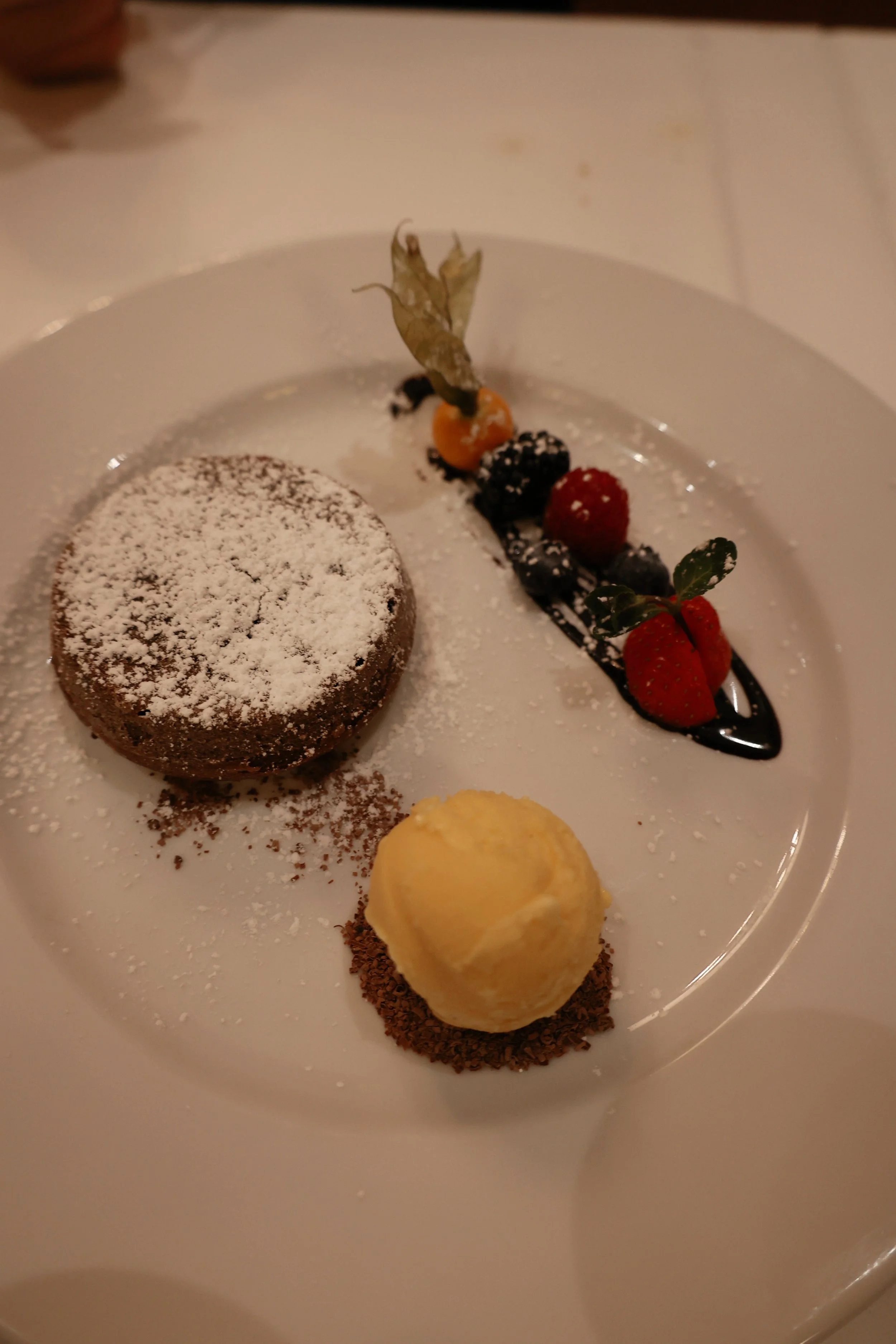
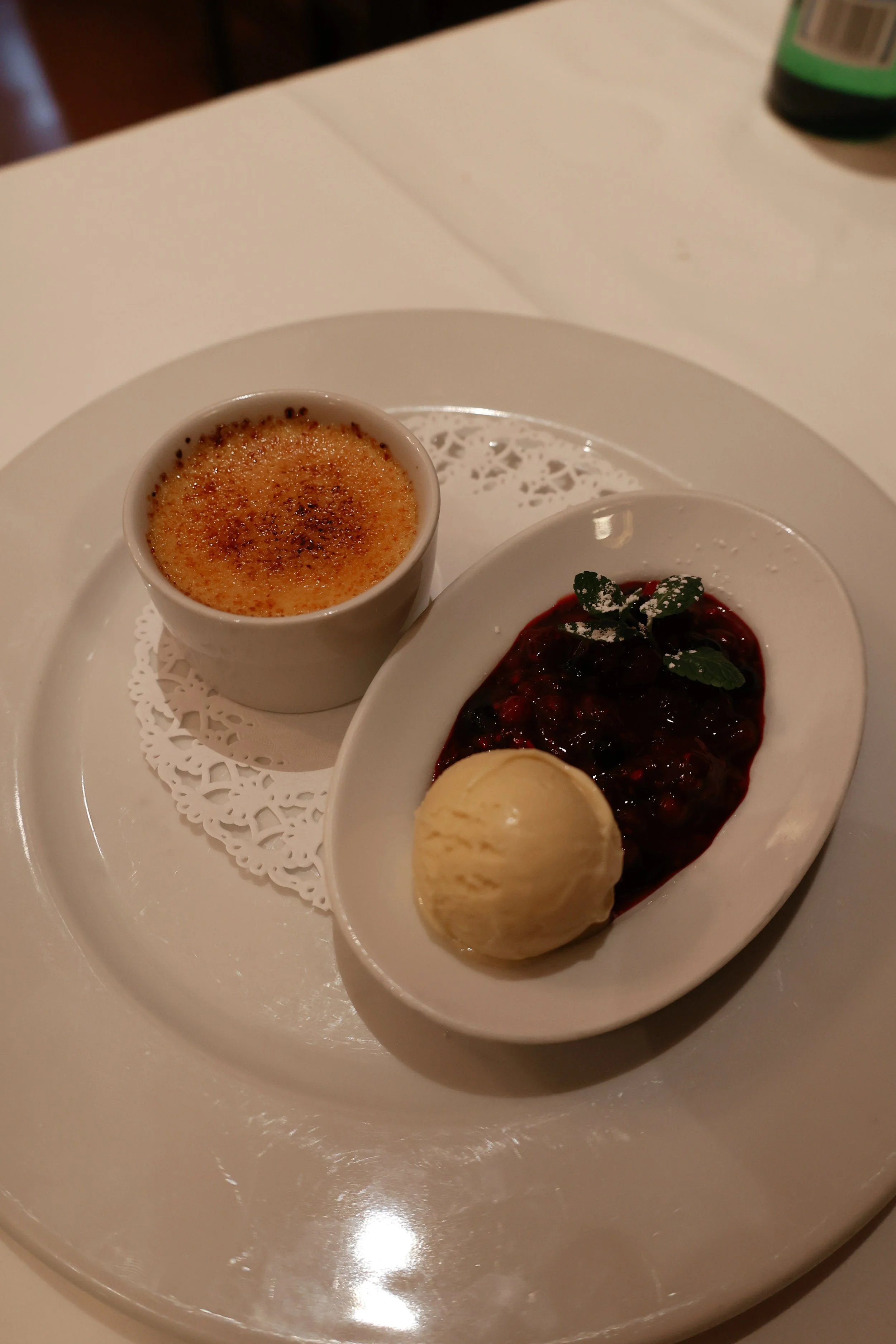
Cafe Tirolerhof
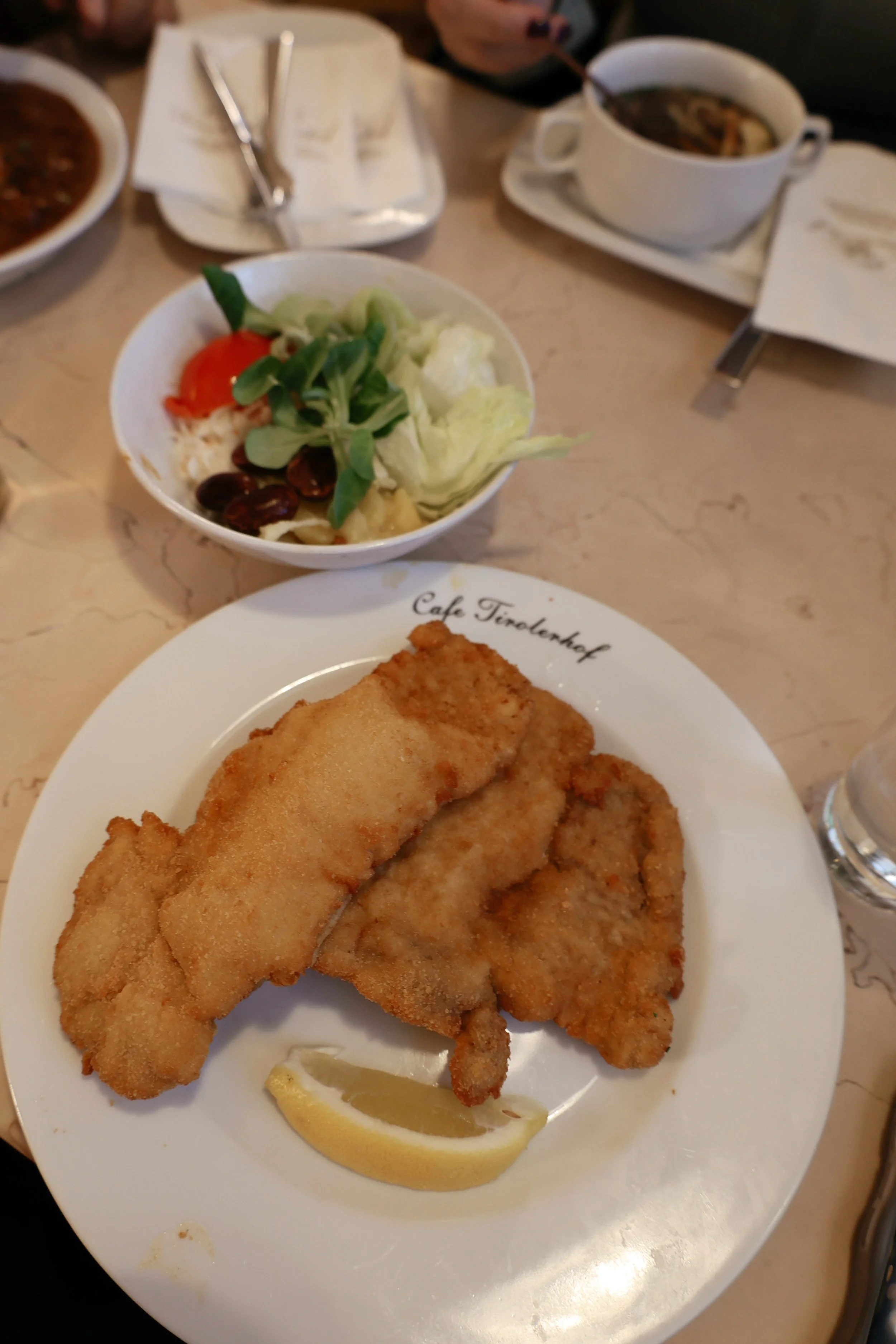
Cafe Tirolerhof is a great spot if you’re craving something traditional and comforting. The atmosphere feels relaxed and classic, making it an easy place to settle into for a no-fuss meal. I ordered the schnitzel, and it was exactly what you hope for—crispy on the outside, tender inside, and perfectly done. Simple, satisfying, and a solid choice when you want a reliable taste of Viennese comfort food.
Cafes + Bakeries in Vienna, Austria
Café Sacher
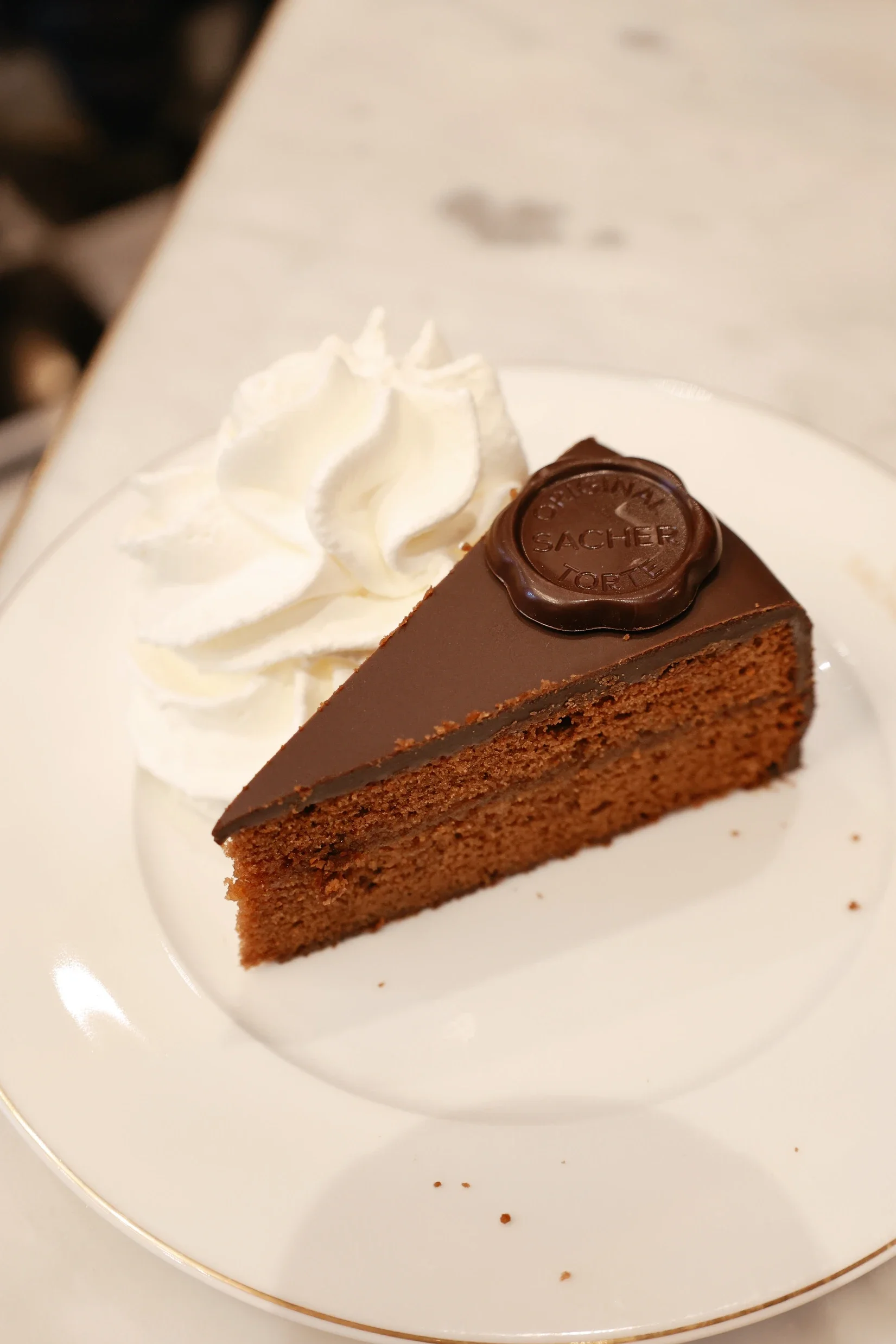
Café Sacher is one of those places you almost have to experience for yourself. Home to the original Sachertorte—the rich chocolate cake layered with apricot jam—it’s a true Viennese institution and absolutely worth the stop. Pairing a slice with their house coffee feels like a rite of passage in Vienna.
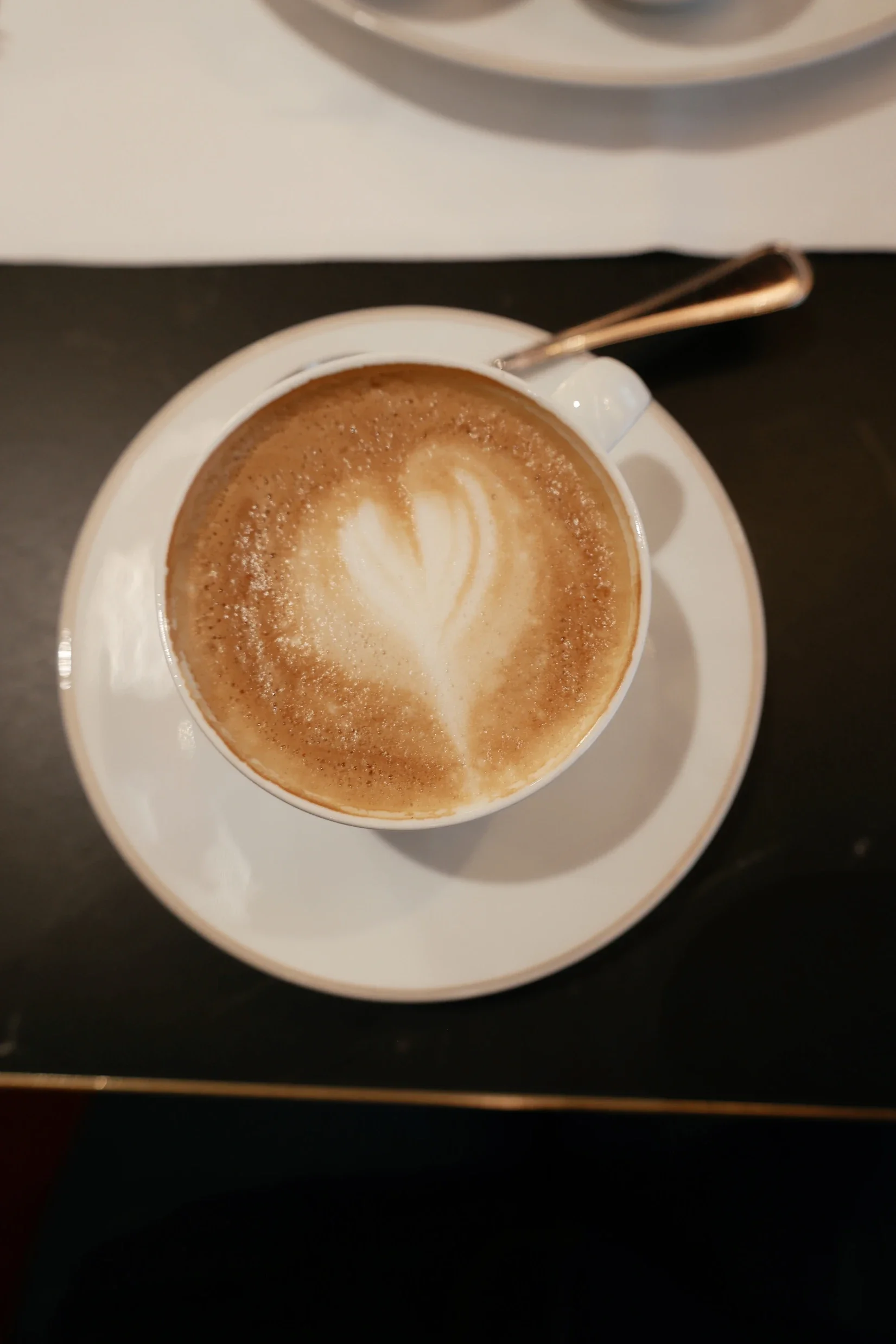
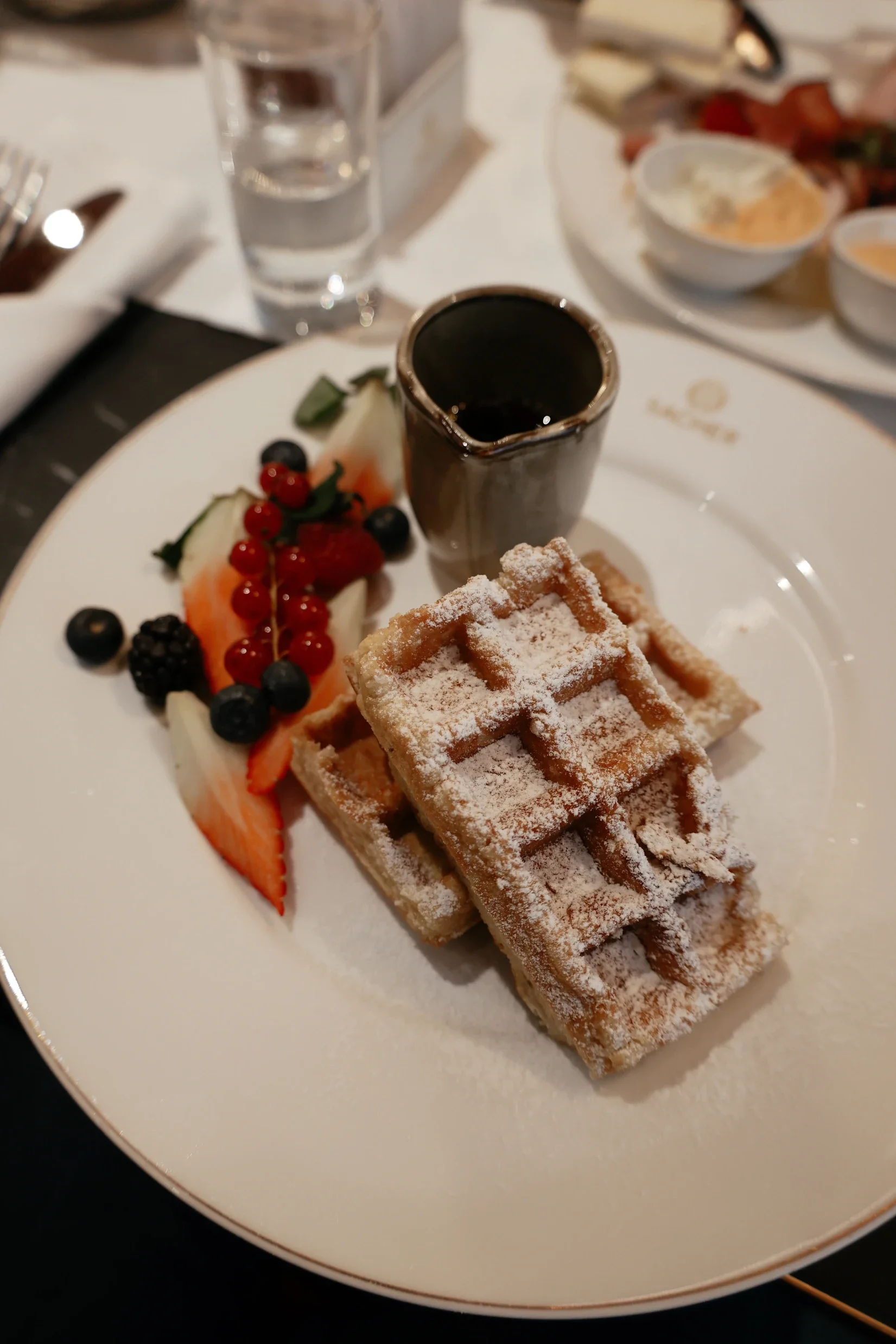
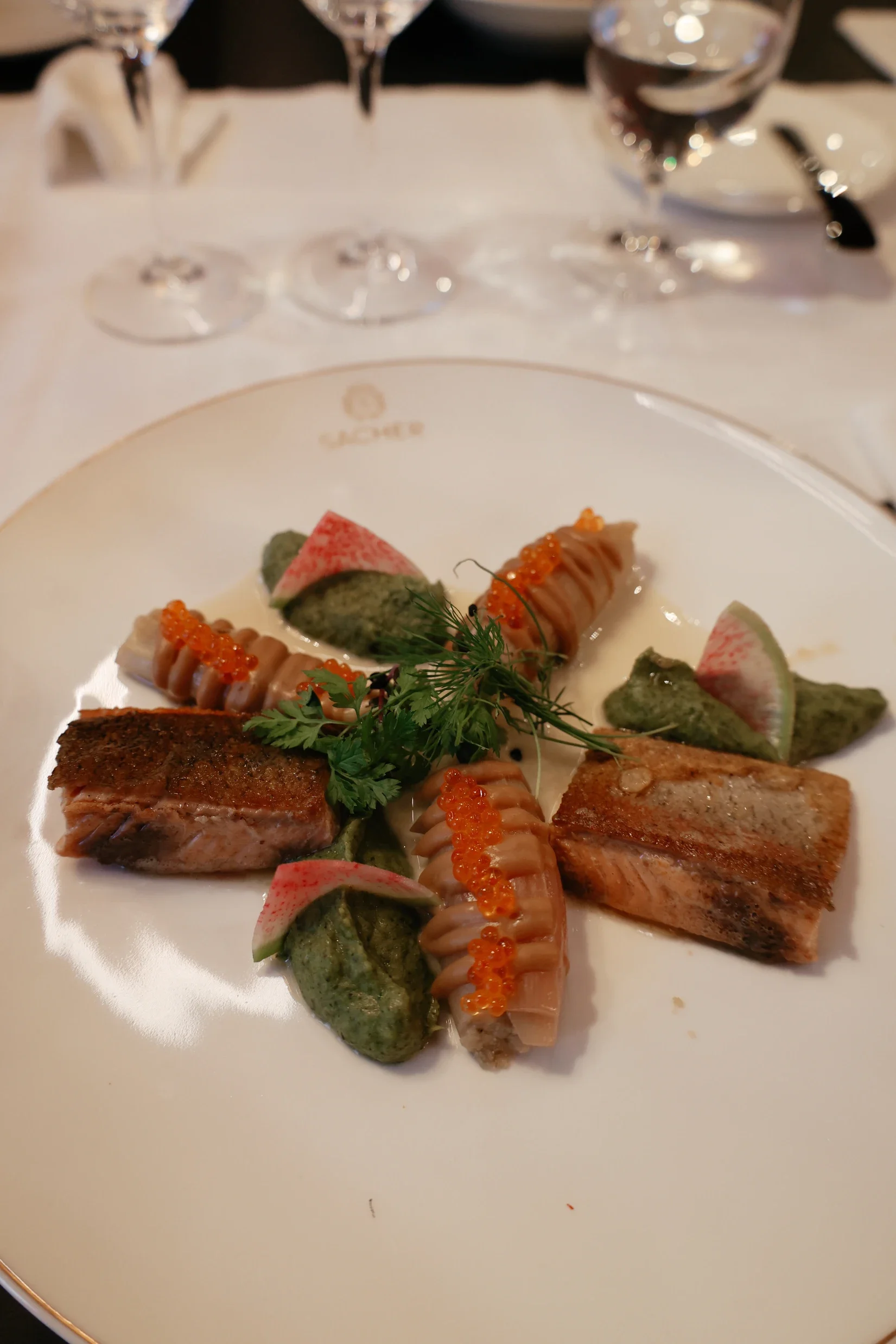
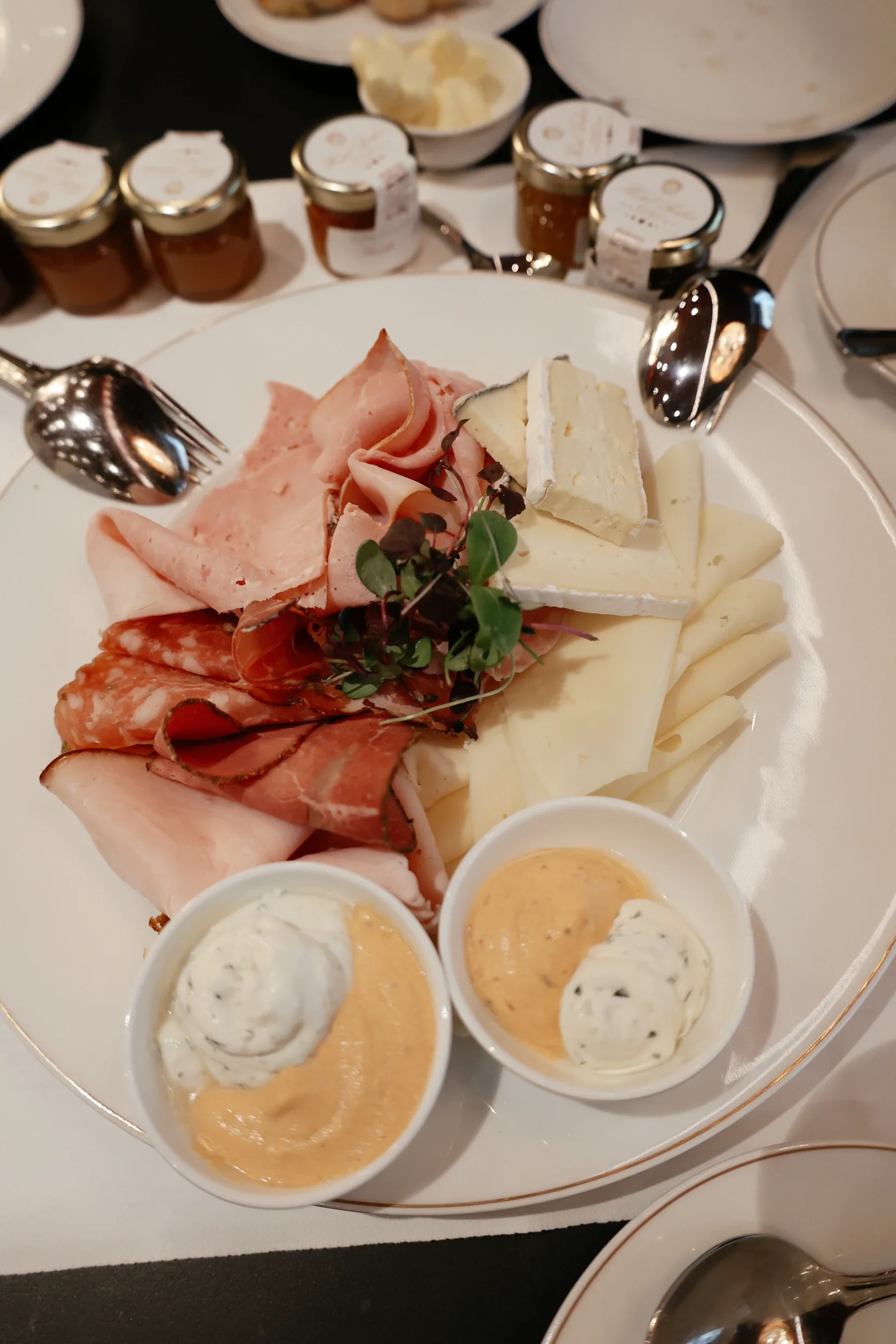
I ended up coming here on a few different days, and each visit felt a little different. Along with the Sachertorte, I tried their classic Sacher waffle, which was indulgent and comforting in the best way. On another visit, I went for the Viennese breakfast, perfect for a slow morning, and on a separate day I ordered the white catfish with braised celery, hazelnuts, and lime sauce—a surprisingly refined and well-balanced dish that showed there’s much more to Café Sacher than just dessert. And of course, every visit included a latte.
Touristy? Yes. But there’s a reason it’s famous. Café Sacher manages to feel timeless, and sitting there—whether for cake, breakfast, or a full meal—really does feel like stepping into a classic piece of Vienna’s café culture.
Café Central
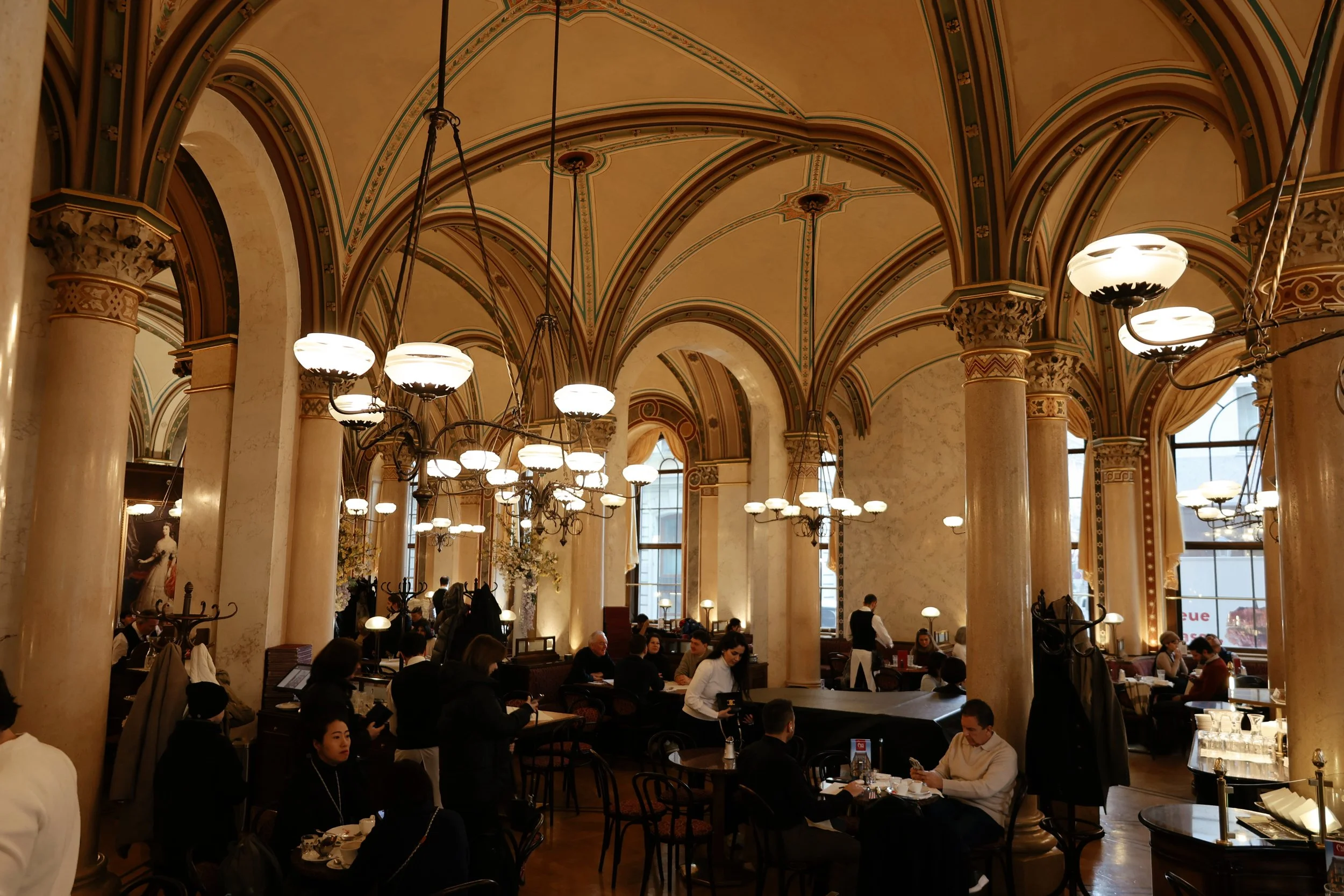
Walking into Café Central genuinely feels like stepping into another era. The grand architecture, soaring ceilings, and elegant atmosphere make it easy to imagine the writers, thinkers, and artists who once sat here for hours at a time. It’s classic Vienna in the most timeless way.
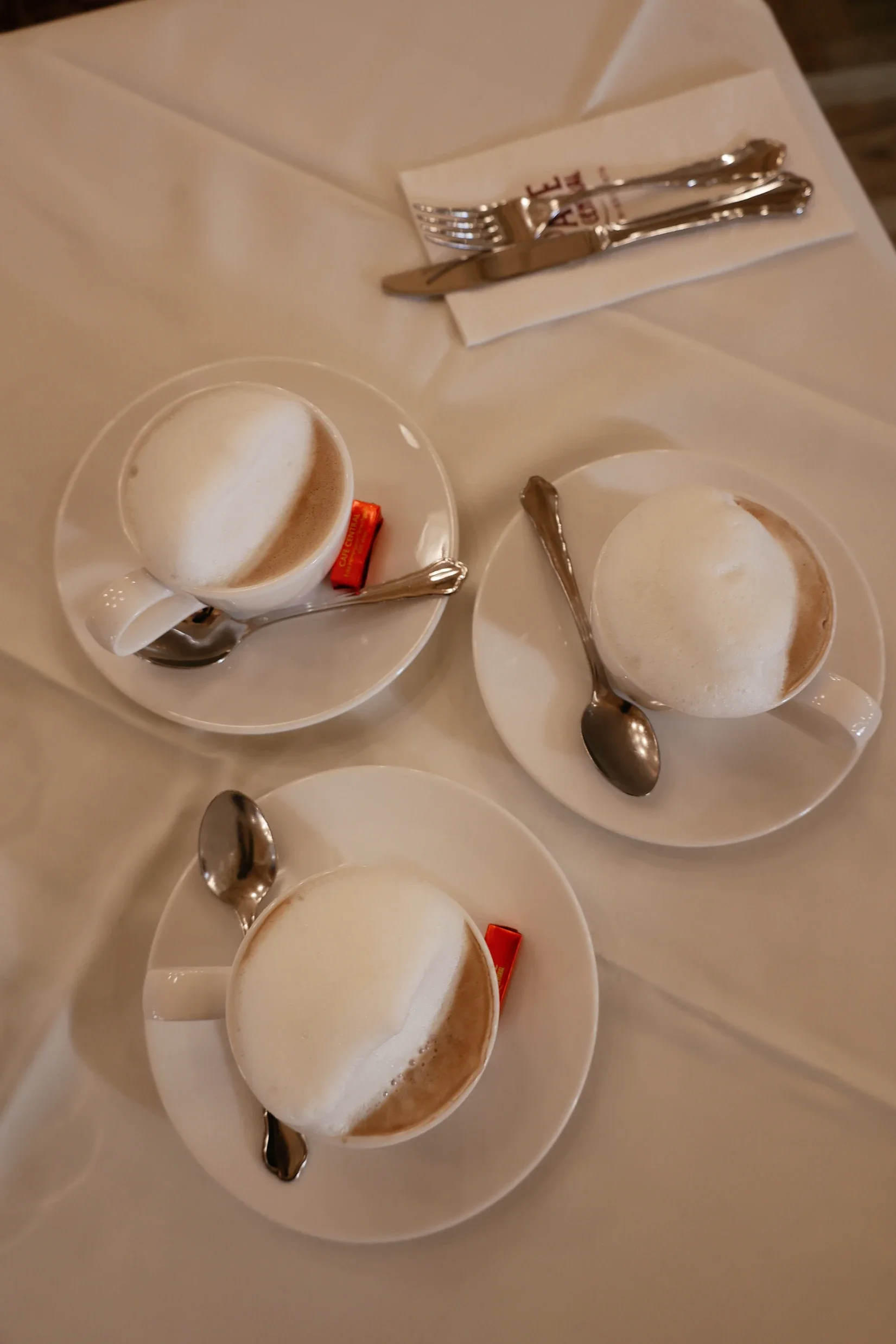
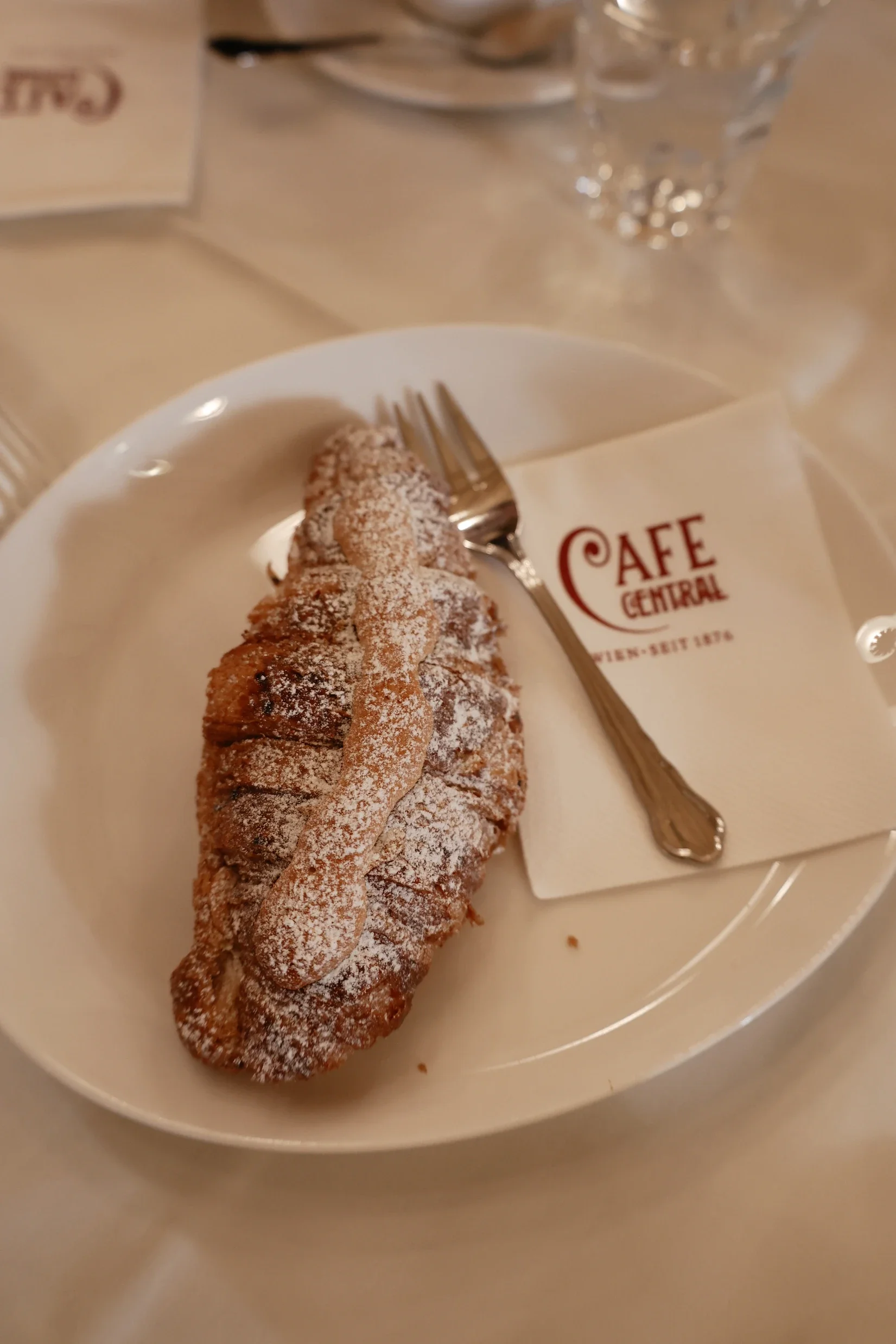
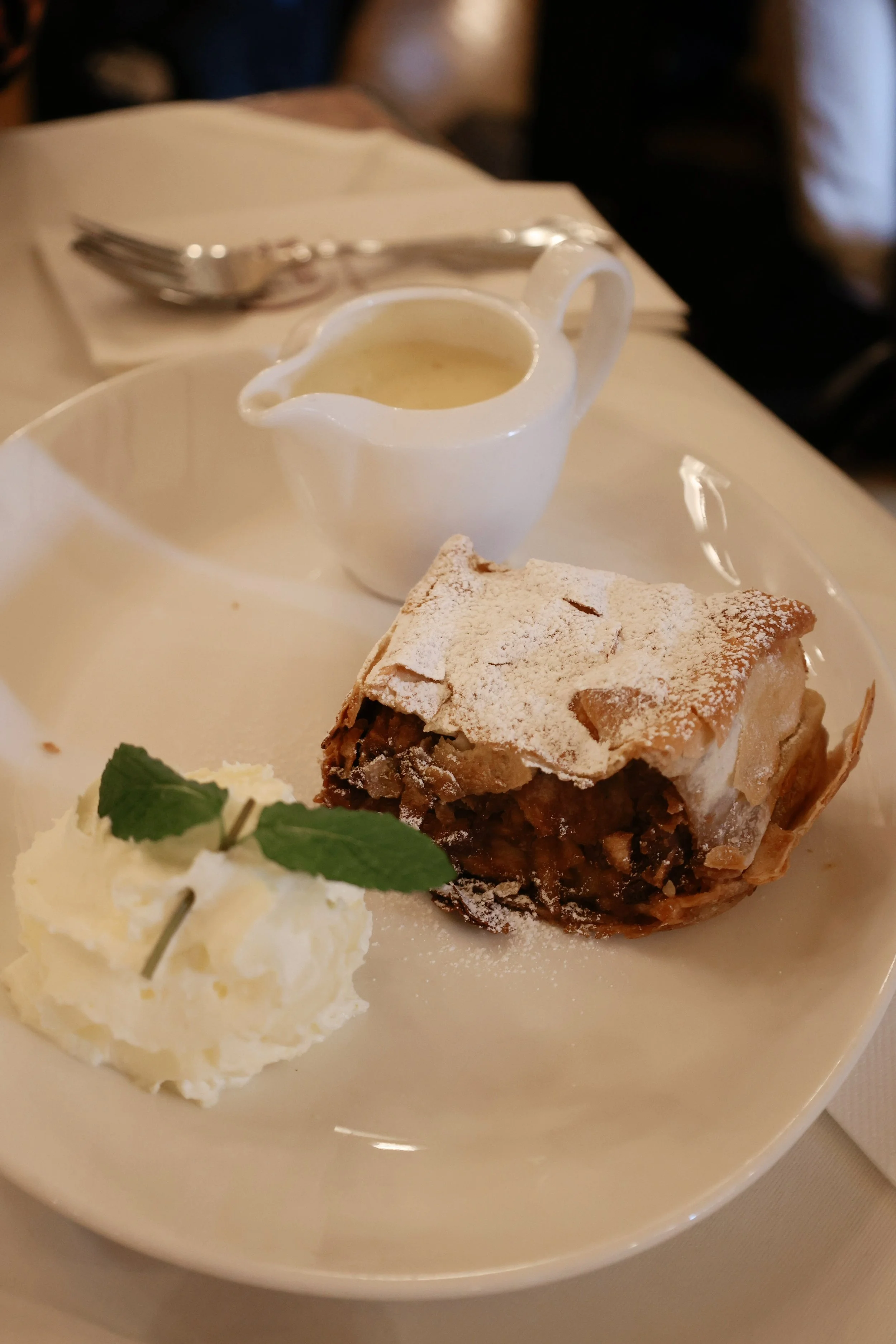
I kept it simple and perfect—a latte, a croissant, and of course the apple strudel, which is an absolute must here. The strudel was warm, lightly spiced, and exactly what you hope for when ordering such a traditional Austrian dessert. Yes, it’s popular and well known, but sitting there with coffee in hand, surrounded by all that history, makes it feel completely worth it.
Café Schwarzenberg
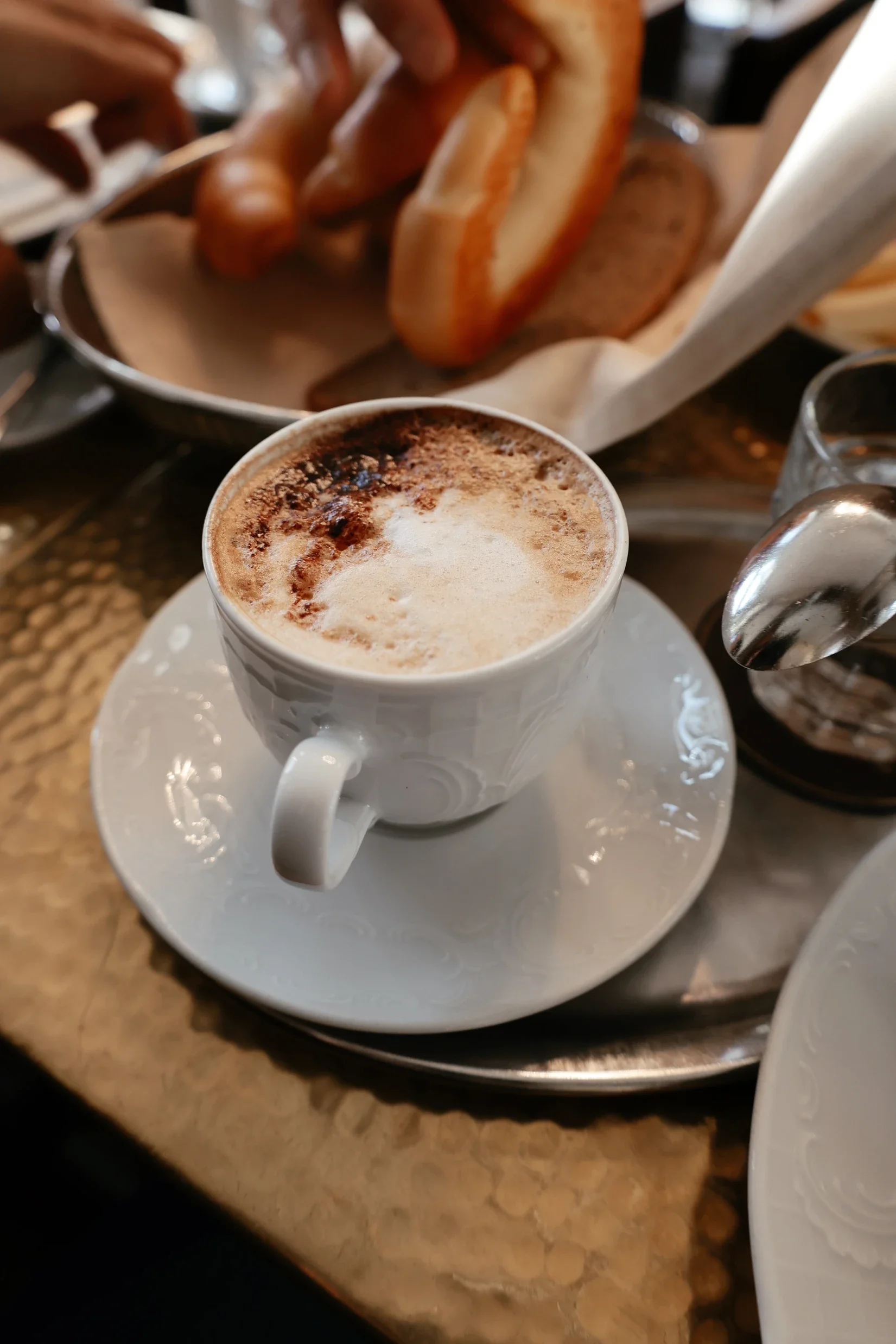
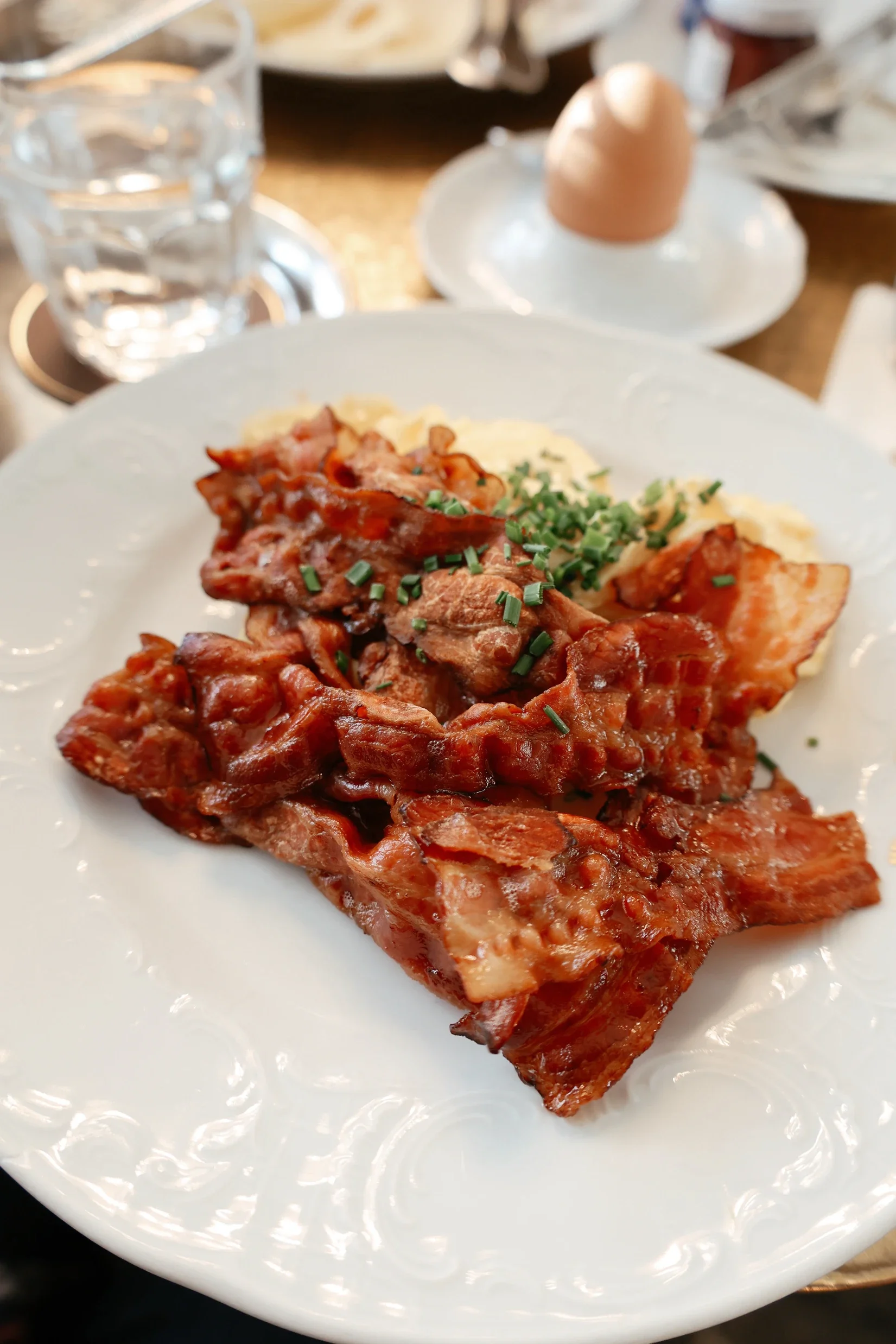
Café Schwarzenberg is one of Vienna’s oldest coffeehouses, and it really wears that history beautifully. The elegant décor, mirrored walls, and old-world atmosphere make it the kind of place where time slows down and lingering is encouraged. I stopped in for a latte and an omelette with bacon, and it was simple, comforting, and exactly what I wanted. It’s a great spot to sit for hours—whether you’re people-watching, journaling, or just soaking in the classic Viennese café culture with coffee and pastries within reach.
Café Landtmann
Café Landtmann is one of those classic Viennese cafés that effortlessly appeals to both locals and visitors. The atmosphere feels polished yet relaxed, and the pastry selection alone is reason enough to stop in. I ordered the Apfelstrudel, and it was exactly what you hope for—warm, comforting, and perfectly balanced with just the right mix of sweetness and spice. Paired with coffee, it’s the kind of simple pleasure that makes Vienna’s café culture so special and easy to fall in love with.
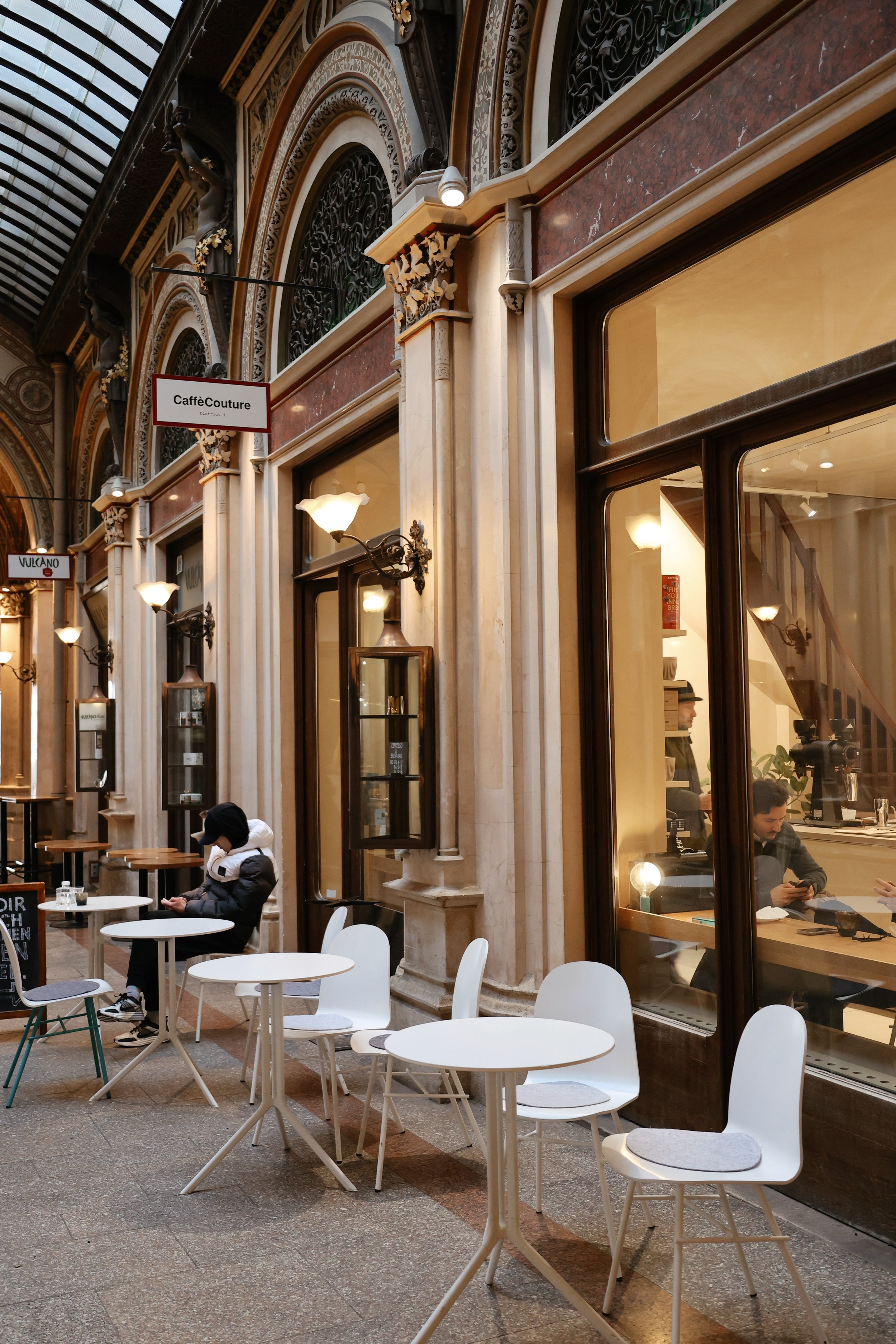
Caffè Couture
Caffè Couture is a great stop if you appreciate really good coffee without any distractions. The space is minimalist and modern, letting the focus stay where it should—on quality beans and expertly brewed drinks. Everything feels intentional, from the design to the way the coffee is made. If you’re a coffee enthusiast who enjoys clean flavors and well-executed brews, this is the kind of place you’ll want to seek out while exploring Vienna.
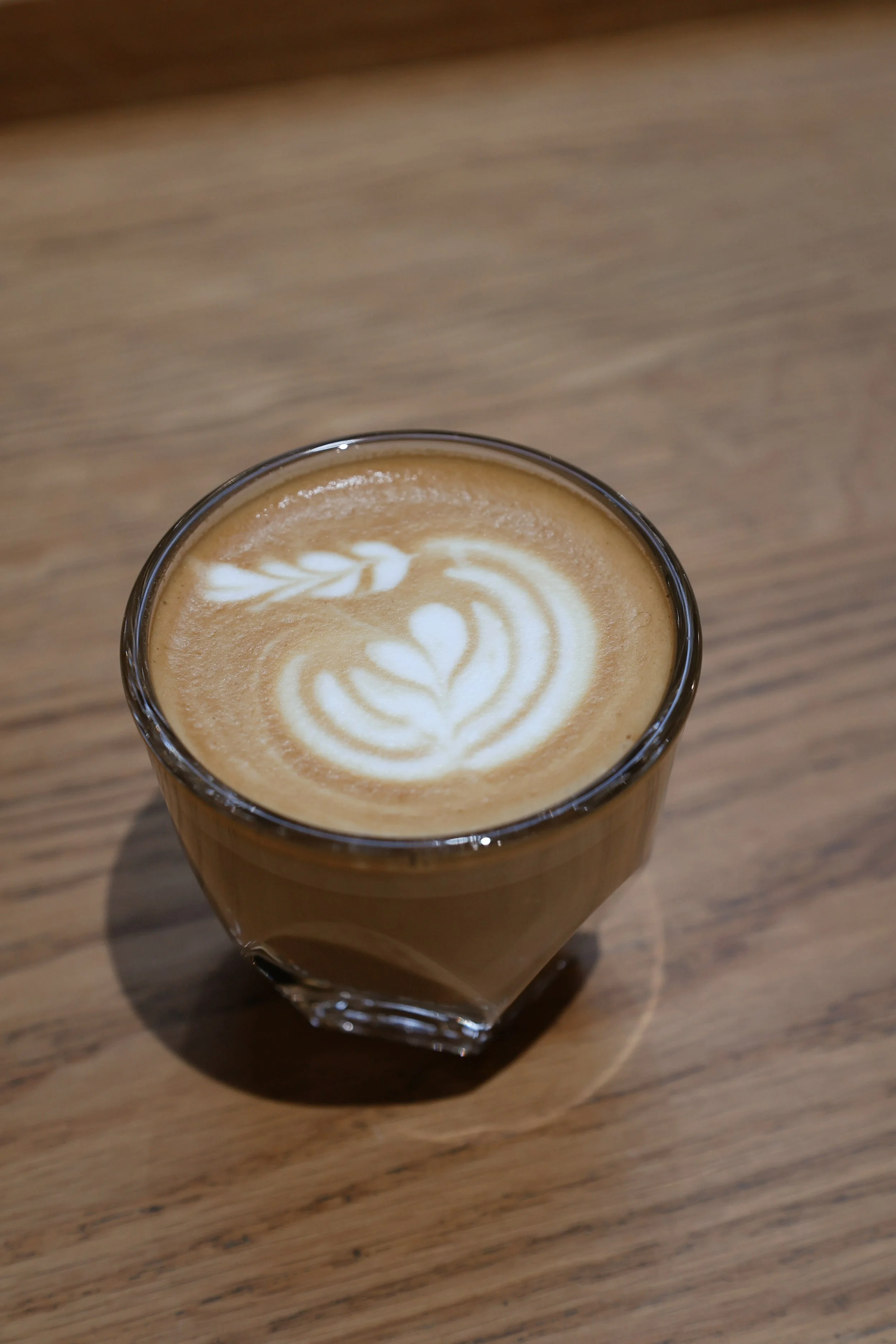
Elias Coffee Shop
Elias Coffee Shop is one of those cozy spots that instantly makes you want to slow down. It’s perfect for a relaxed afternoon break, especially when you need a moment away from the busy streets. Their selection of cakes and artisanal coffees feels comforting and thoughtful, making it an easy place to linger with a warm drink in hand.
Caffè a Casa
Caffè a Casa is a must for serious coffee lovers. Specializing in beans from around the world, this café offers a more hands-on, educational experience. The staff were incredibly knowledgeable and happy to guide me through their diverse selection, which made the visit feel personal and memorable. It’s a great stop if you’re curious about different coffee profiles and enjoy learning as much as tasting.
Where to Stay in Vienna, Austria
For my time in Vienna, I chose a beautifully appointed Airbnb that put me right in the heart of the city—close to cafés, museums, and historic streets that were perfect for wandering. It felt like living in the city rather than just visiting, and it made mornings and evenings feel effortless. If you’re more into a hotel experience or want to treat yourself, here are some fantastic options that are centrally located and offer comfort, style, and excellent service.
Hotel Sacher Wien
Staying at Hotel Sacher feels like stepping straight into Vienna’s history. Everything about it is classic and polished, from the elegant interiors to the old-world service. Being right next to the Vienna State Opera and Kärntner Straße means you can walk almost everywhere, and coming back here at the end of the day feels special. And yes, having the original Sachertorte just downstairs never gets old.
The Guesthouse Vienna
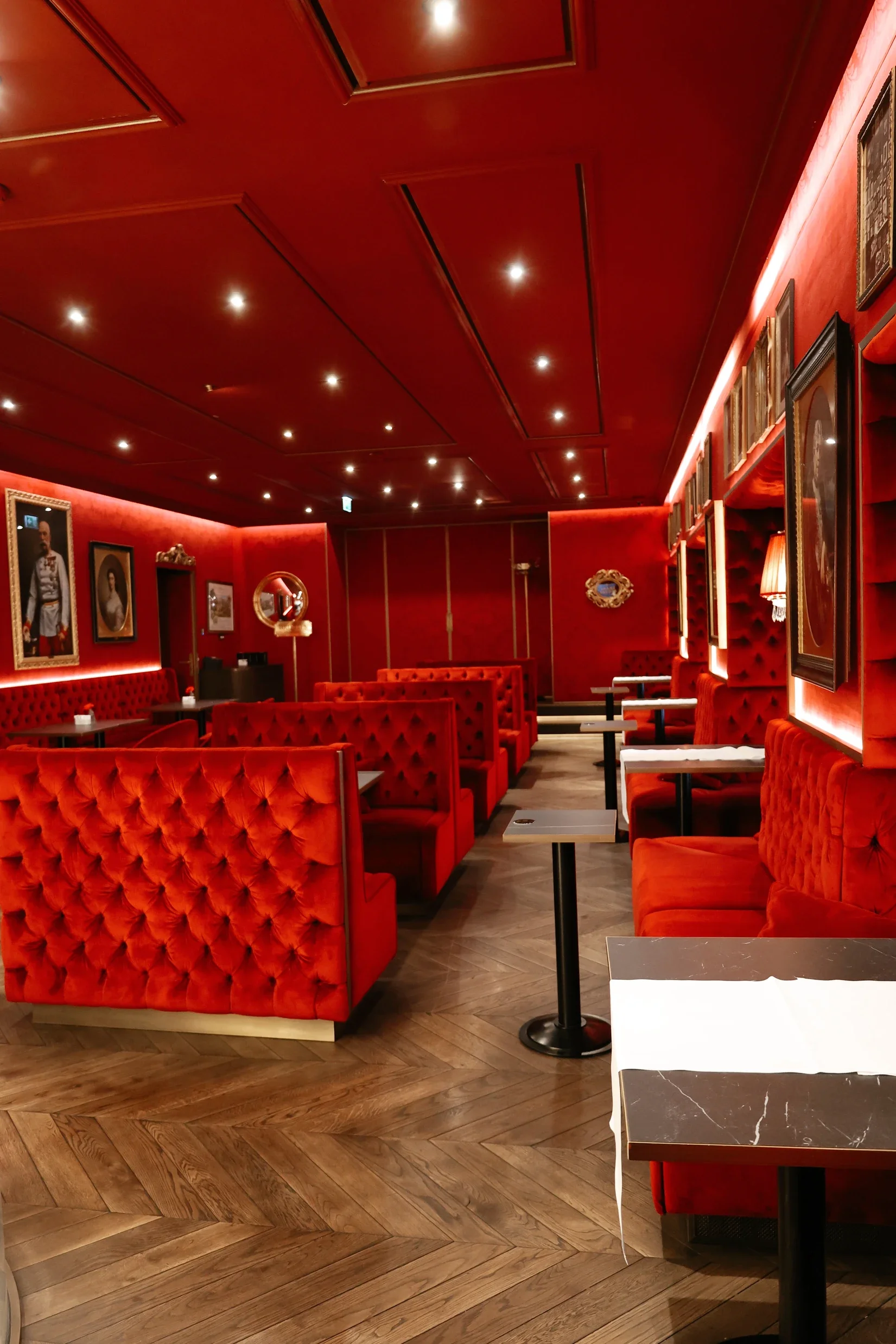
The Guesthouse Vienna is ideal if you like luxury that feels relaxed and modern rather than formal. The rooms are spacious and beautifully designed, and the location near the Albertina makes it incredibly easy to explore on foot. It’s the kind of place that feels calm and comfortable after a full day of museums, cafés, and walking—stylish without trying too hard.
Palais Hansen Kempinski Vienna
Palais Hansen Kempinski has a quieter, more refined feel, perfect if you want something elegant and peaceful. The building itself is stunning, blending 19th-century architecture with modern luxury, and the spa is a huge plus if you want time to unwind. It feels like a true escape while still being close enough to the city center to get around easily.
Park Hyatt Vienna
Park Hyatt Vienna strikes a beautiful balance between historic and contemporary. Housed in a restored early 20th-century building, the rooms are elegant but not stuffy, and the spa is ideal after long days of sightseeing. Its central location makes it easy to pop in and out between shopping, museums, and coffee breaks, which is exactly how Vienna is meant to be enjoyed.
Best Time to Visit Vienna, Austria
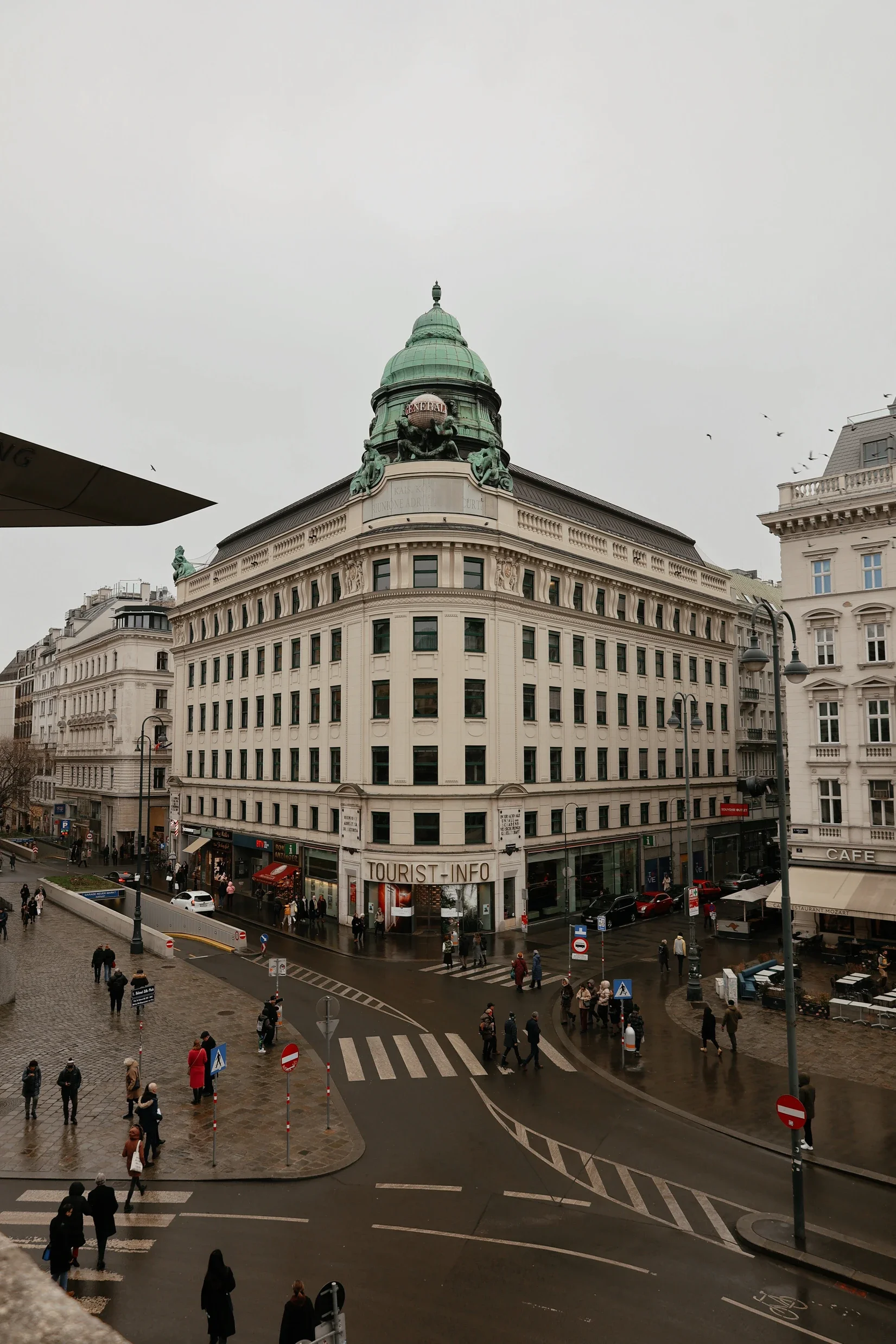
Vienna is truly a year-round destination, and each season brings its own personality. I’ve visited in both December and January, and while it’s cold, there’s something incredibly special about the city in winter. In December, Vienna feels festive and full of life, with Christmas markets, twinkling lights, and that cozy holiday energy everywhere you go. By January, the city slows down noticeably—streets feel quieter, museums are less crowded, and the elegant architecture looks even more striking when dusted with snow. Visiting in winter meant I could explore places like Schönbrunn Palace and the Kunsthistorisches Museum without the usual rush, and spend long afternoons warming up in cafés or attending classical concerts. It felt calm, intimate, and deeply atmospheric.
Spring, from March through May, is one of the most balanced times to visit. The city begins to wake up, flowers bloom, and palace gardens—especially around Schönbrunn and Belvedere—are at their most beautiful. The weather is mild, outdoor cafés start to fill up, and the crowds are still manageable compared to summer. It’s a great shoulder season, often with better flight and hotel prices, and the city feels lively without being overwhelming.
Summer, from June to August, brings energy and activity. Vienna hosts open-air concerts, film festivals, and events along the Danube Canal, and the long daylight hours make sightseeing easy. That said, it’s also the busiest and most expensive time to visit. If you enjoy warm weather and a vibrant atmosphere, early summer—especially June—is a good compromise before peak crowds arrive.
Fall, from September through November, is one of Vienna’s most underrated seasons. The parks turn golden, the air becomes crisp, and the cultural calendar fills with opera and theater performances. It’s also a great time for wine lovers, as traditional Heuriger wine taverns come alive during harvest season. With fewer tourists and a slower pace, fall offers a more romantic, relaxed version of the city.
No matter when you visit, Vienna has a way of feeling thoughtful and timeless. Whether it’s glowing with holiday lights in December, peaceful in January, blooming in spring, or golden in fall, the city adapts beautifully to every season.
Vienna is the kind of city that doesn’t rush you—it invites you to slow down, look closer, and really take it all in. Whether you’re wandering through imperial palaces, lingering in a café for longer than planned, or letting an afternoon unfold without an agenda, Vienna has a quiet elegance that stays with you. It’s refined without feeling distant, historic without feeling frozen in time.
#vienna #viennaaustria #austria #visitvienna #visitaustria #travel #travelphotography #travelgram #travelguide #travelholic #traveltheworld #traveler #traveltoexplore #travelon #traveldestination #traveldiaries #travelblogger #traveltheworld #traveler #traveladdict #traveldestinations #travellover #womenwhotravel #womenwhoexplore