Some cities impress you from a distance. Others quietly pull you in and never really let go. Prague did both for me. From the moment I arrived, it felt like I’d stepped into a living storybook—red-tiled rooftops stretching in every direction, the Vltava River winding effortlessly through the city, and Gothic cathedrals standing tall like they’ve seen it all. In the evenings, centuries-old pubs glowed softly, the kind of places that invite you to slow down, warm up, and linger just a little longer. Every narrow alley seemed to carry its own memory, its own secret.
I couldn’t have picked a more meaningful place to begin my 30th birthday trip. Prague was my first stop, and it set the tone in the most magical way. Visiting in January meant crisp winter air, quieter streets, and a calm, almost cinematic stillness that made the city feel deeply personal. Wrapped in a coat, wandering under that soft winter light, it felt as though Prague had paused—just long enough for me to take it all in.
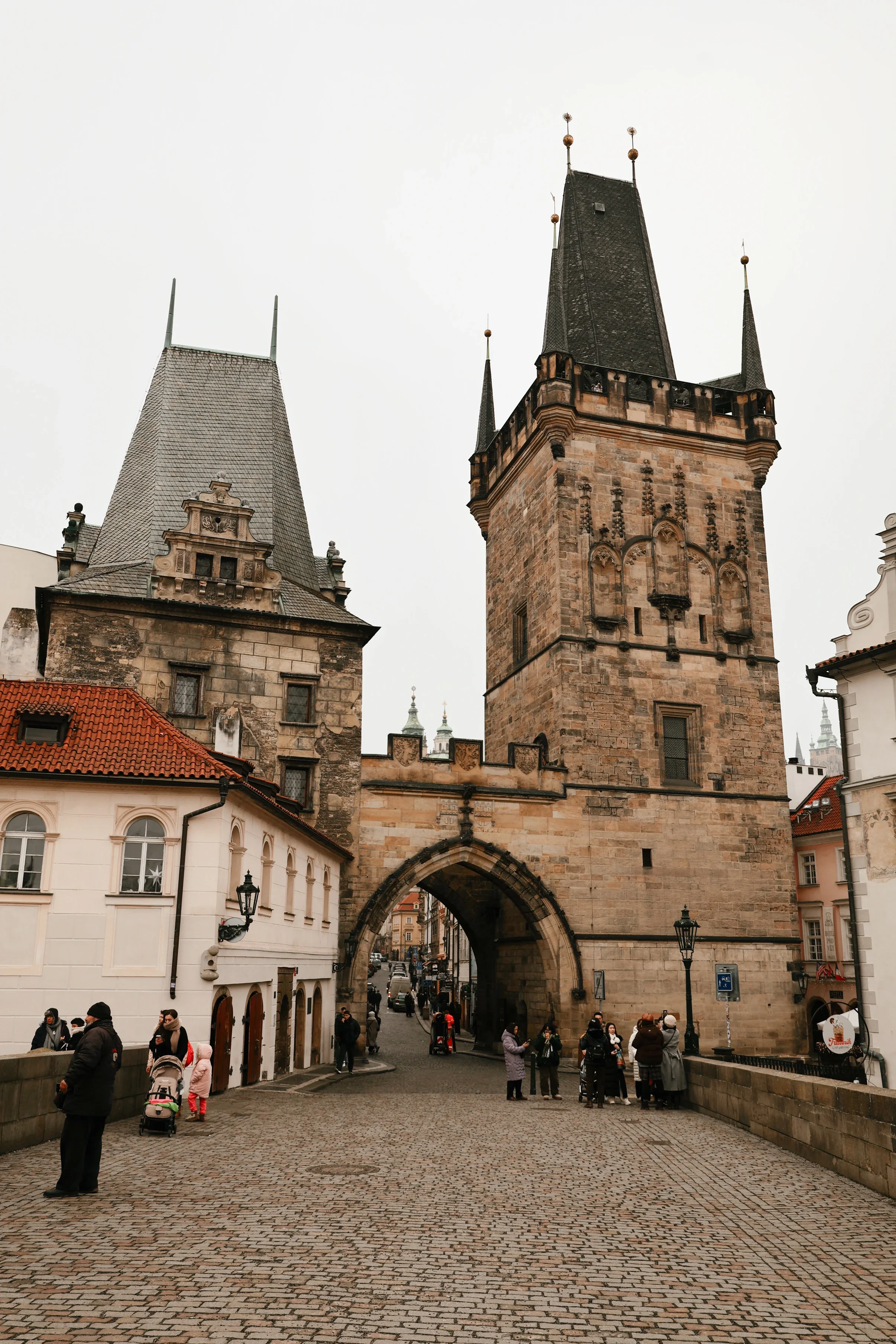
Getting to Prague, Czech Republic
By Plane
Flying into Prague is refreshingly easy. You’ll land at Václav Havel Airport Prague, the city’s main international airport, and from there you’re only about 30 minutes from the city center. The airport is clean, well-organized, and doesn’t feel overwhelming—always a win after a long travel day.
By Uber (What I Used)
I didn’t rent a car, and honestly, I never felt like I needed one. I relied on Uber when I wanted the easiest option, especially arriving from the airport. It was affordable, smooth, and way less stressful than dealing with taxis. My Uber from the airport into the city cost around $25–$35 USD, which felt completely worth it after a flight.
Bolt is another popular ride-sharing app in Prague and is often slightly cheaper, so it’s worth having both downloaded.
Important tip: Skip street-hailed taxis. Overcharging tourists still happens. If you do take a taxi, stick with reputable services like AAA Taxi or Liftago (Prague’s local Uber-style app).
By Public Transport (Budget-Friendly & Efficient)
Prague’s public transportation system is excellent—easy to use, reliable, and very affordable.
Airport Express Bus (AE): The quickest public option. It takes about 35 minutes to reach the main train station (Hlavní nádraží), no transfers required, and costs around $3.50 USD (100 CZK).
Bus 119 + Metro: Take Bus 119 to Nádraží Veleslavín, then hop on Metro Line A straight into the city. Total travel time is about 35–40 minutes.
Bus 100 + Metro: If you’re staying near Anděl or Smíchov, Bus 100 takes you to Zličín, where you’ll connect to Metro Line B.
Public Transport Ticket Prices:
30-minute ticket: 30 CZK (~$1.30 USD)
90-minute ticket: 40 CZK (~$1.75 USD)
24-hour pass: 120 CZK (~$5.25 USD)
72-hour pass: 330 CZK (~$14.50 USD)
Important tip: Don’t forget to validate your ticket before boarding. Prague uses an honor system, but inspectors do random checks. Tickets need to be stamped at the yellow machines—if not, fines can be steep (around 1,000 CZK / $45 USD).
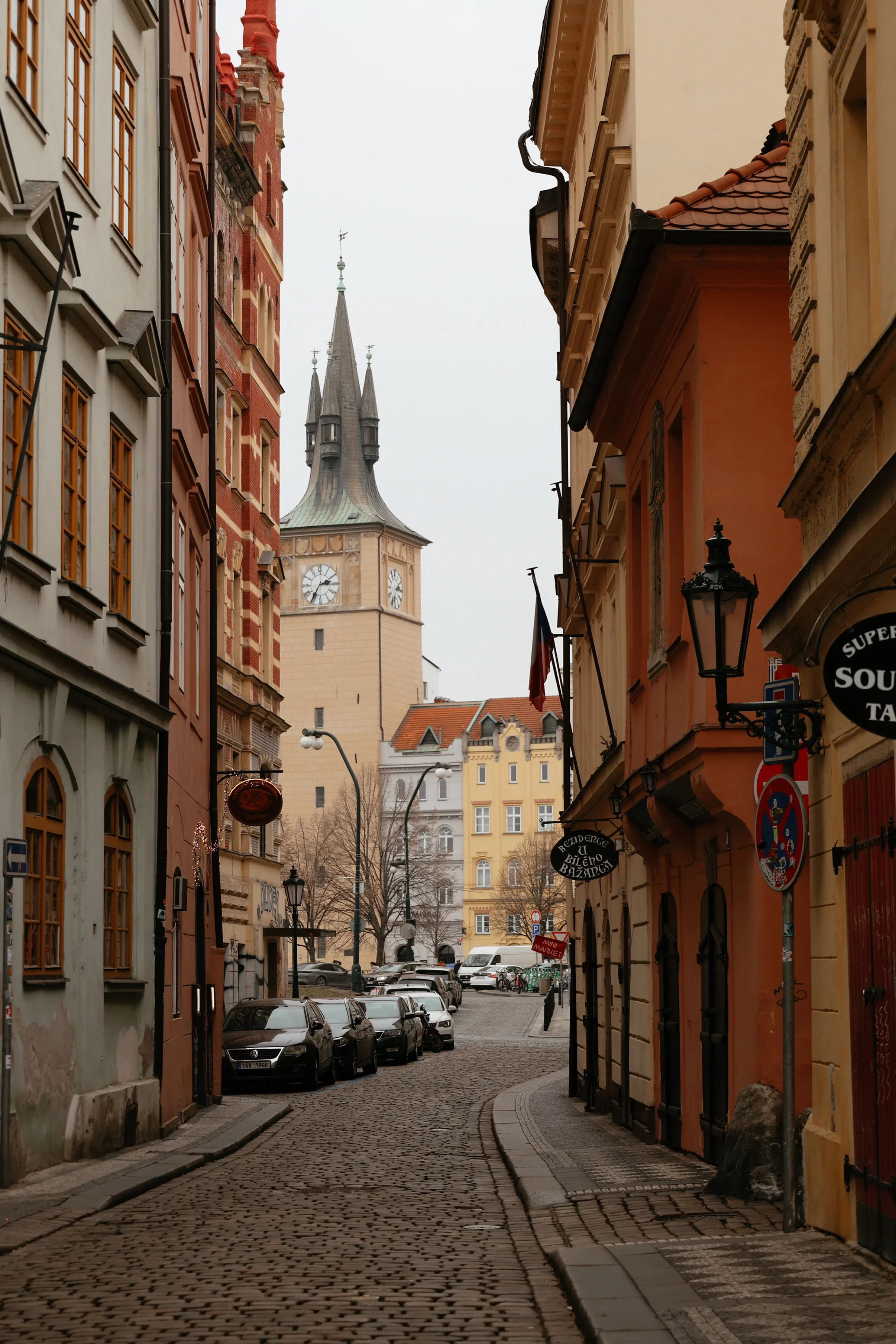
Getting Around Prague, Czech Republic
Honestly? Prague is a walker’s dream. The city is wonderfully compact, and most major sights sit within a comfortable 15–20 minute walk of each other. I spent most of my time exploring on foot—letting myself wander, taking in the architecture, and stumbling across quiet streets and little corners that weren’t on my itinerary but ended up being some of my favorite moments. For spots that were a bit farther out, like Vyšehrad or Letná Park, I simply grabbed an Uber or Bolt. Rides were always quick, affordable, and hassle-free. And if you want to move around like a local, Prague’s trams and metro are incredibly easy to use—and very budget-friendly.
Public Transport Tips:
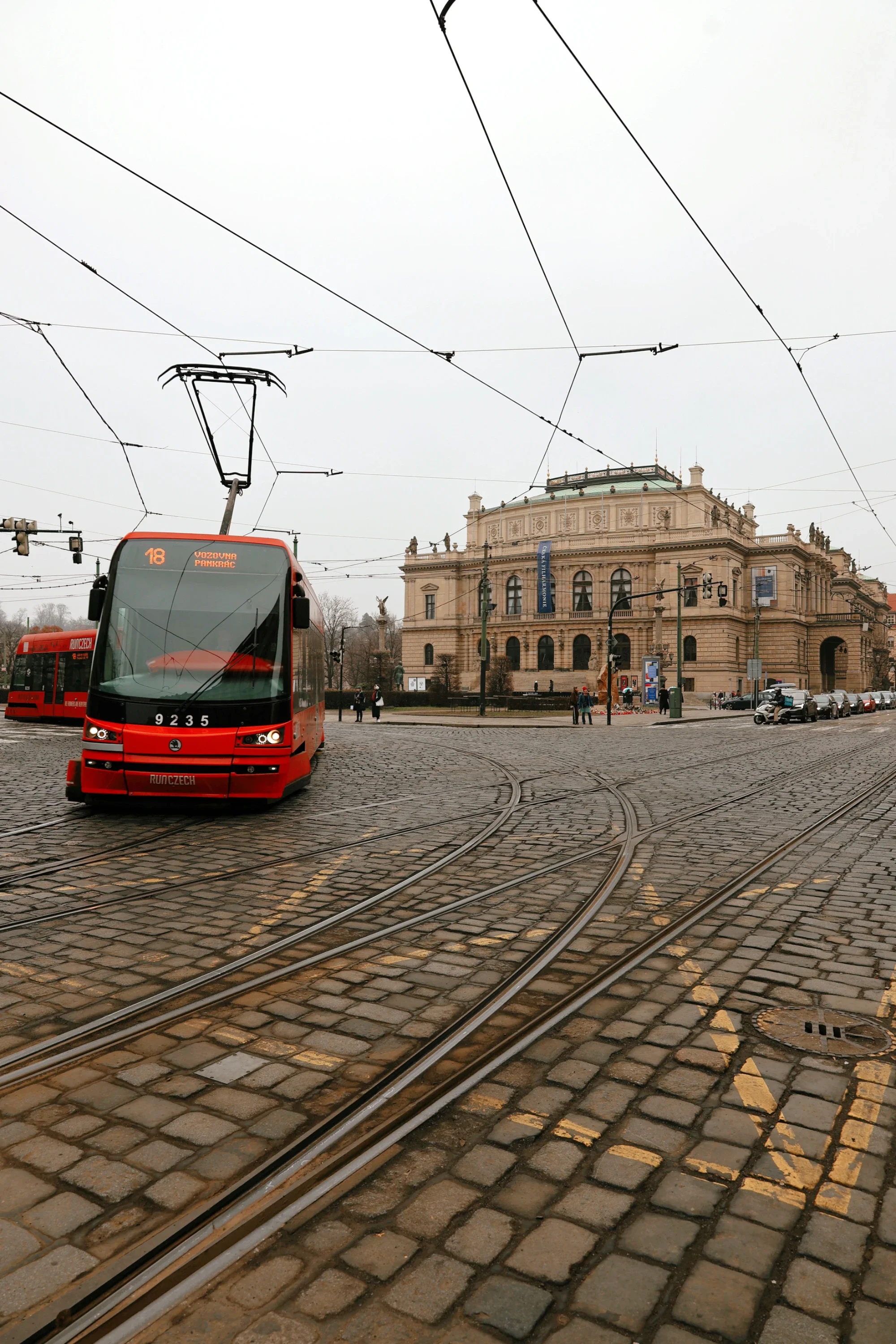
Trams are hands down the best way to experience the city. They run often, are easy to navigate, and some routes are genuinely scenic. Tram 22 is especially popular—it winds through Old Town, Malá Strana, and climbs toward Prague Castle, offering beautiful views along the way.
Metro is fast and efficient, though if you’re staying centrally, you may not even need it most days.
Night trams (12:00–5:00 AM) replace the metro after midnight. Look for routes numbered 91–99 if you’re out late.
Important tip: Be cautious with currency exchange. Avoid touristy exchange offices in the city center—they often come with poor rates and hidden fees. I recommend withdrawing cash from ATMs inside bank branches or using apps like Revolut or Wise for much better exchange rates. Most places accept credit cards, but having a little cash (CZK) on hand is helpful for small shops, cafés, and local markets.
Things to Do in Prague, Czech Republic
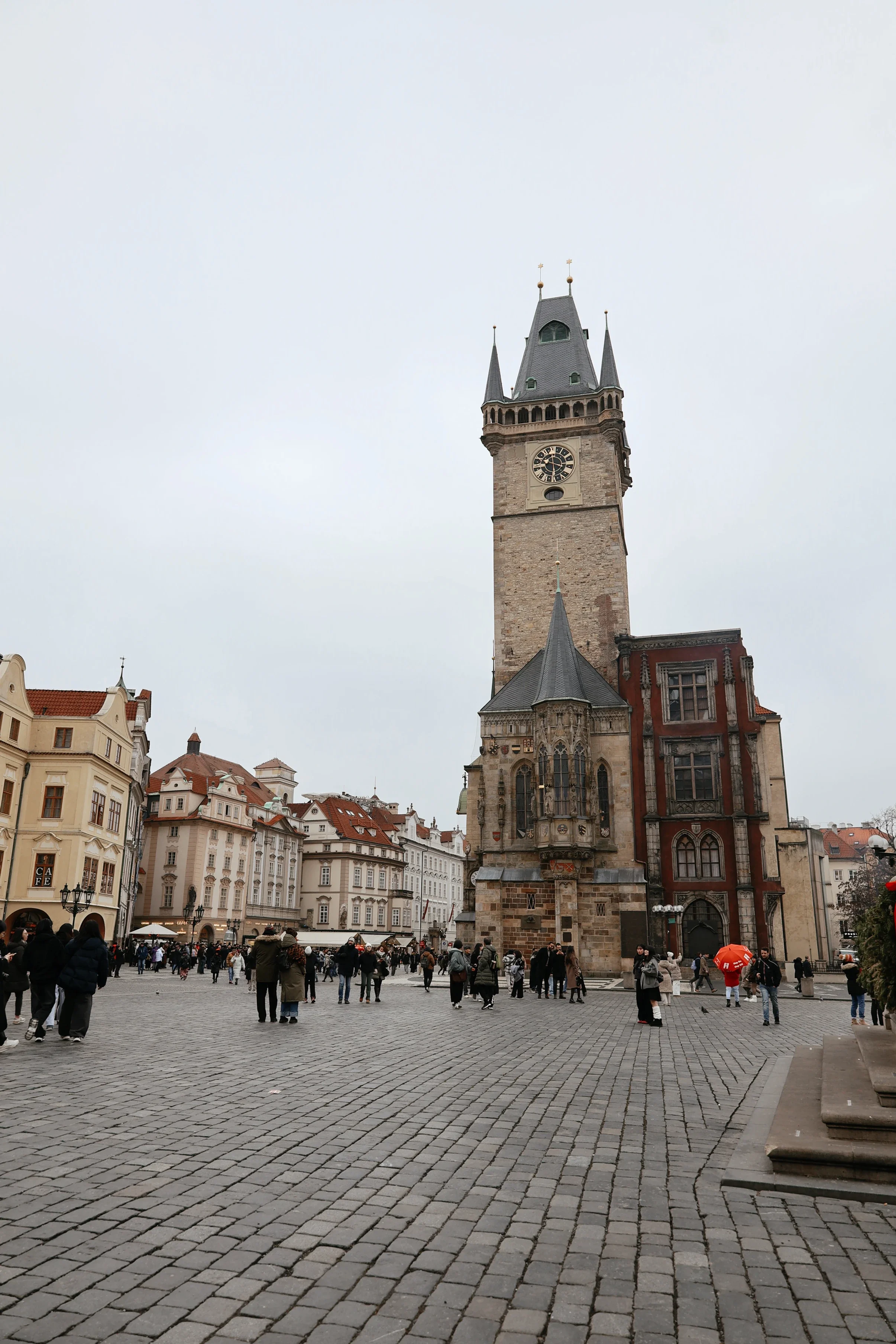
Old Town Square & the Prague Astronomical Clock
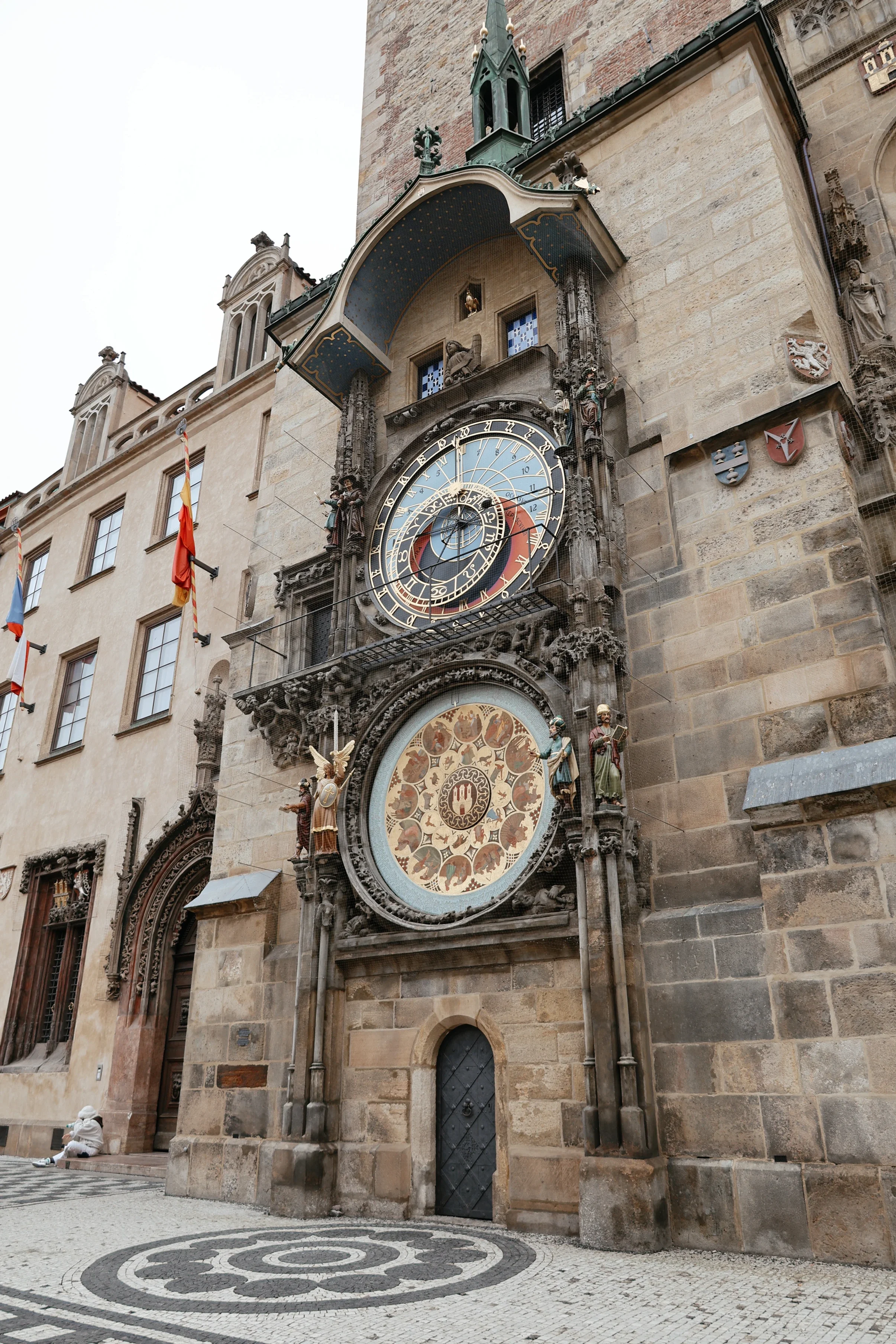
There’s really no way to visit Prague without finding yourself in Old Town Square at some point. It’s the city’s historic heart, framed by pastel-colored buildings, outdoor cafés, Gothic churches, and one of the most iconic clocks in the world. The Astronomical Clock draws a crowd every hour as people gather to watch the small mechanical figures emerge, but honestly, what stayed with me most was seeing it up close. The golden celestial dials, zodiac symbols, and intricate medieval details are stunning, especially when you take a moment to slow down and really look at it. Even with people passing by, there’s something grounding about standing there, surrounded by centuries of history.
A little tip from my experience: try to visit early in the morning or later at night. The square feels completely different without the crowds—quieter, more intimate, and much easier to appreciate.
Charles Bridge
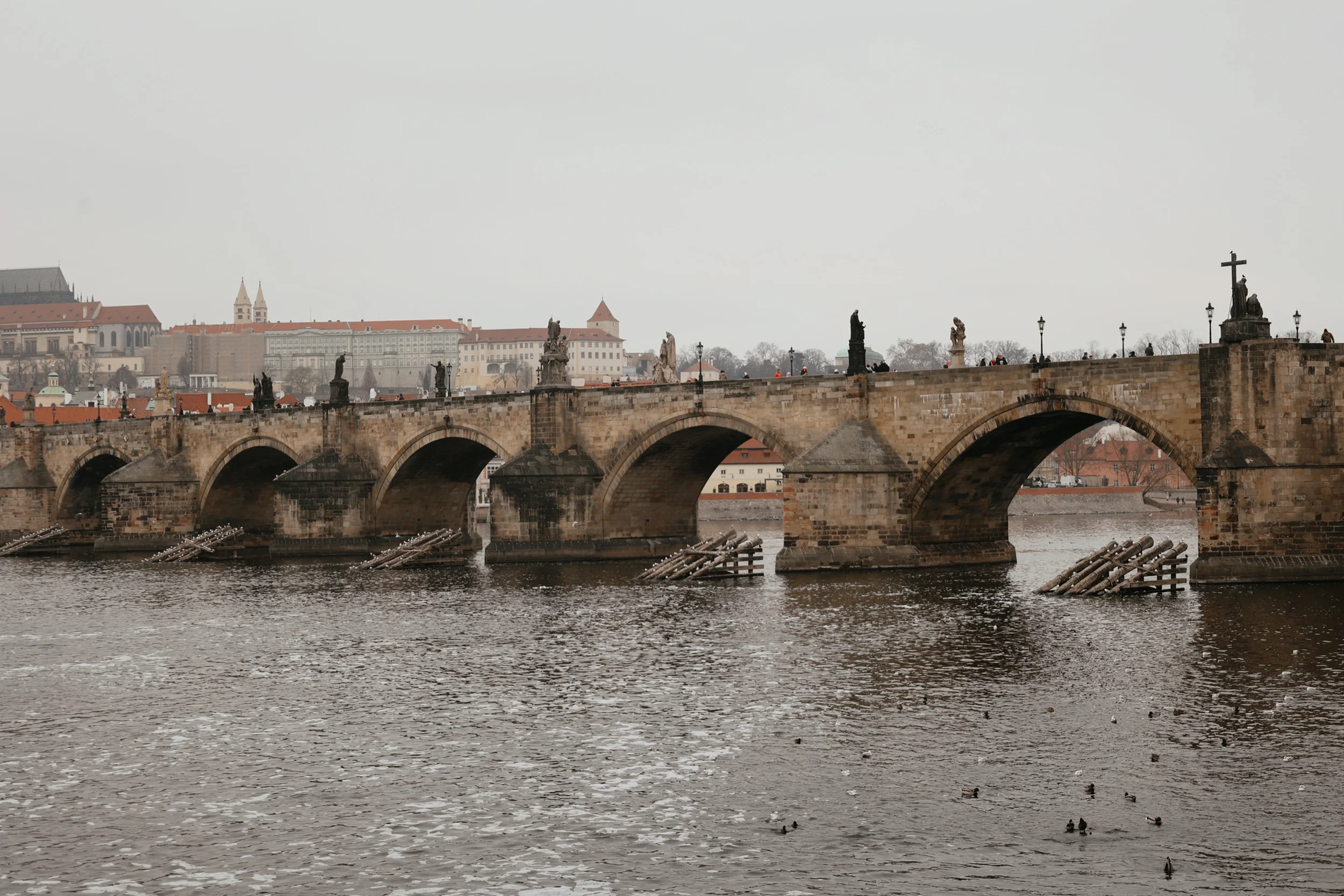
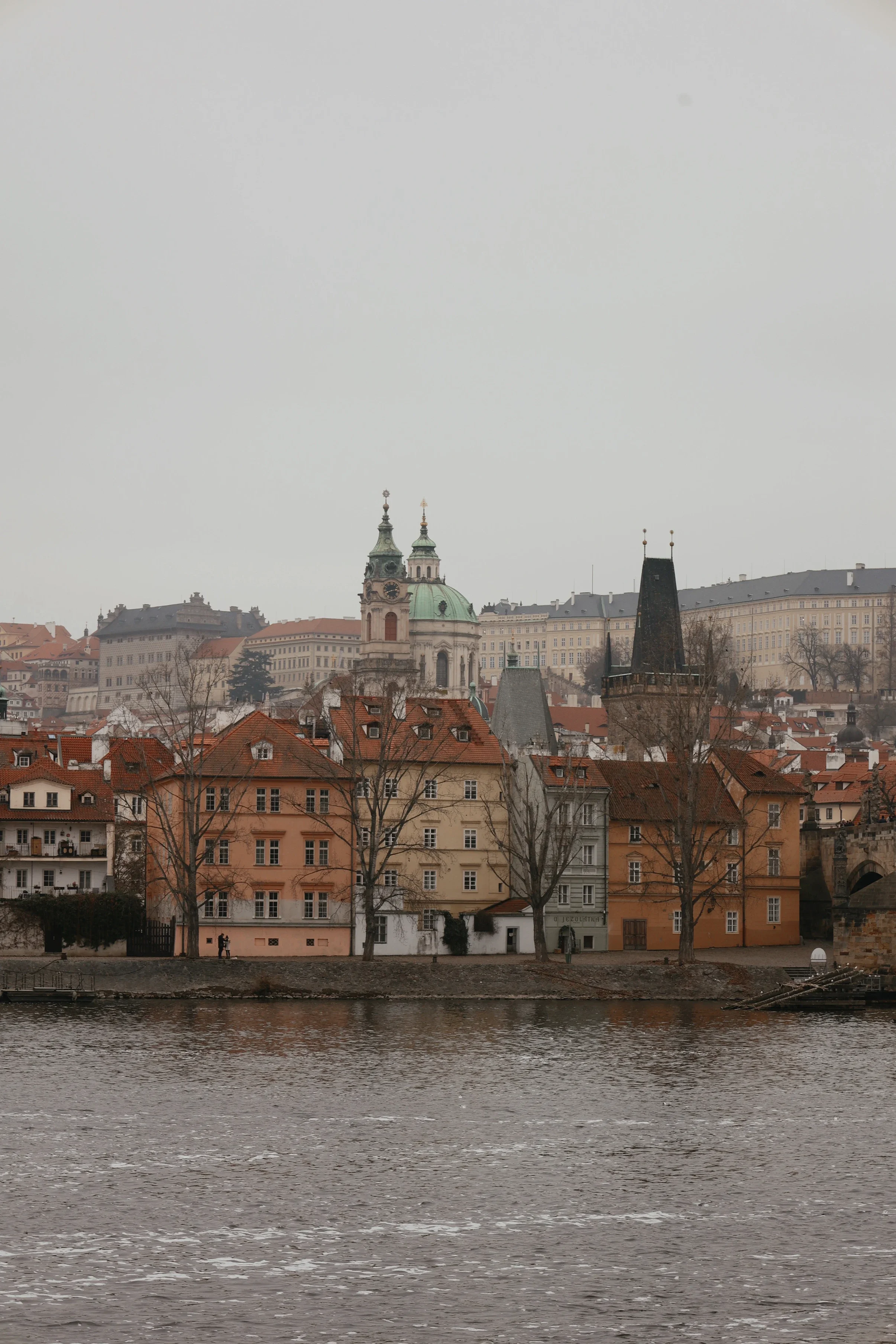
Walking across Charles Bridge feels like a Prague rite of passage—but here’s the secret: go at sunrise. Seeing the soft golden light hit the statues while the Vltava River sat below in a light morning mist felt almost unreal, like the city was slowly waking up just for those of us there early enough to see it. The bridge dates back to the 14th century and is lined with 30 baroque statues. One of the most well-known is St. John of Nepomuk—touching the plaque beneath his statue is said to bring good luck and guarantee a return to Prague. I couldn’t resist trying it, just in case. One thing most people don’t realize is that the statues you see today are actually replicas. The originals have been carefully preserved in the National Museum, helping protect them from weather and time.
A small tip that makes a big difference: aim to visit before 8 a.m. Without the crowds, the bridge feels quieter, more intimate, and honestly, a lot more magical.
Prague Castle
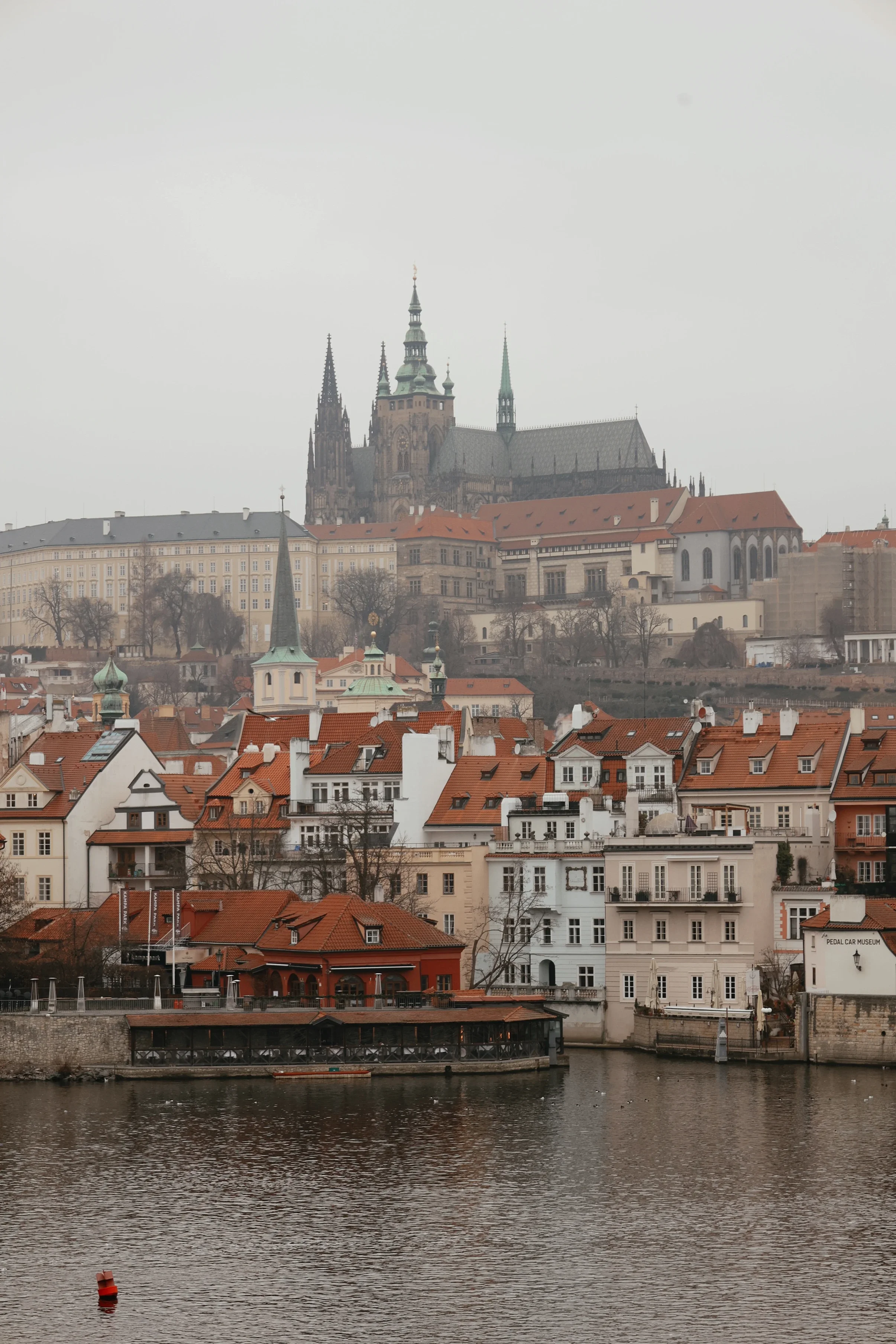
Prague Castle isn’t just a single castle—it’s an entire world of palaces, churches, towers, and historic buildings, all woven together into the largest ancient castle complex in the world. Walking through the grounds, I quickly realized this isn’t the kind of place you breeze through in an hour. It’s massive, layered with history, and full of spaces that each tell their own story.
Some areas are free to wander, while others require tickets, so it’s worth deciding ahead of time what you really want to see if you plan to explore beyond the courtyards.
Here are some of the highlights inside Prague Castle that stood out to me:
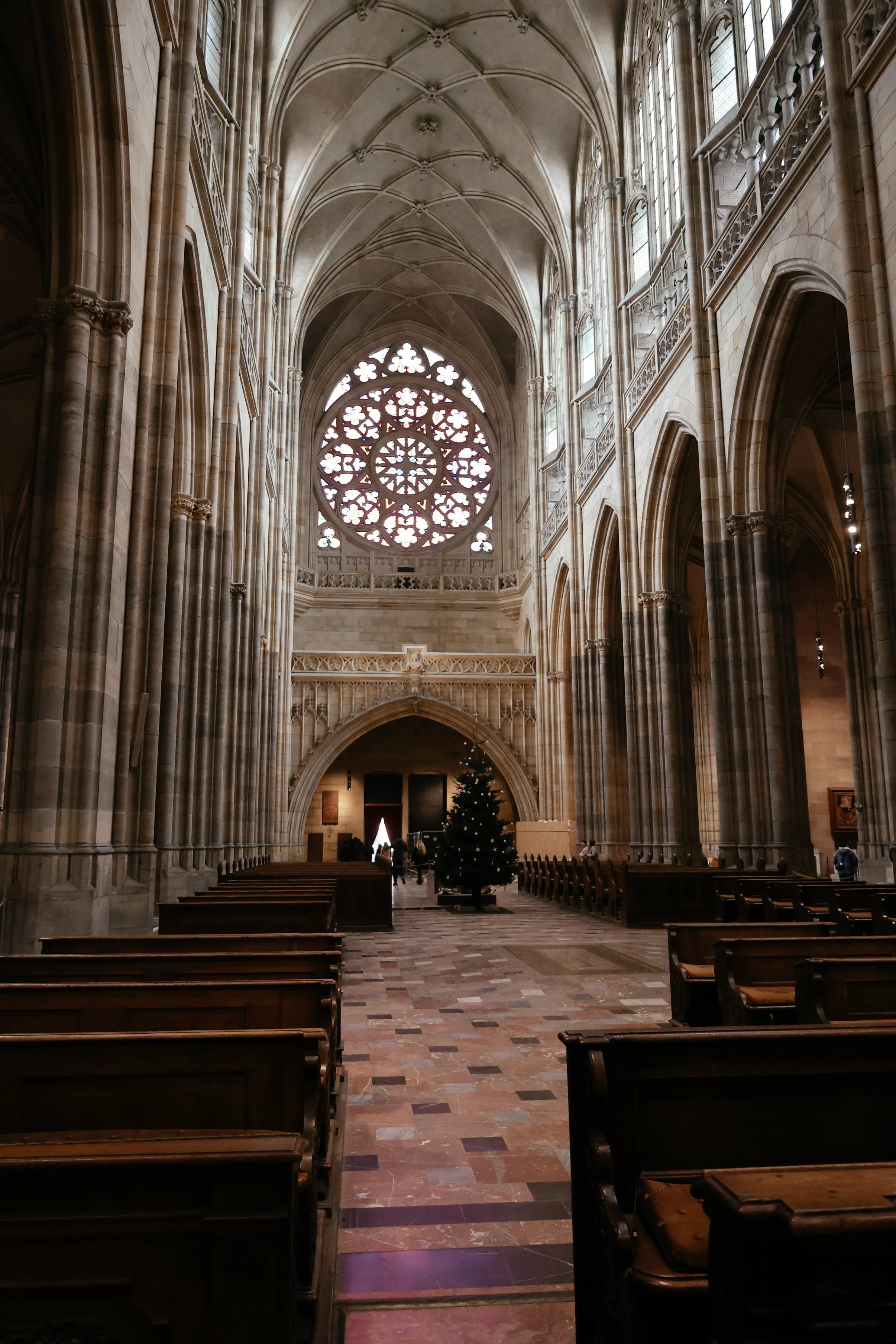
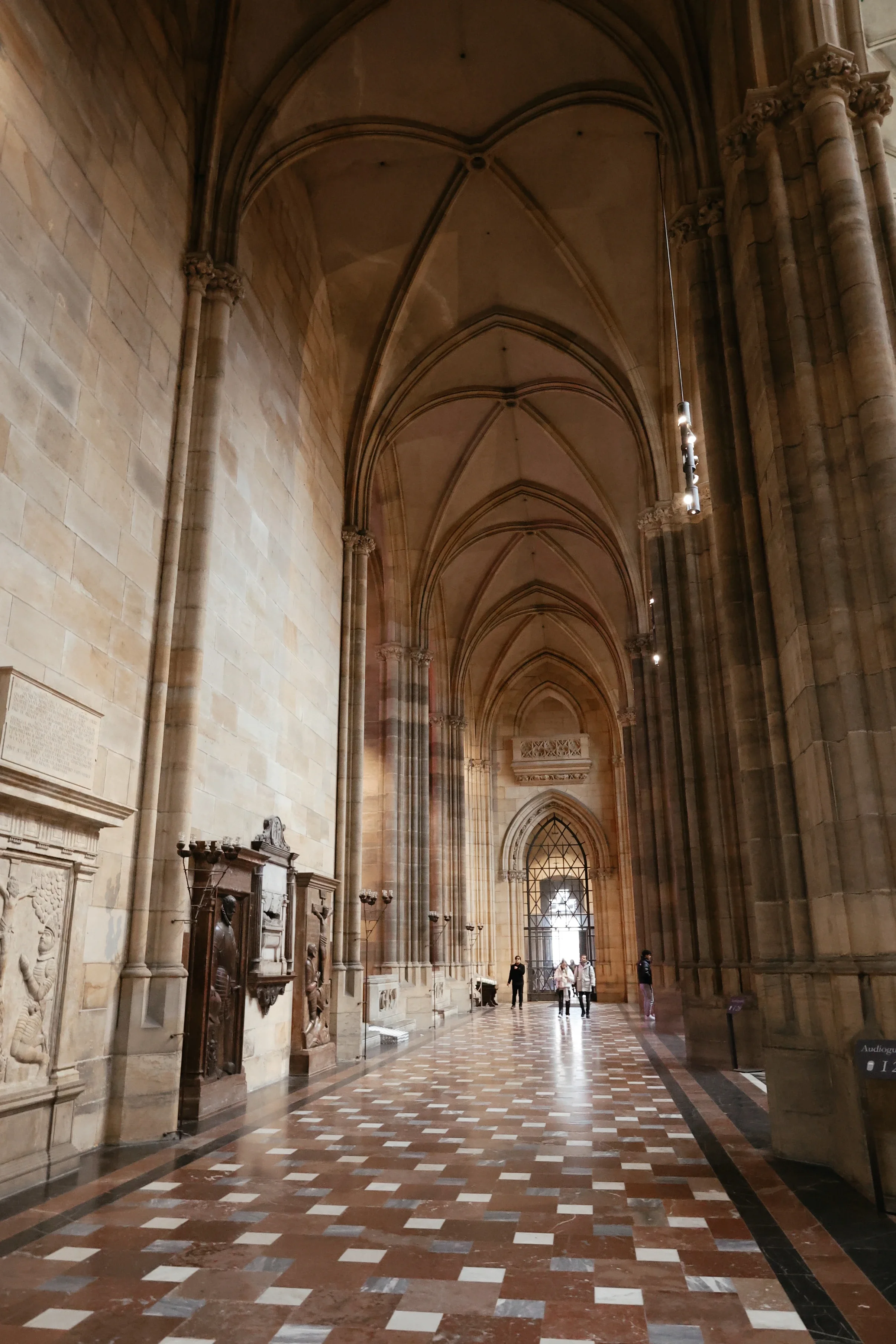
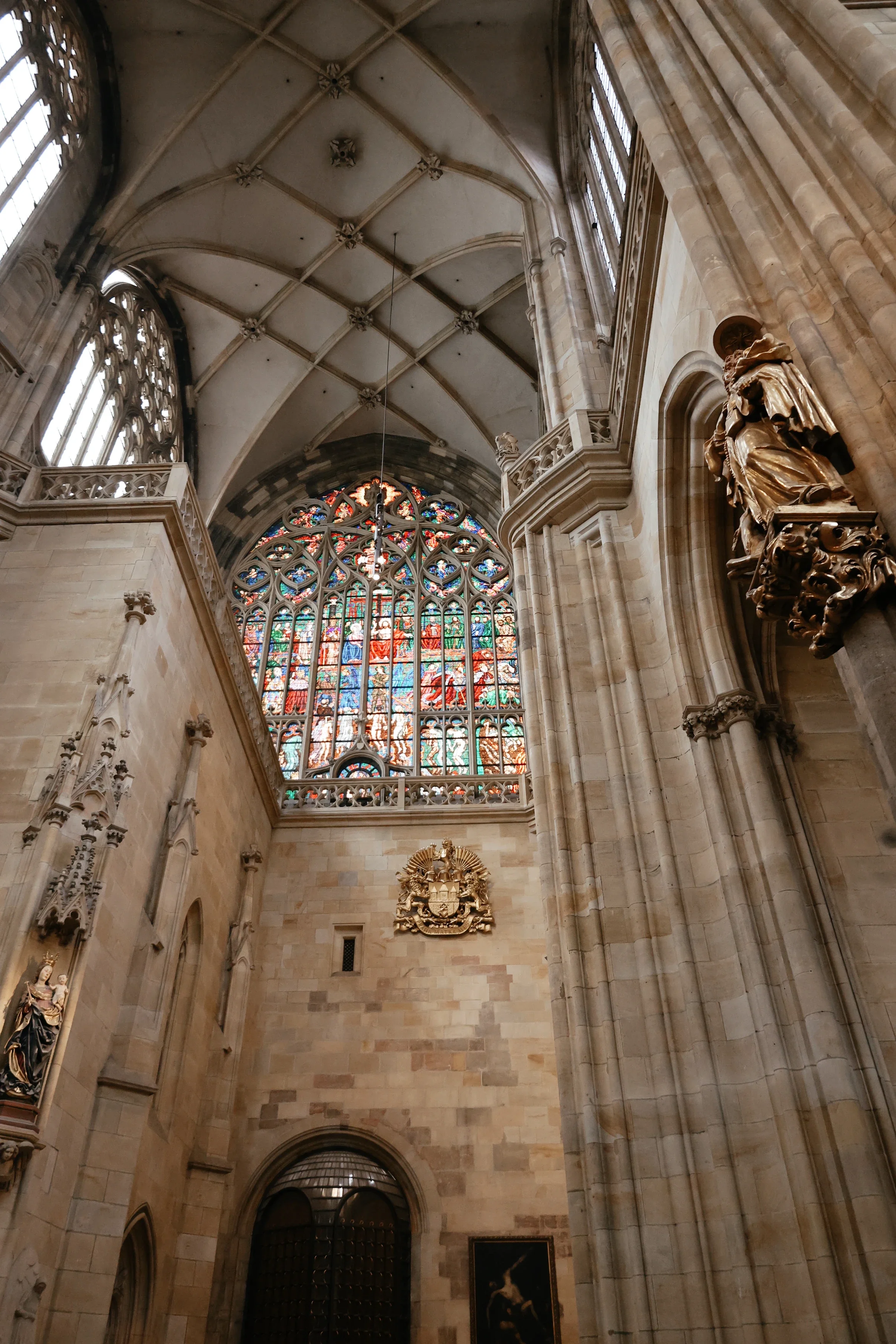
St. Vitus Cathedral – The most iconic landmark within the castle walls and a defining feature of Prague’s skyline. The stained glass windows, intricate chapels, and soaring spires are absolutely breathtaking and worth taking your time with.
Old Royal Palace – Once the seat of Czech kings. Vladislav Hall, with its enormous vaulted ceilings, feels especially grand and gives a real sense of the castle’s political past.
Golden Lane – A tiny, colorful street that feels straight out of a fairytale. It was once home to castle guards, alchemists, and even Franz Kafka for a short time.
St. George’s Basilica – One of the oldest churches in Prague, known for its striking red façade and beautifully preserved Romanesque interior.
The Story of Prague Castle – A great stop if you want deeper context. This exhibition walks through the evolution of the castle from medieval times to today.
Powder Tower - Mihulka – Once used for gunpowder storage, this tower offers a glimpse into Prague’s military history.
Picture Gallery at Prague Castle – Home to artwork from the castle’s historic collections, featuring pieces from the Renaissance and Baroque periods.
Rosenberg Palace – Formerly a residence for noblewomen, showcasing a more refined and domestic side of life within the castle walls.
Great South Tower of St. Vitus Cathedral – If you’re up for a challenge, the climb rewards you with one of the best panoramic views in Prague. Just be ready for 287 steps to the top.
A helpful tip: because the complex is so vast, it’s best to decide in advance what matters most to you. Some areas require separate tickets, and crowds can build quickly. Visiting early in the morning or later in the afternoon makes a big difference.
If you love history, you could easily spend half a day—or more—exploring Prague Castle. Every turn feels like stepping back into another chapter of the city’s past.
Petrin Hill & The Lookout Tower
For one of the best views in Prague, make your way up to Petřín Hill. It’s a calm, green escape from the city with gentle walking paths and a relaxed, almost local feel. At the top sits the Petřín Lookout Tower, which looks like a miniature version of the Eiffel Tower and offers sweeping views over the entire city. If you’re up for it, climbing the 299 steps to the top is totally worth it—the panoramic views stretch across Prague’s rooftops, bridges, and spires, and on a clear day, you can see surprisingly far. It’s one of those moments that really puts the city into perspective.
A little tip: if you’re not in the mood for the climb, take the funicular railway from Újezd. The ride itself is scenic and easy, and it drops you right near the top so you can enjoy the views without breaking a sweat.
The John Lennon Wall
Tucked away in Malá Strana, the John Lennon Wall is one of those places you kind of stumble upon—and end up staying longer than you planned. What began as a symbol of peaceful resistance during the communist era has turned into a constantly evolving canvas of street art, layered with meaning, memory, and creativity. I loved taking my time here, reading through the colorful messages, song lyrics, and political notes left by people from all over the world. It feels alive in the truest sense—always changing, always reflecting the moment.
A small tip if you want to join in: bring a marker or a piece of chalk and leave your own message. It’s a simple way to add your voice to a place that’s been doing exactly that for decades.
Finding Czech Art & Sculptures Around the City
Prague has this incredible way of blending centuries-old history with bold, modern creativity. Beyond the medieval architecture, I had so much fun seeking out some of the city’s most unexpected and thought-provoking public art—especially the works of Czech artist David Černý. His sculptures are strange, playful, sometimes uncomfortable, and impossible to ignore—in the best way.
A few pieces worth tracking down:
Crawling Babies (Kampa Park & Žižkov TV Tower)
These giant, faceless infants scattered around the city—and climbing the Žižkov TV Tower—are unsettling and fascinating at the same time. The barcode-like faces make you pause and question how you feel about them. Cute? Creepy? Probably both.Franz Kafka Head
Also known as the rotating Kafka head near Národní třída, this stainless-steel sculpture is hypnotic to watch as it continuously shifts shape. It’s one of the coolest modern art pieces in the city and always draws a small crowd.Piss Sculpture (outside the Kafka Museum)
Two mechanical figures “relieving themselves” into a pool shaped like the Czech Republic—and yes, you can text messages that they’ll spell out in the water. It’s bizarre, political, and very Prague.Upside-Down Horse (Lucerna Palace)
Tucked inside a historic passageway, you’ll find St. Wenceslas riding an upside-down, lifeless horse. It’s a satirical twist on one of Prague’s most traditional monuments and one of those moments where you stop and say, “Only here.”
A little tip if this kind of art speaks to you: following David Černý’s work around the city turns into a fun, slightly offbeat scavenger hunt. If you enjoy street art, political commentary, or pieces that make you pause and think, Prague delivers in the most unexpected ways.
Klementinum & the Baroque Library
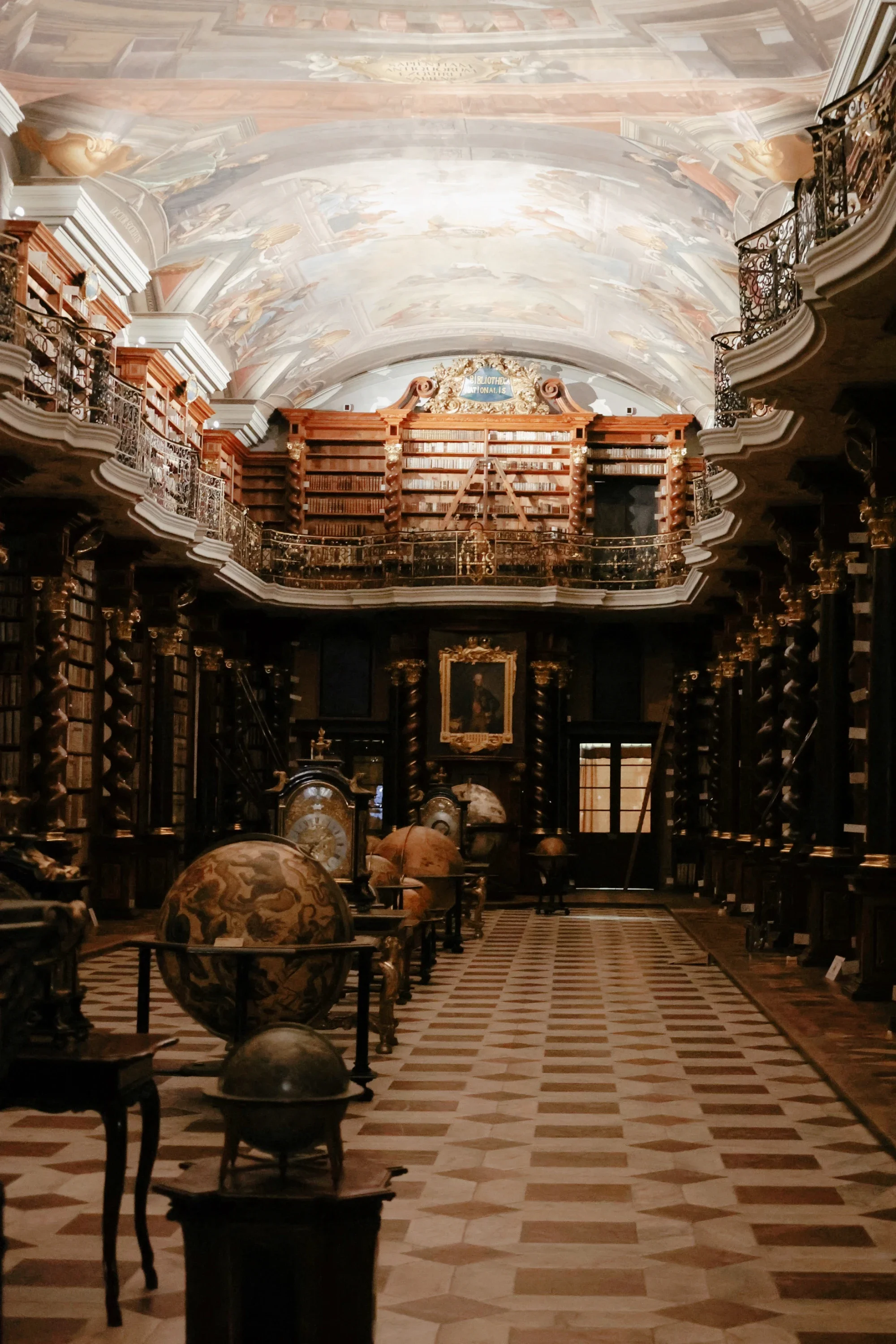
If you love old libraries even a little, the Baroque Library at the Klementinum is unmissable. I’m fully obsessed with spaces like this, and the moment I stepped inside, it felt like I’d walked straight into a scene from Harry Potter or The Name of the Rose. The ornate ceiling frescoes, towering wooden bookshelves, and antique globes give the space an almost unreal beauty—quiet, dramatic, and steeped in centuries of knowledge.
After taking it all in, I headed up to the Astronomical Tower, and somehow the views over Prague’s rooftops managed to rival the magic of the library itself. Seeing the city from above, after standing in a room filled with so much history, made the whole experience feel even more special.
A quick tip before you go: the Baroque Library can only be visited as part of a guided tour, so be sure to check the schedule in advance and plan accordingly. It’s absolutely worth it.
Powder Tower
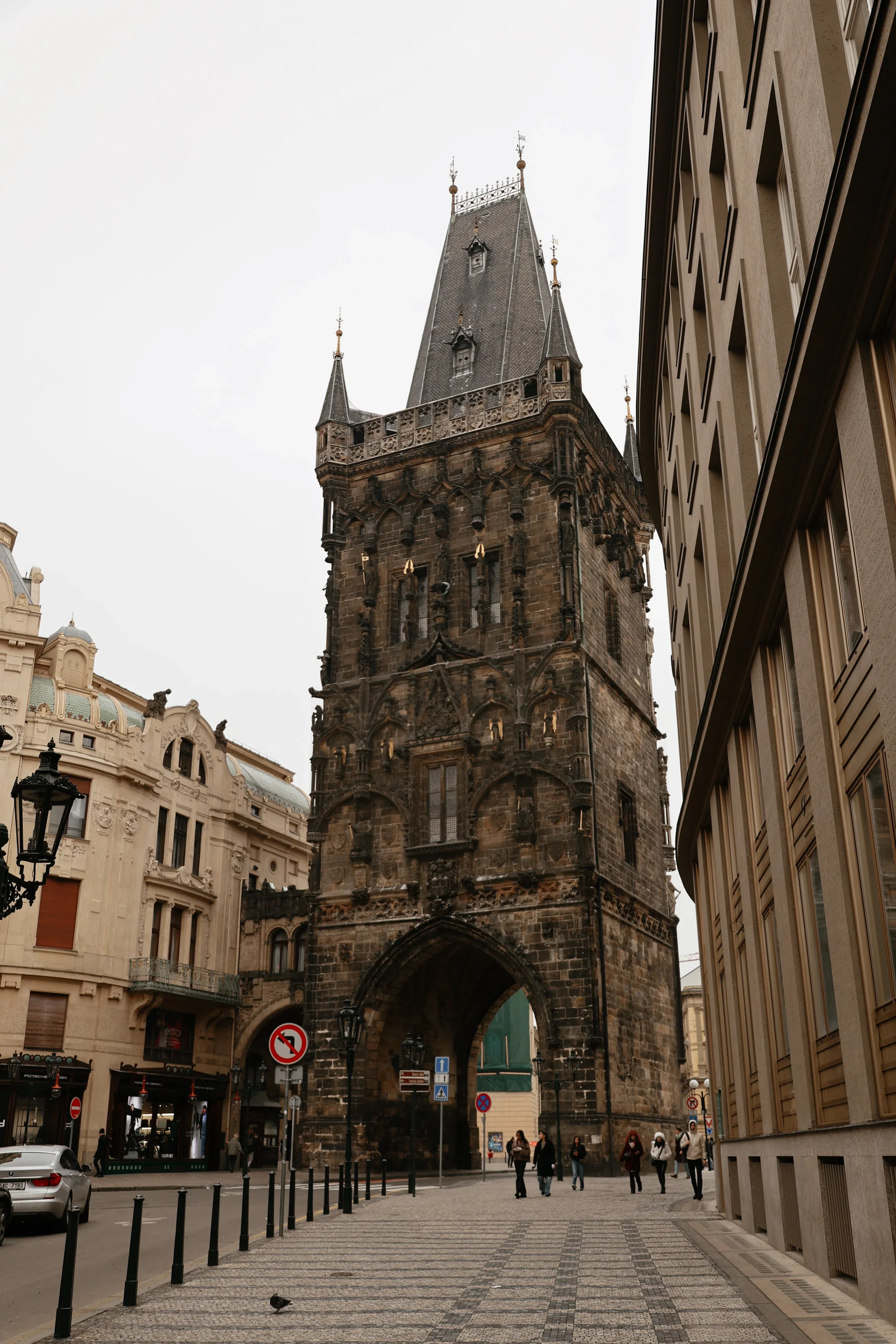
One of the first landmarks I passed while walking through Prague was the Powder Tower, and it immediately stopped me in my tracks. The dark, almost blackened Gothic exterior looks like something pulled straight from a medieval fantasy. Originally part of the city’s fortifications, it later became a storage site for gunpowder—which is how it earned its name. Climbing to the top ended up being one of my favorite moments in Old Town. The views are incredible and, surprisingly, far less crowded than the Astronomical Clock Tower. From above, I could see winding alleyways, red-tiled rooftops, and church spires cutting into the skyline—the kind of view that makes you fall in love with Prague almost instantly.
A little tip: if you’re choosing between viewpoints, this one is absolutely worth it. You’ll get stunning panoramic views without the heavy crowds, which makes the experience feel much more relaxed and personal.
Gallery of Steel Figures
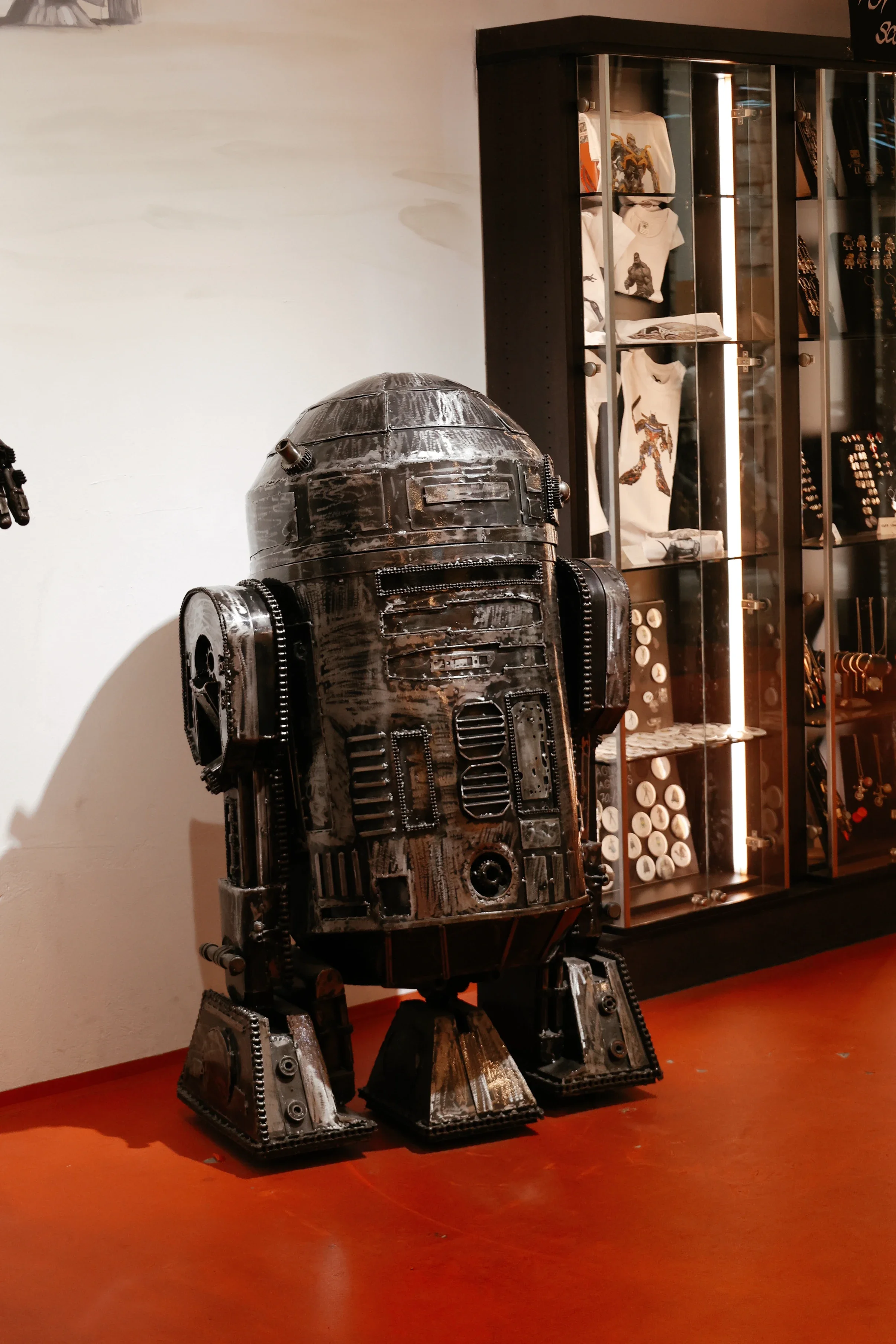
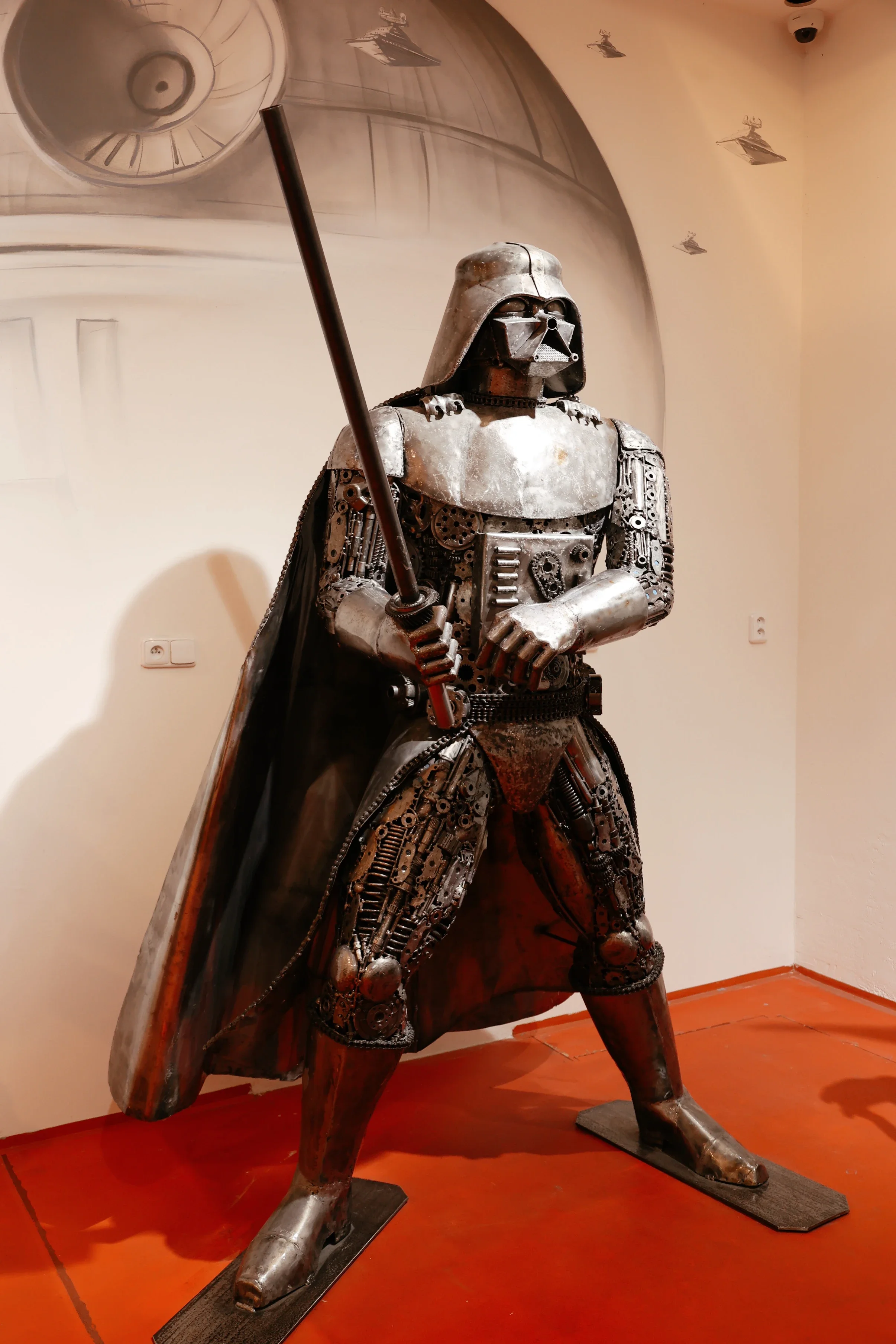
This ended up being one of the most unexpected highlights of my trip. I had no idea Prague had a museum filled with life-sized sculptures made entirely from scrap metal, and walking in felt like stepping into a giant, industrial art playground. The gallery is packed with cars, superheroes, animals, and movie characters, all crafted from old gears, chains, bolts, and car parts. What makes it even more fun is that this isn’t a “look but don’t touch” kind of place—you’re actually encouraged to interact with the sculptures. Sitting inside a fully metal-crafted Ferrari was already pretty cool, but standing beneath towering steel figures like Optimus Prime and Darth Vader somehow topped it. It’s creative, playful, and completely different from the traditional museums Prague is known for—a nice change of pace if you’re looking to mix things up.
A quick tip: definitely bring your camera. This place is incredibly photogenic, especially if you love cars, movies, or art that’s a little outside the box.
Franz Kafka’s Birthplace & The Kafka Head
For literary lovers—or anyone drawn to the surreal—Prague feels like a pilgrimage for Franz Kafka fans. Born here in 1883, Kafka’s presence still lingers throughout the city in quiet, thoughtful ways. His birthplace on Kaprova Street includes a small exhibit about his life and work, and while it’s worth a quick stop, it wasn’t the part that stayed with me the most. That honor goes to the giant kinetic head just outside the Quadrio Shopping Center. Created by David Černý, the Franz Kafka Head stands 11 meters tall and is made of rotating stainless-steel layers that continuously shift and reassemble Kafka’s face. Watching it slowly transform felt hypnotic—and oddly emotional—like seeing Kafka’s existential themes unfold in physical form, right in front of you.
A small tip if you visit: the sculpture moves every 15 minutes, so give yourself time to watch at least one full cycle. It’s one of those moments where standing still and observing makes all the difference.
Lumia Gallery
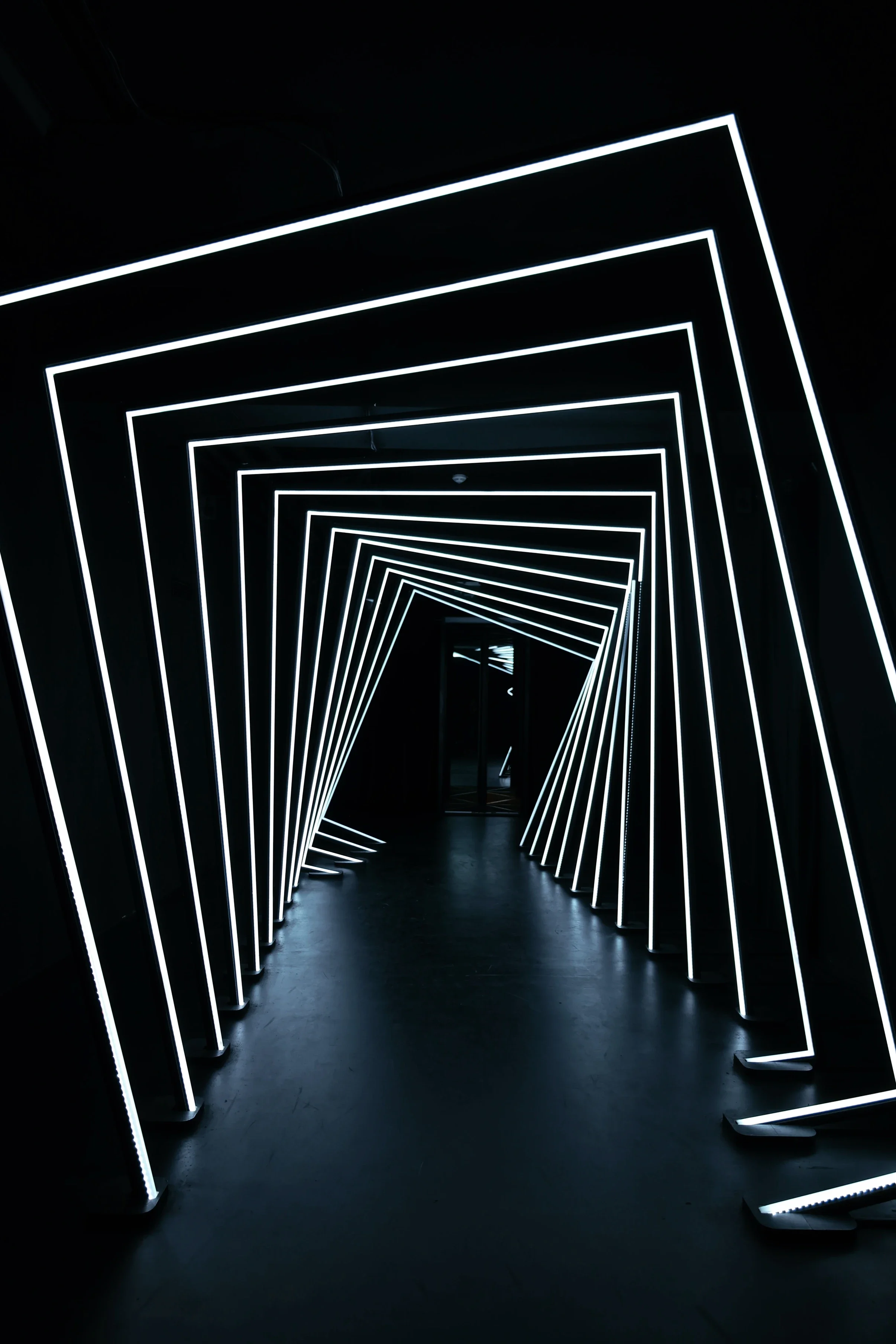
If you’re craving something completely different from Prague’s medieval landmarks, Lumia Gallery is such a fun contrast. This immersive digital art space blends light, sound, and motion into an experience that feels truly otherworldly. Walking through the exhibits felt like stepping into a living painting. The walls, floors, and ceilings all become part of the art as colors shift, patterns evolve, and the space responds to movement. Everything is in constant motion, which makes each room feel alive—and no two moments feel exactly the same. Between the glowing visuals and the layered soundscapes, it almost felt like stepping into another dimension.
If you love technology, creativity, or anything visually striking (and yes, very Instagram-worthy), this is absolutely worth adding to your list.
A little tip: try to visit at night if you can. The glowing lights feel even more dramatic in the dark and really heighten the experience.
The Old Jewish Cemetery
Walking through the Old Jewish Cemetery in Josefov felt like stepping into another world. Unlike any cemetery I’ve ever seen, it’s filled with thousands of ancient gravestones, many leaning and layered on top of one another in a way that feels both haunting and beautiful. Because Jewish burial traditions didn’t allow for relocating graves, new tombstones were placed above older ones over centuries. The result is a surreal landscape of tilted stones and dense history, where time feels stacked just as much as the graves themselves. Many important figures from Prague’s Jewish history are buried here, including Rabbi Loew, the legendary scholar tied to the story of the Golem of Prague. The atmosphere is quiet, reflective, and deeply moving—a powerful reminder of the city’s rich Jewish heritage and the resilience of its people.
A helpful tip: entry to the cemetery is included with a Jewish Museum in Prague ticket, which also grants access to several historic synagogues and exhibitions throughout the Jewish Quarter.
The Dancing House
The first time I saw the Dancing House, I genuinely stopped in my tracks. Designed by Frank Gehry, this curvy, fluid-looking building feels completely unexpected among Prague’s historic façades—and yet, somehow, it works. Nicknamed “Fred & Ginger,” the structure is meant to resemble a dancing couple, and once you notice it, you can’t unsee it. There’s something really fun about the contrast: this playful, modern design standing confidently alongside the city’s old-world charm. It’s a reminder that Prague isn’t just frozen in history—it’s a place where creativity continues to evolve, right in the middle of it all.
Where to Eat in Prague, Czech Republic
Pivovar U Supa
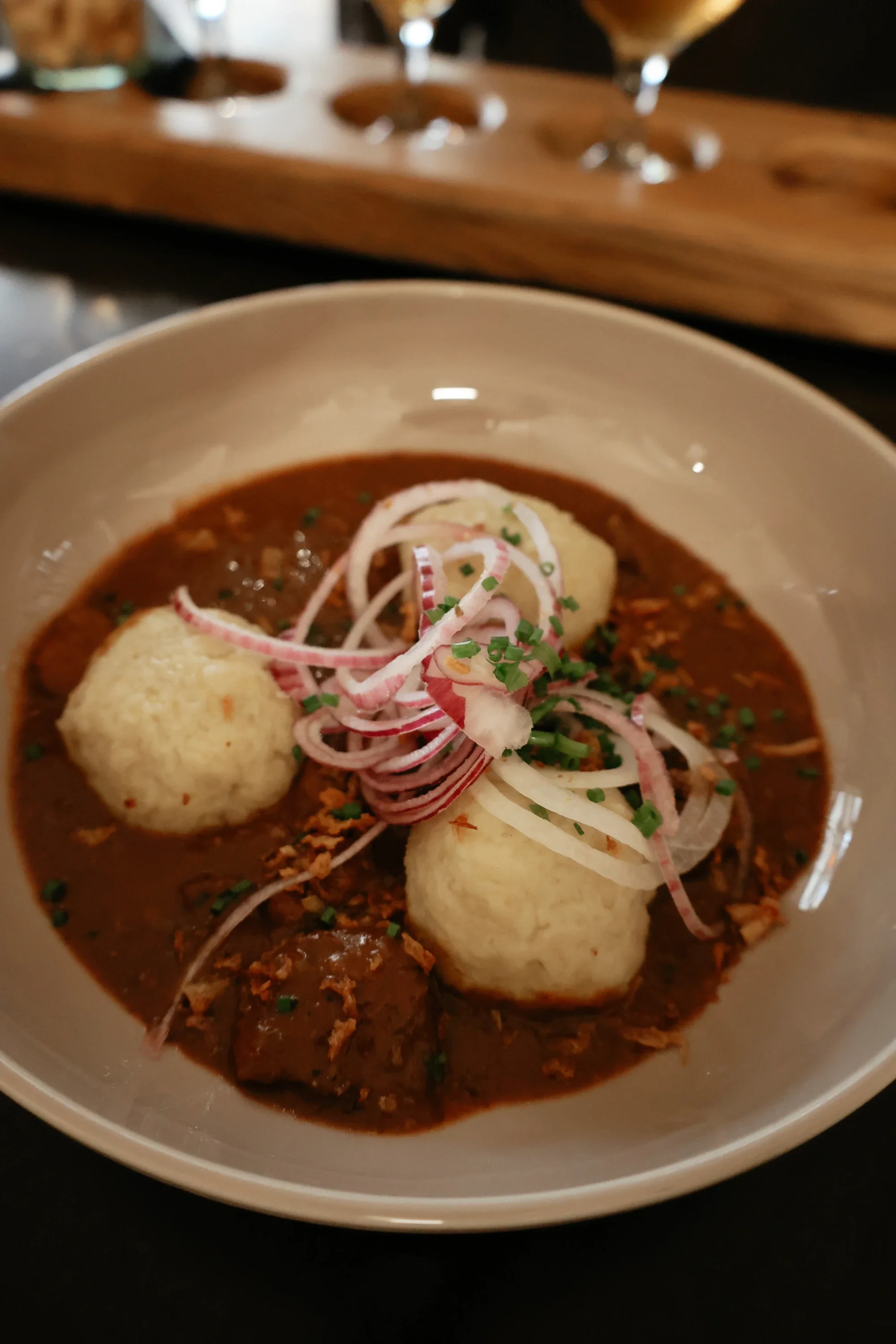
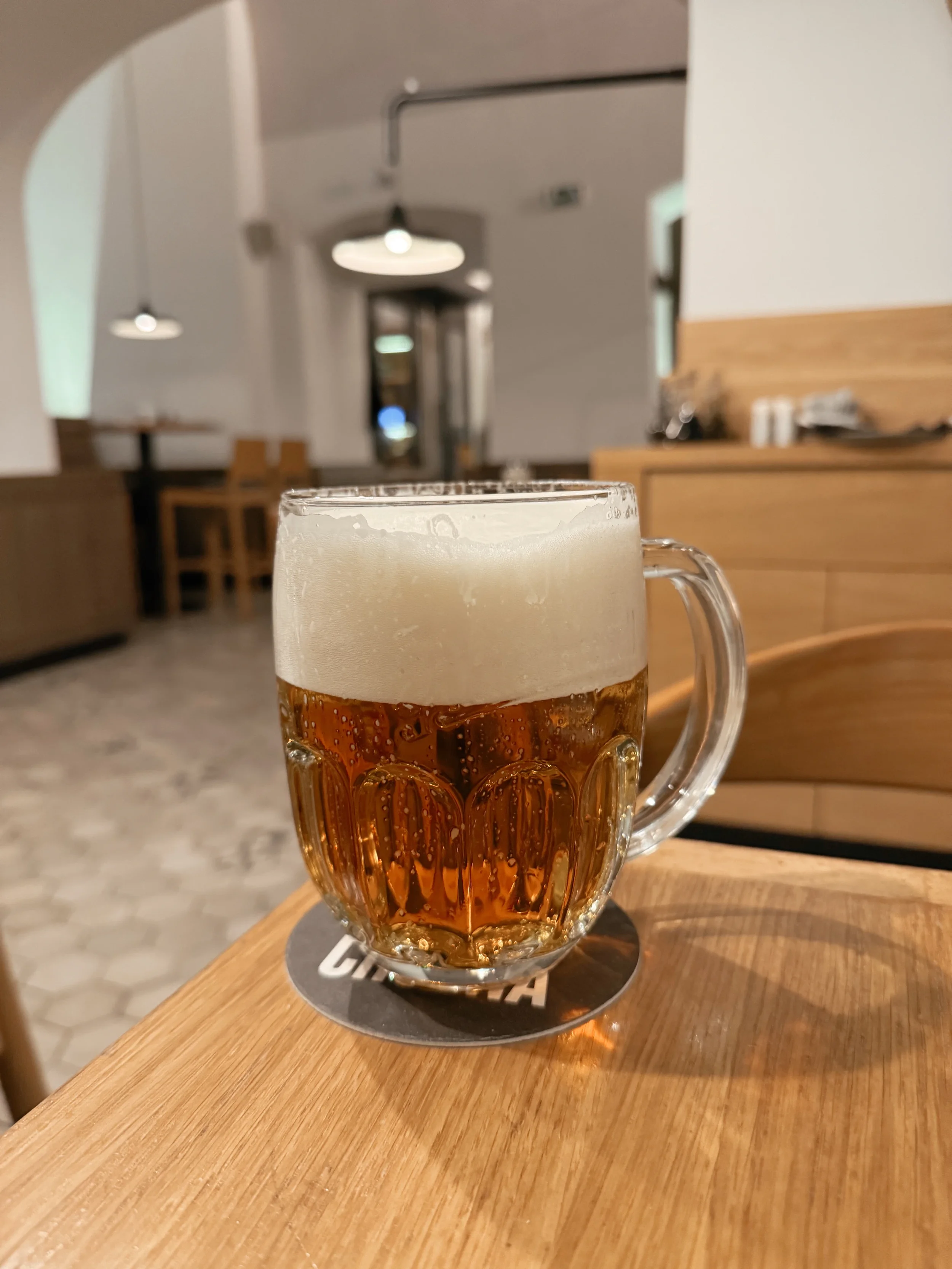
Tucked away in Prague’s Old Town, Pivovar U Supa is known as the city’s oldest brewery and inn, with roots going all the way back to 1431—and you can feel that history the moment you walk in. The space has a warm, rustic charm that makes it the kind of place you want to settle into, especially after a day of exploring. I ordered the classic goulash, and it was exactly what I was craving—rich, comforting, and perfectly seasoned, served with freshly baked bread that soaked up every bit of flavor. Paired with their house-brewed beer, it felt like the most authentic introduction to Czech comfort food. Simple, hearty, and deeply satisfying—the kind of meal that stays with you long after you leave.
Restaurace Mincovna
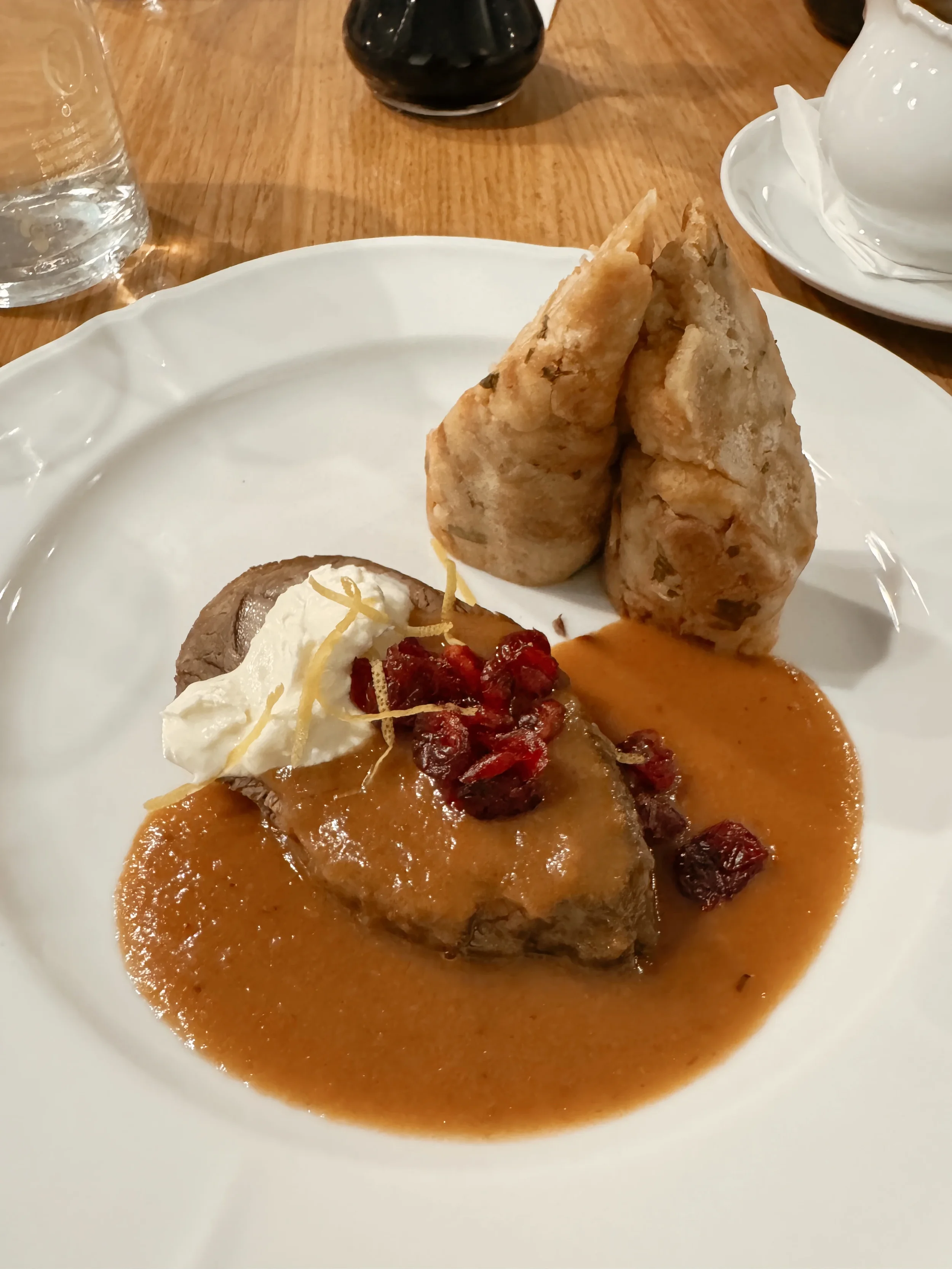
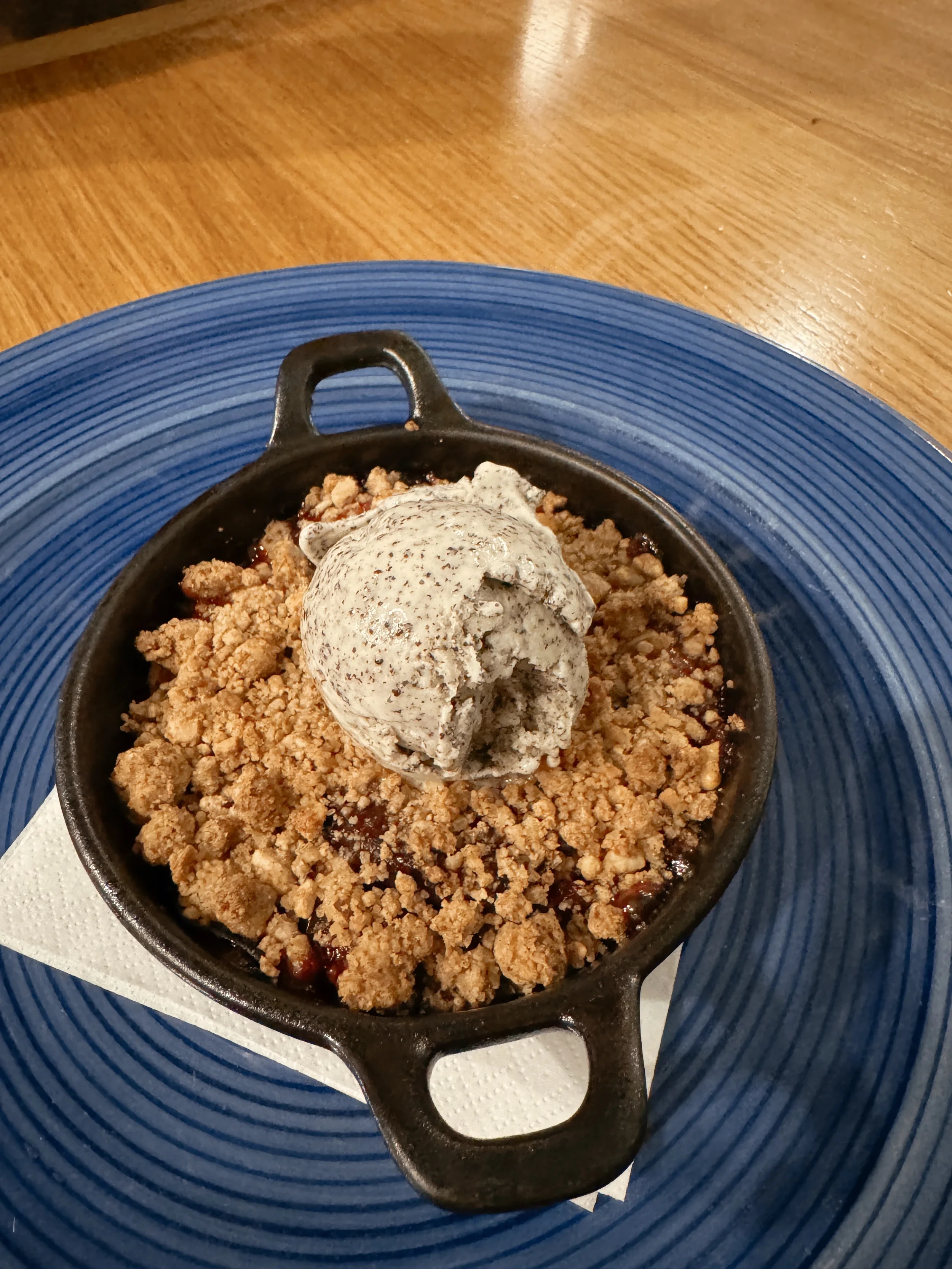
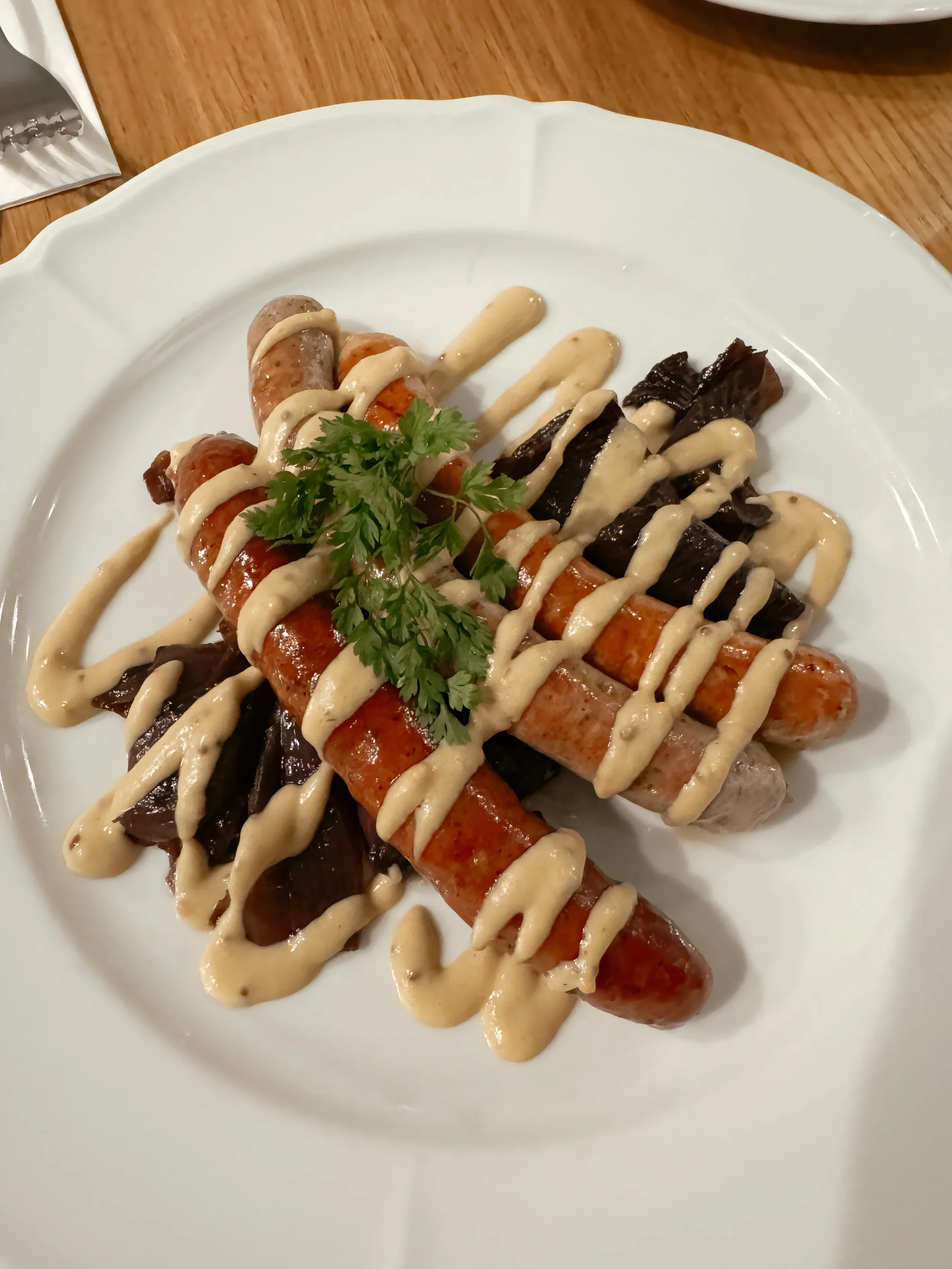
Just steps from Old Town Square, Restaurace Mincovna is a beautiful introduction to classic Czech cuisine done thoughtfully and well. The menu leans into tradition, but everything feels carefully prepared and elevated without losing its roots. I started with the Grilované klobásy—three different grilled sausages from the organic Seletice farm, served with baked onion, picante mustard, and sourdough bread. Each sausage had its own distinct flavor, and the accompaniments tied everything together perfectly. For my main, I went with Svíčková na smetaně, a true Czech classic. The beef was incredibly tender, paired with a velvety creamy sauce, Carlsbad bun dumplings, and marinated cranberries. The slight tartness of the cranberries balanced the richness beautifully and made every bite feel comforting without being heavy. I couldn’t resist dessert, and the Bramborové šišky s mákem ended the meal on the perfect note. The potato dumplings with poppy seeds, nut butter, plum sorbet, and pistachios were warm, lightly sweet, and full of texture—one of those desserts that surprises you in the best way and stays on your mind afterward.
Café Louvre
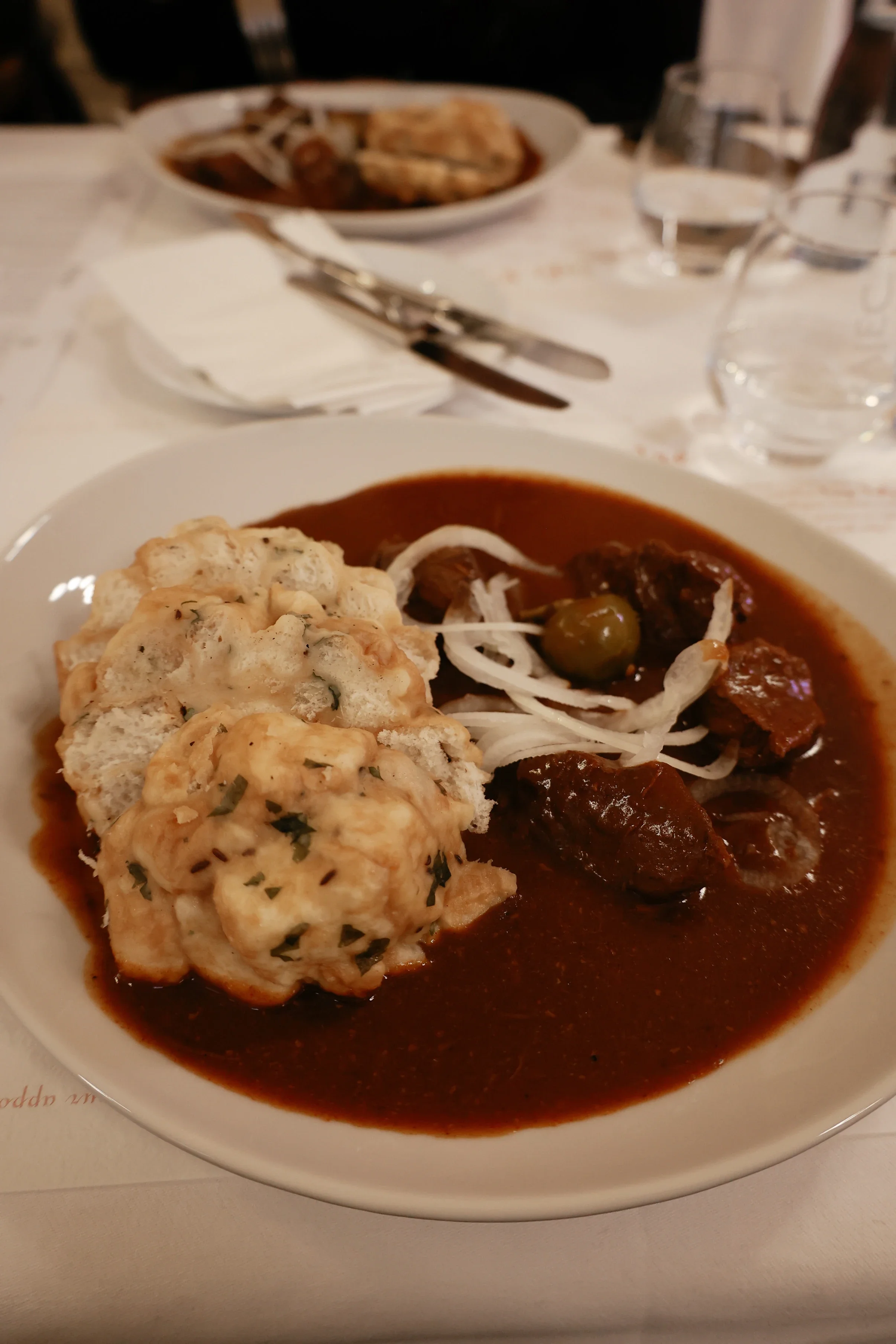
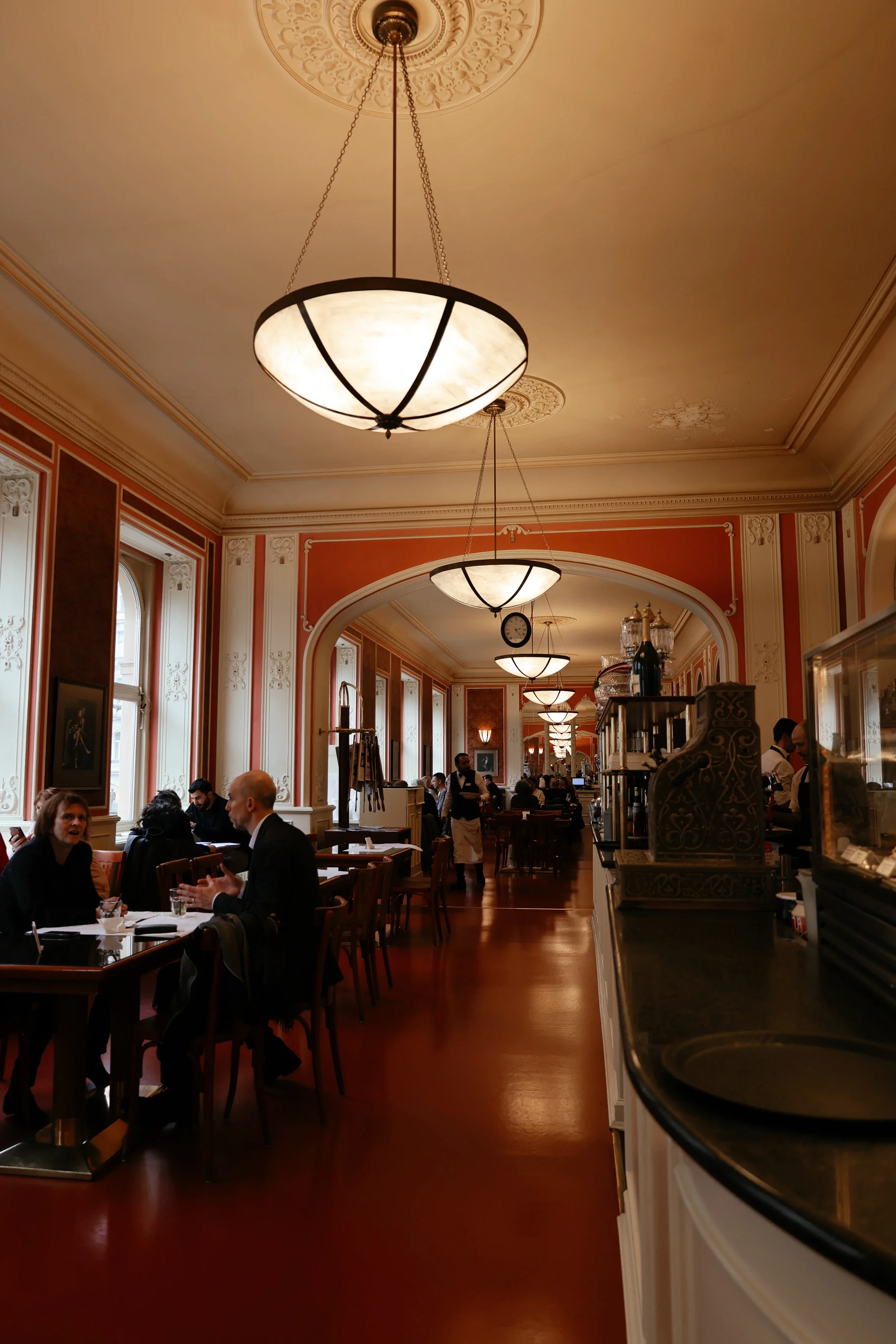
Stepping into Café Louvre genuinely feels like traveling back in time. Established in 1902, this iconic café has long been a gathering place for thinkers, artists, and writers, and the atmosphere still carries that quiet elegance. The high ceilings, classic décor, and softly buzzing dining room make it feel timeless in the best way. I ordered the large beef goulash with Carlsbad dumplings, and it was exactly the kind of comforting, well-executed dish you want in a place like this. The goulash was rich and deeply flavorful, and the dumplings soaked up the sauce perfectly. It was simple, satisfying, and felt very true to Czech tradition—an experience as much about the setting as the meal itself.
Café Savoy
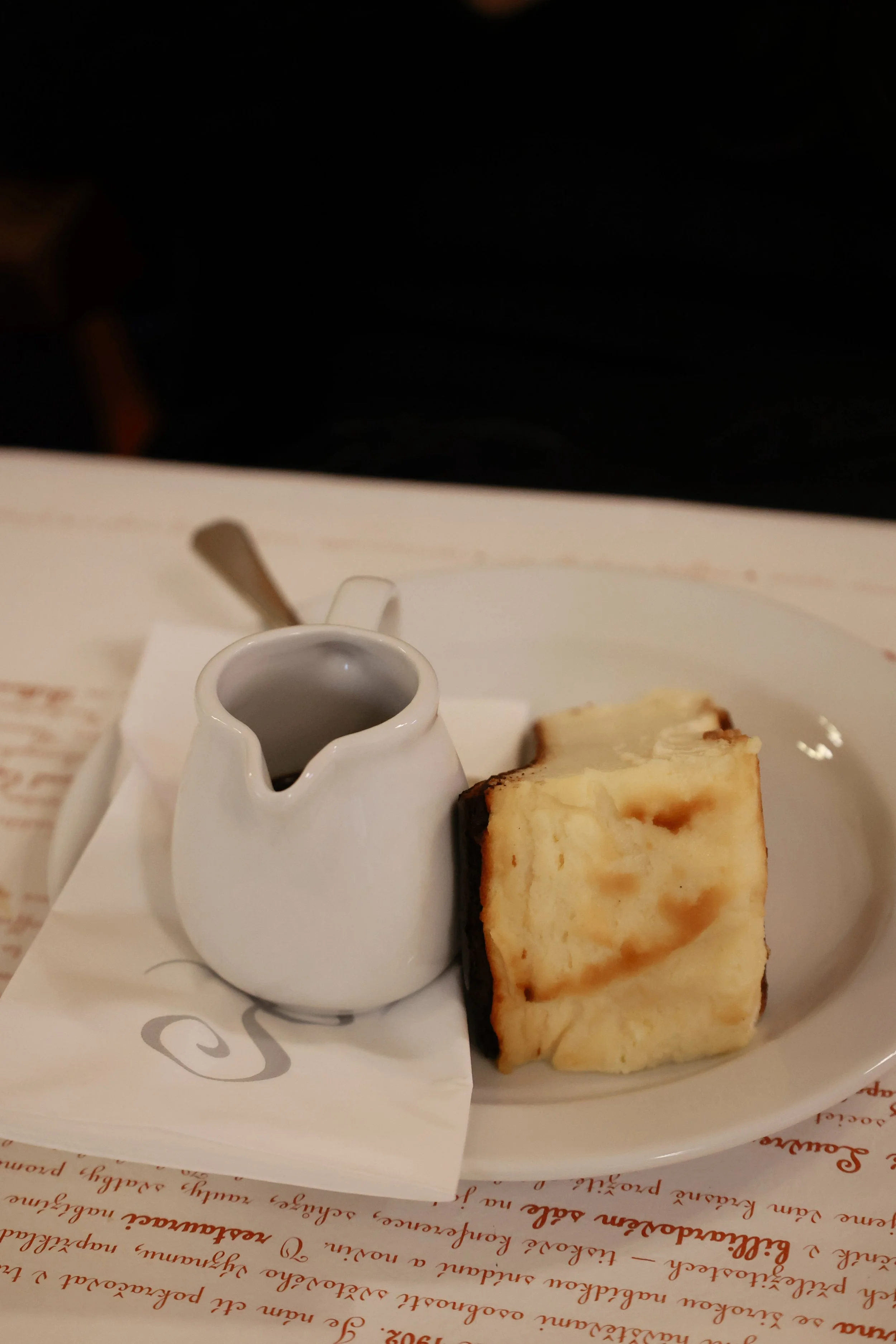
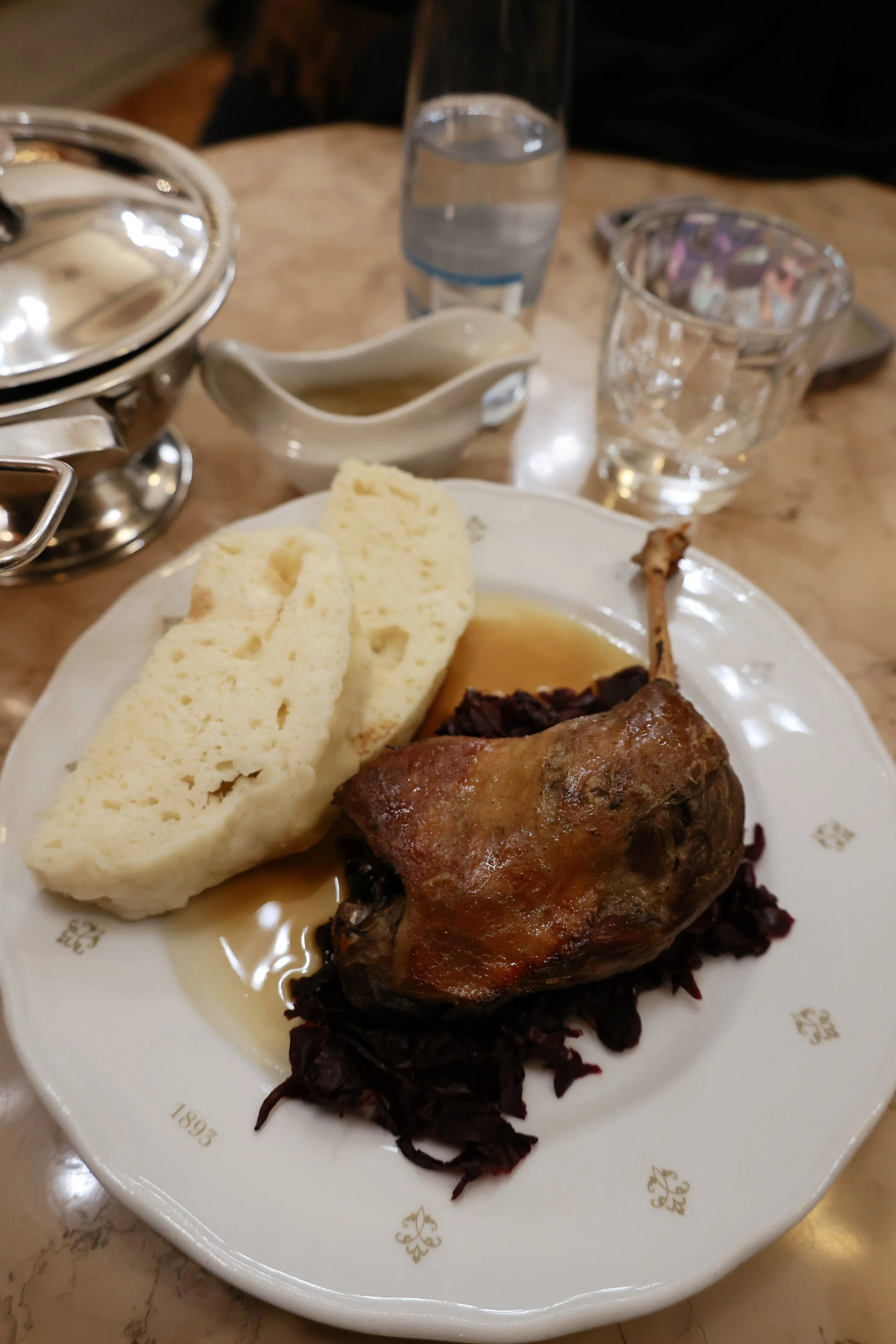
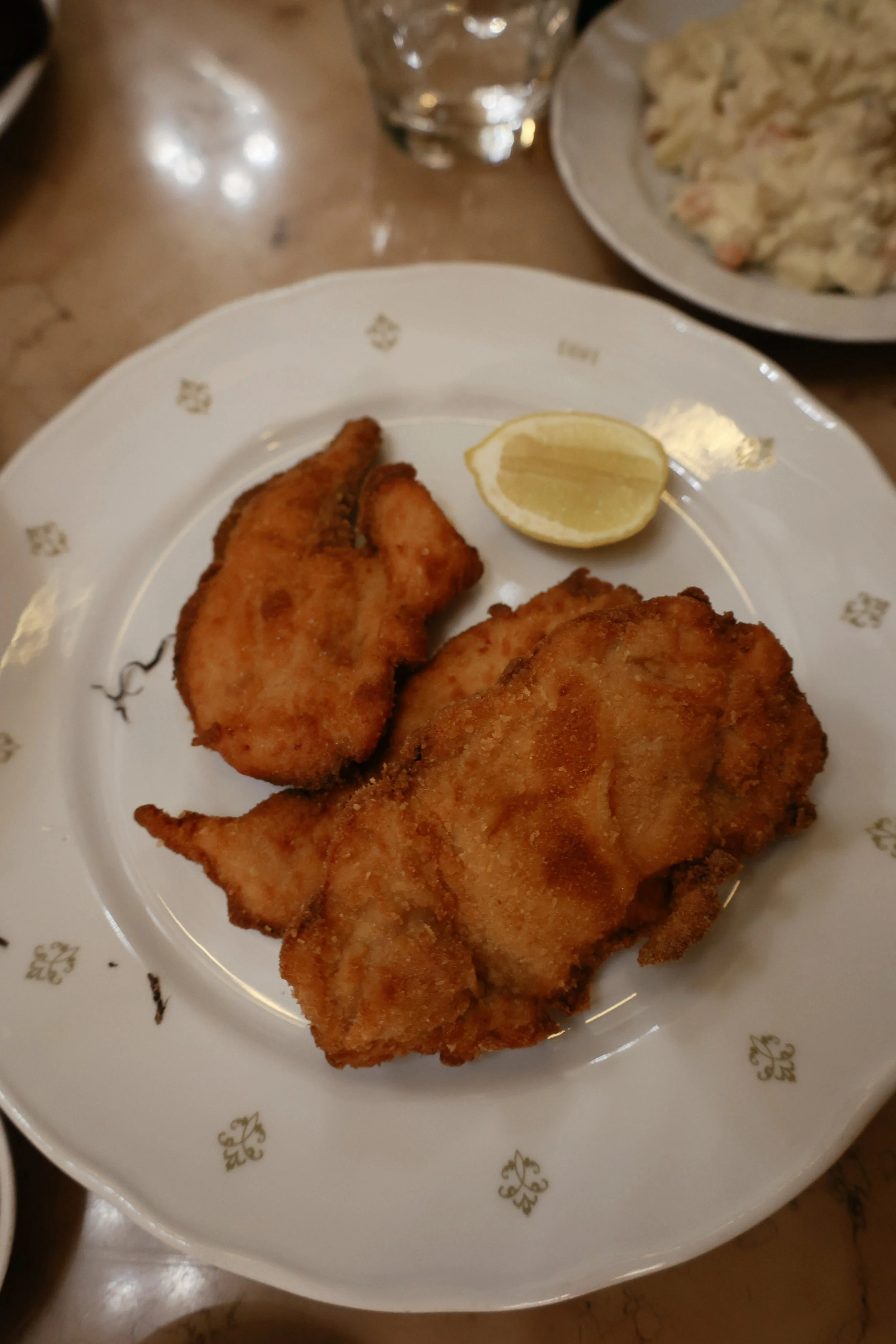
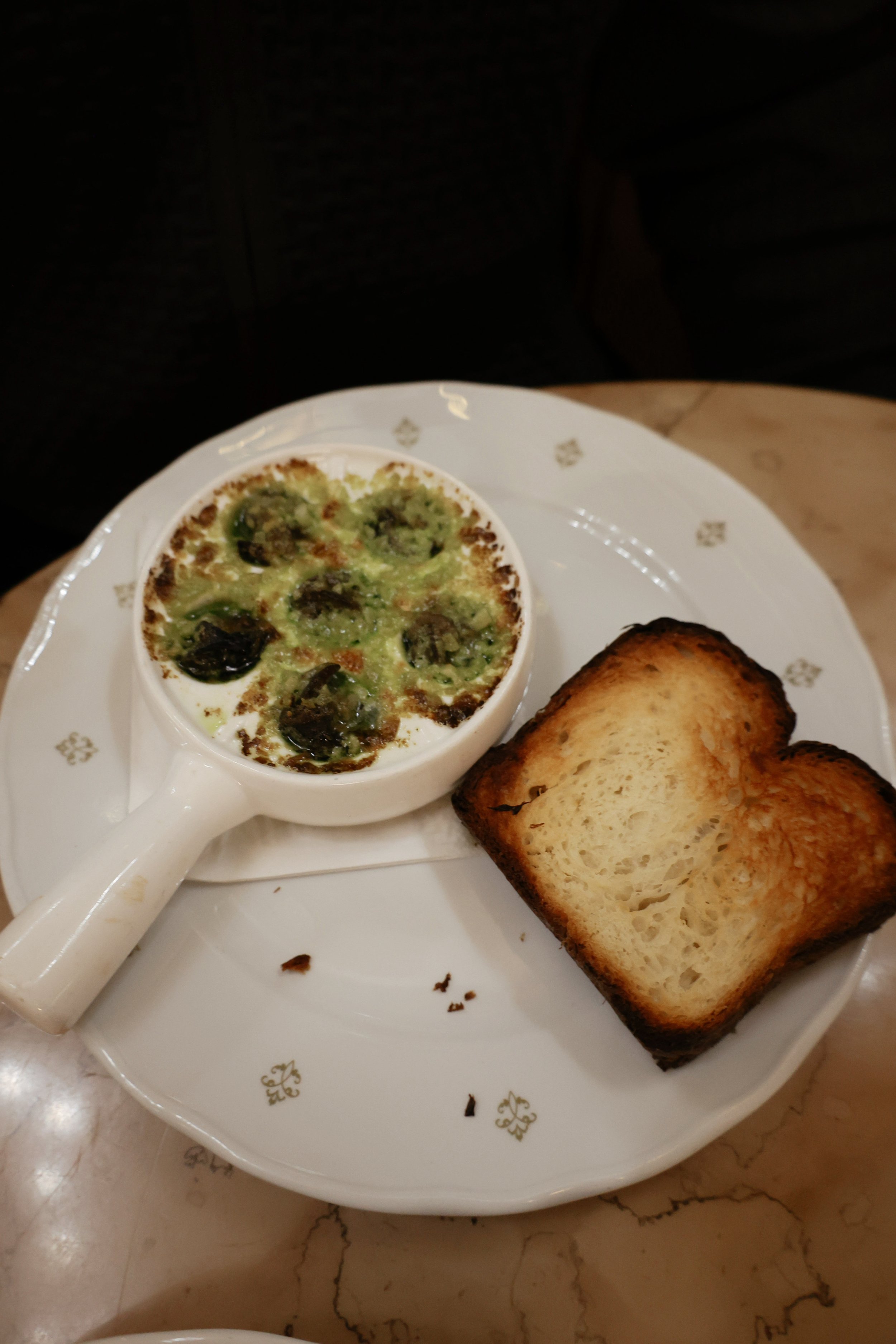
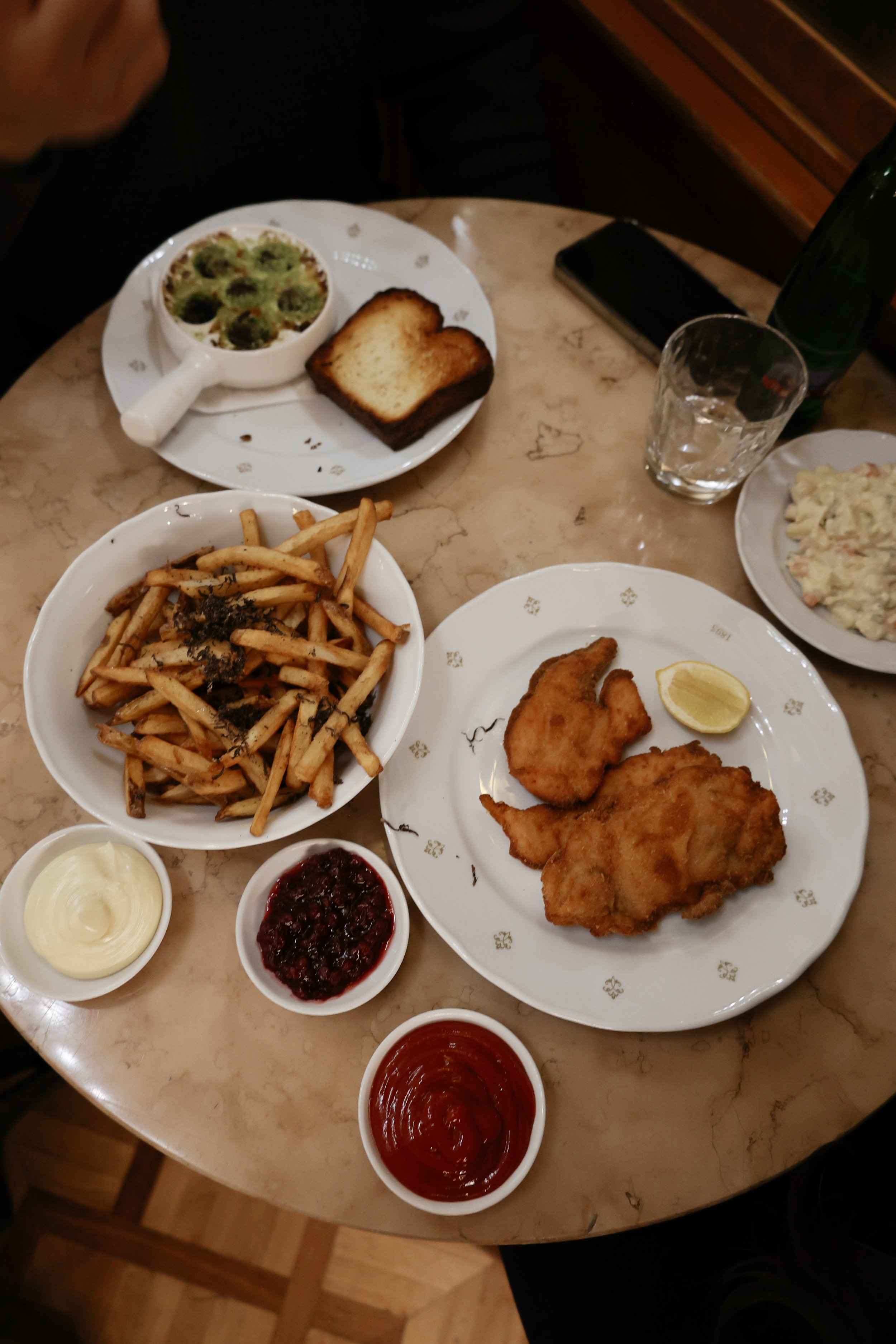
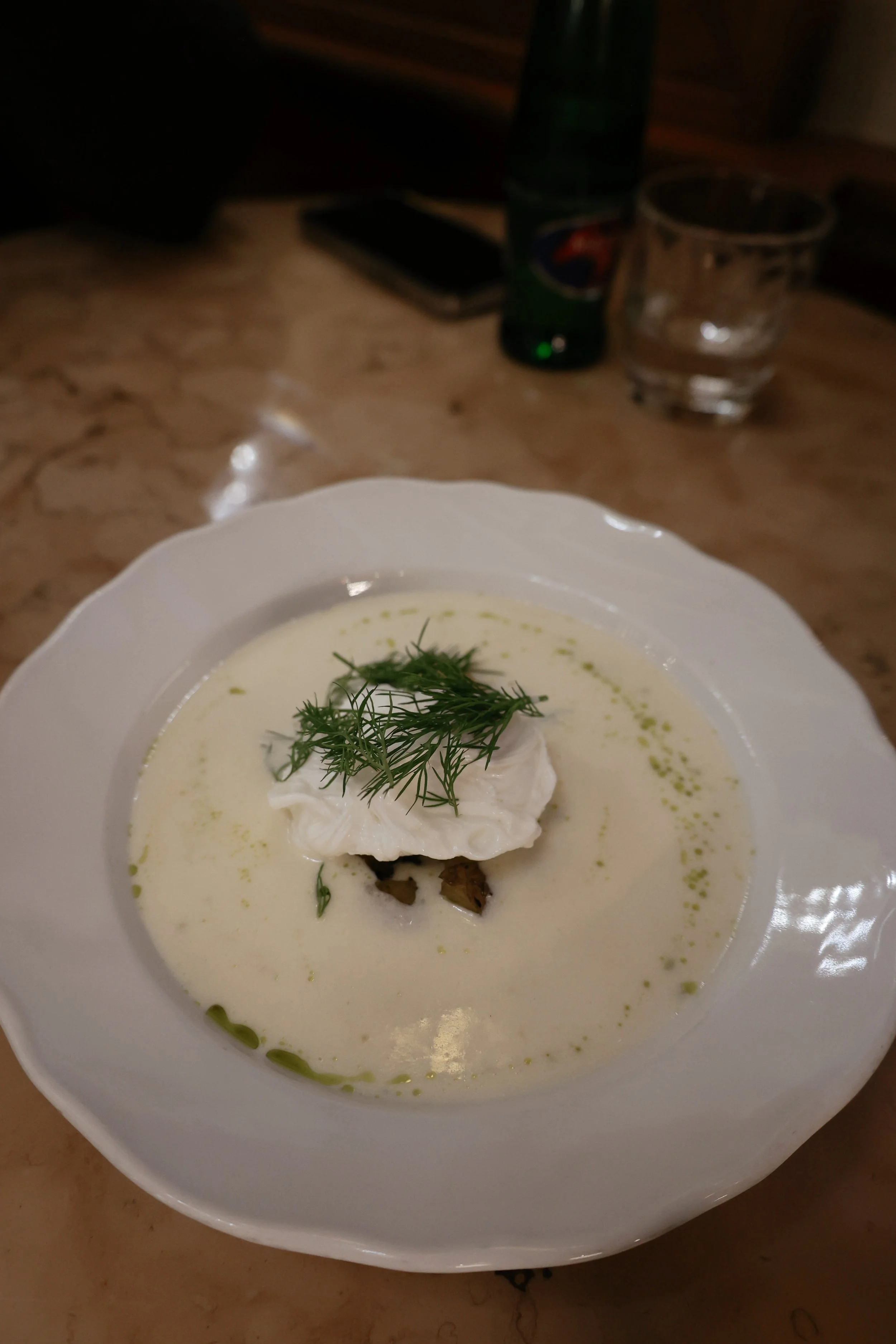
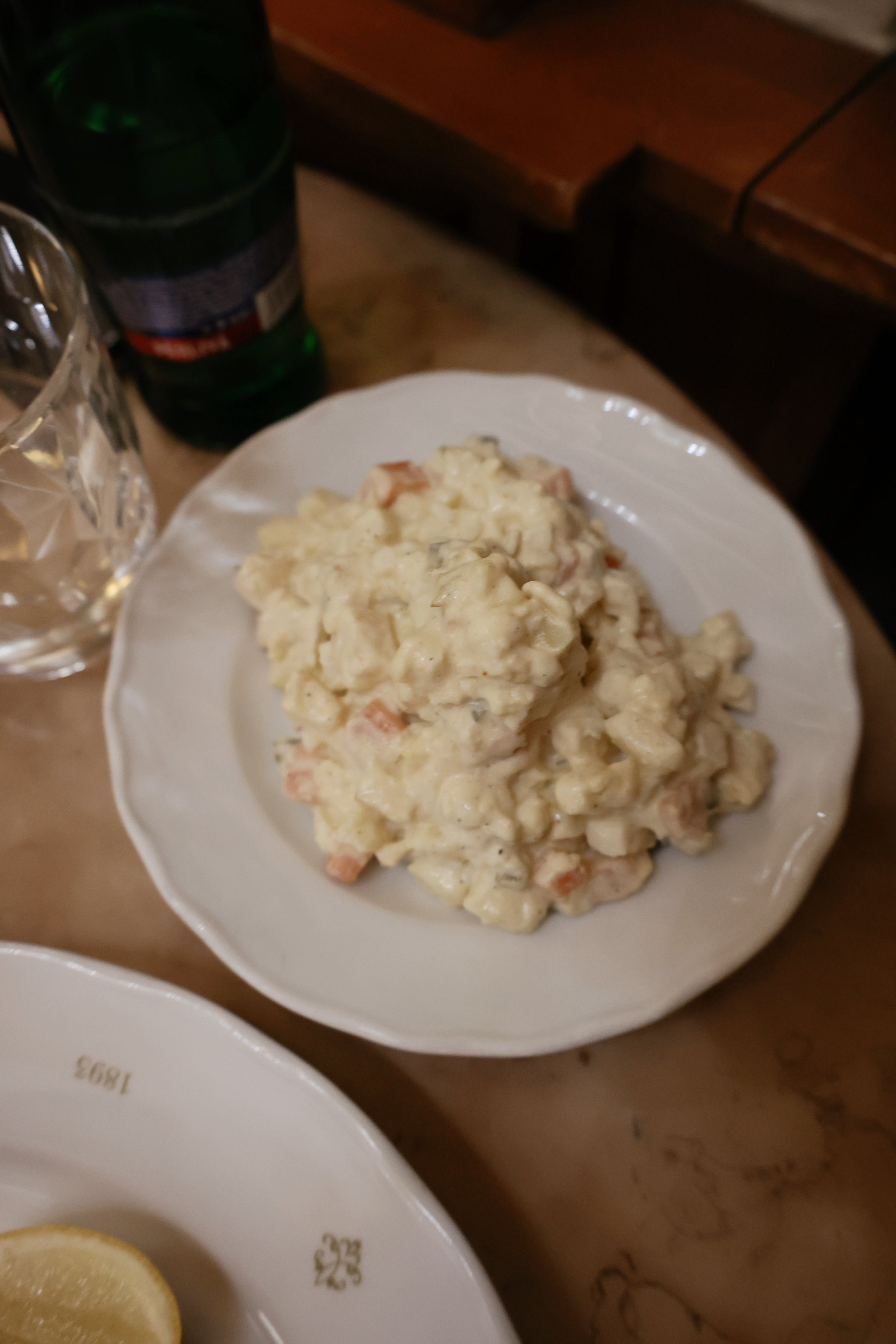
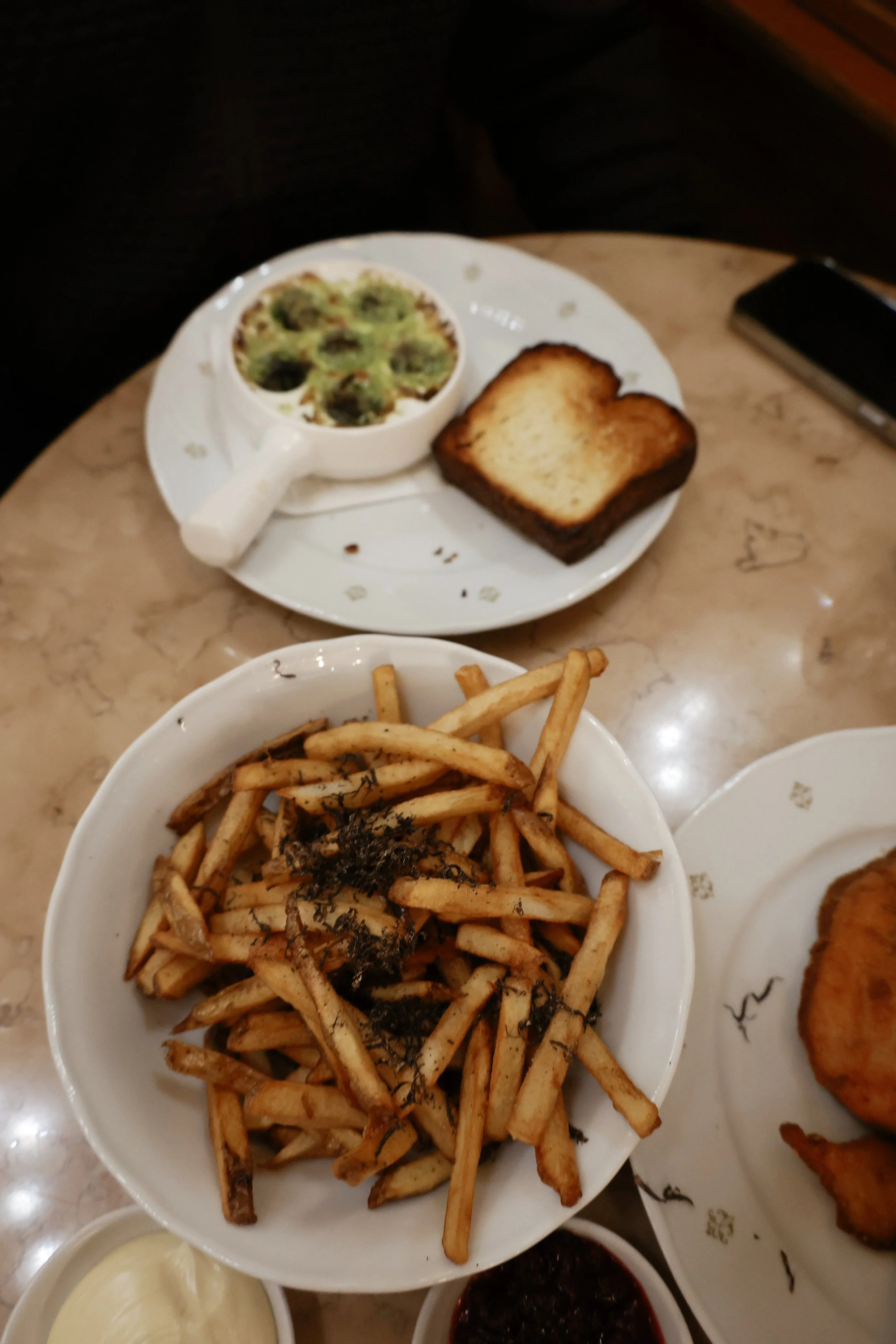
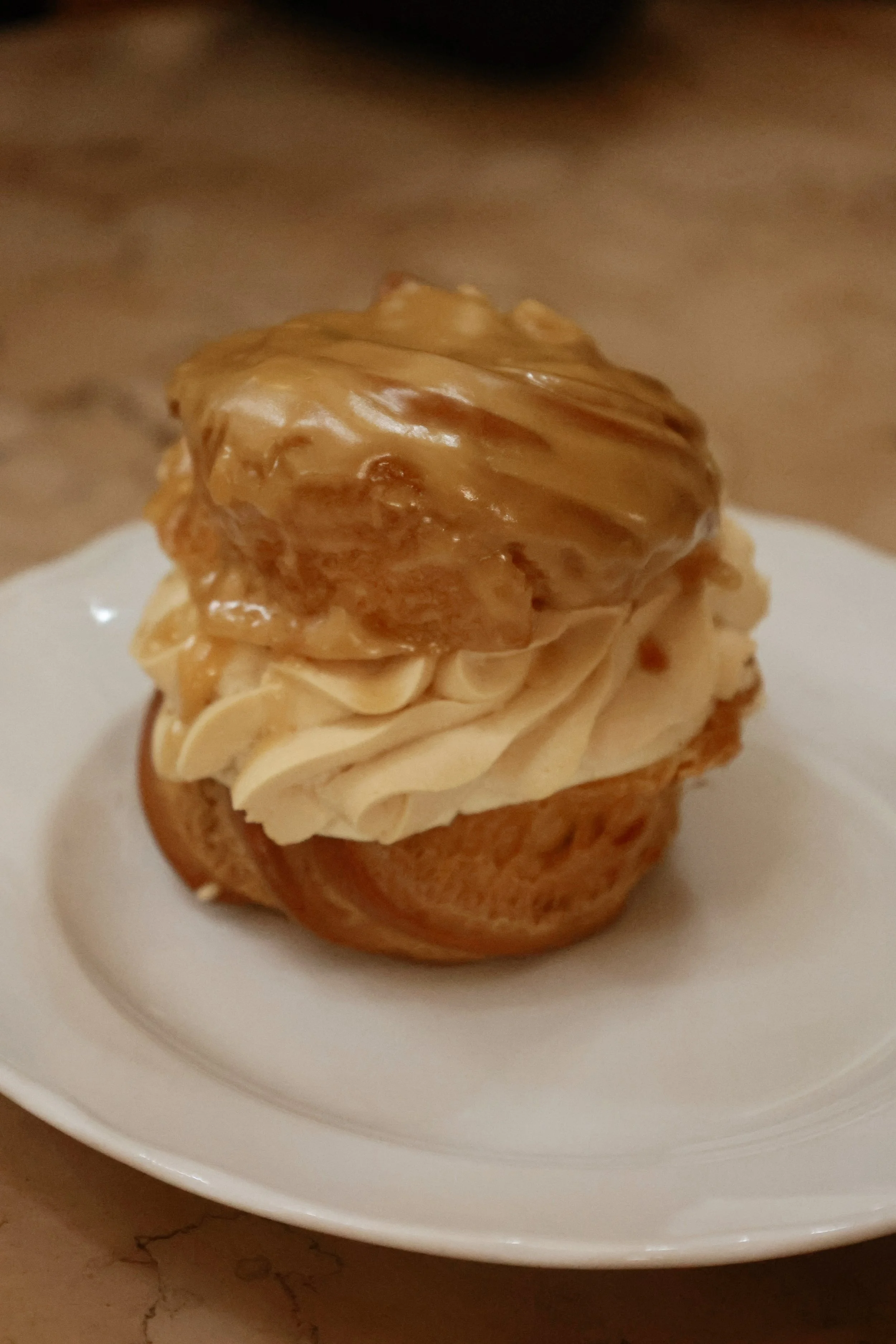
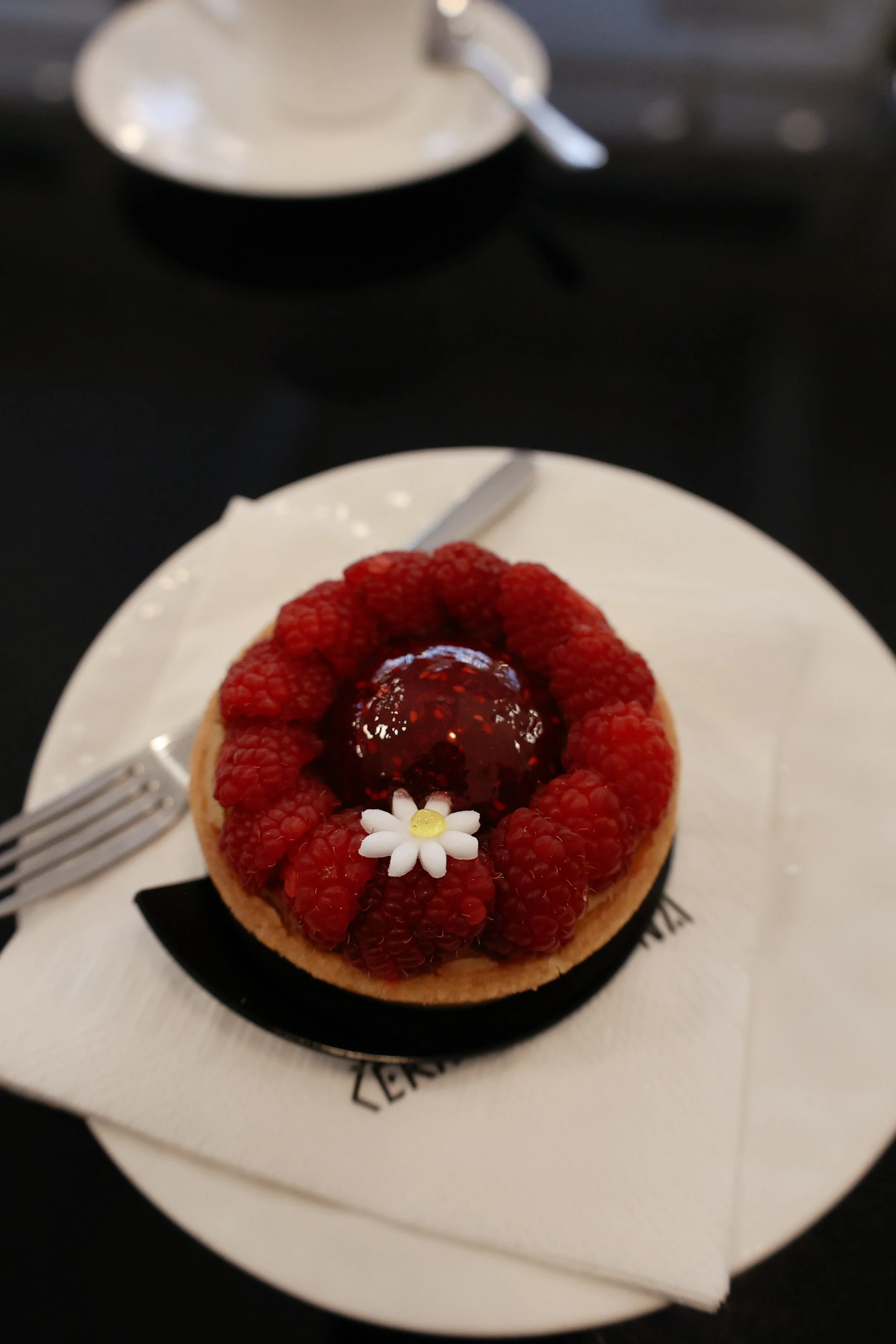
Café Savoy is one of those places where the setting alone makes you slow down. The interior is stunning—ornate ceilings, soft light, and a beautiful chandelier that instantly gives the space a refined, old-world feel without feeling stuffy. I ordered the confit duck leg with red cabbage and bread dumplings, and it was incredible. The duck was perfectly tender with crisp skin, and the red cabbage added just the right touch of sweetness to balance the richness of the dish. It felt classic, comforting, and thoughtfully prepared. To end the meal, I couldn’t resist the Větrník. This cream-filled choux pastry topped with caramel was rich, indulgent, and absolutely worth it—a sweet, satisfying finish that made the entire experience feel complete.
Cerná Madona Celetná
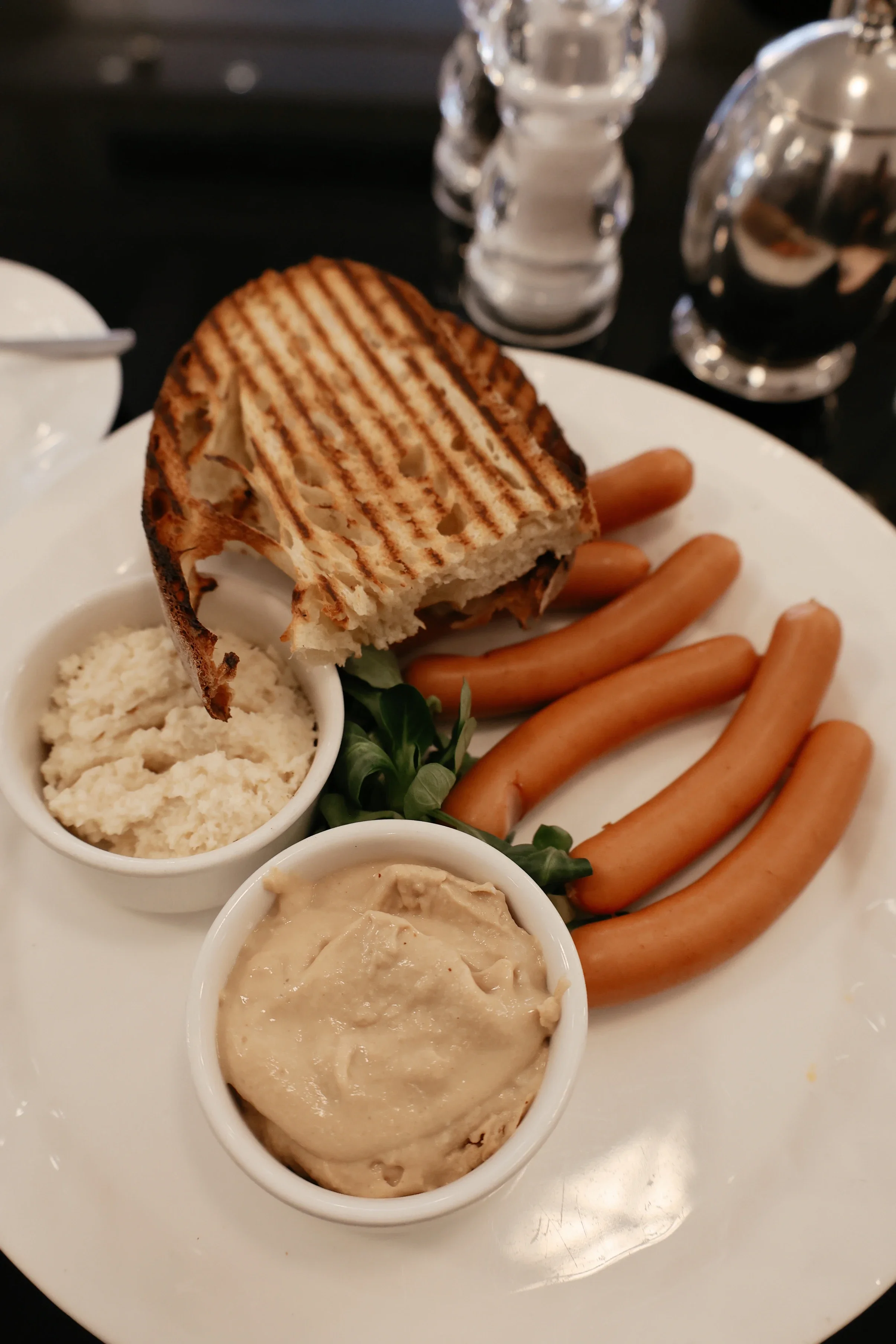
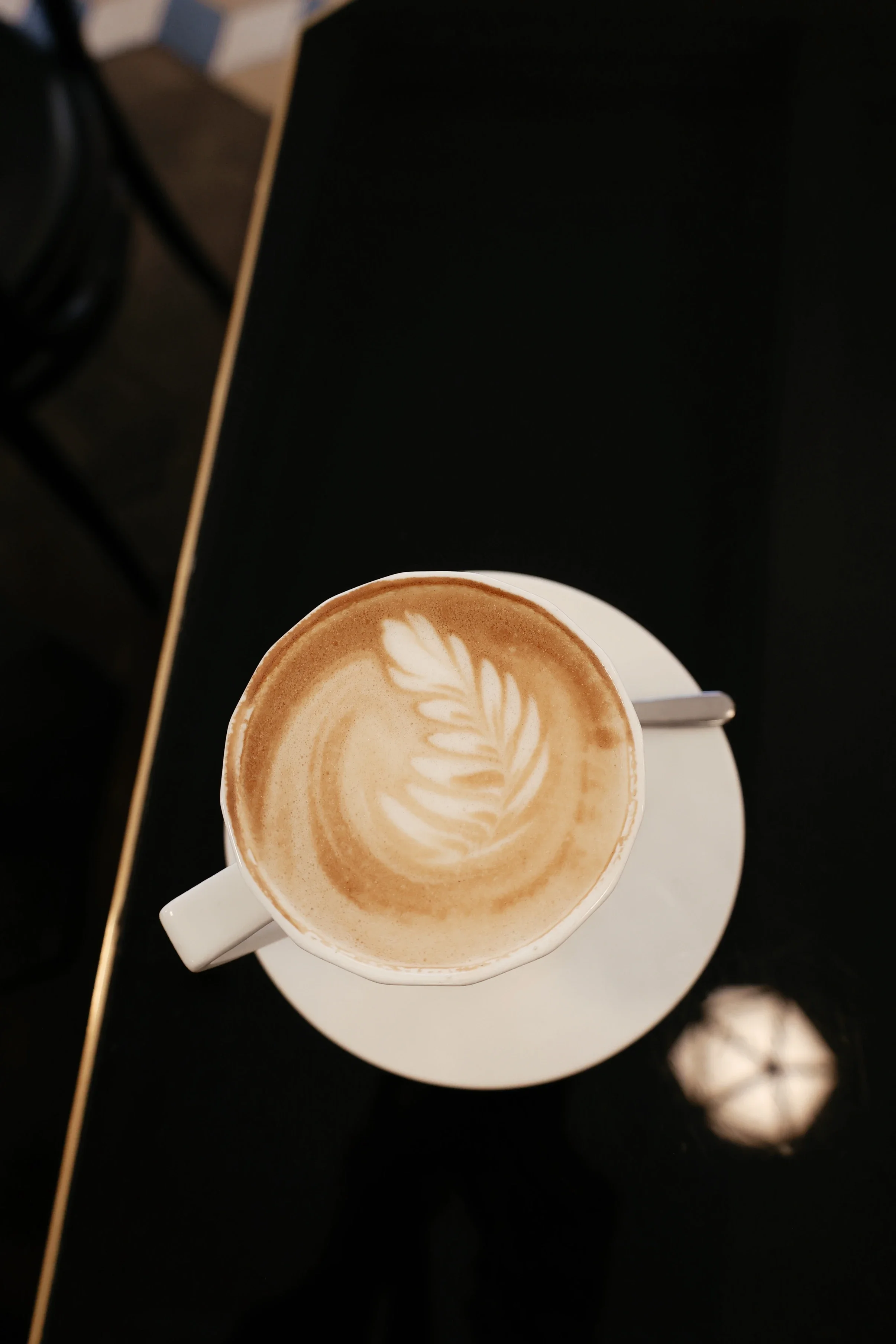
Set inside the iconic House of the Black Madonna, this café is a lovely mix of architectural history and simple, satisfying food. Even before sitting down, the space itself feels special—clean lines, cubist details, and a quiet elegance that makes you want to linger. I went with the classic sausage served with mustard, horseradish, and house bread. It was straightforward in the best way, letting the quality of the ingredients speak for themselves. Paired with a cappuccino, it made for a comforting, unfussy meal—perfect for a mid-day pause while exploring Old Town.
Venue
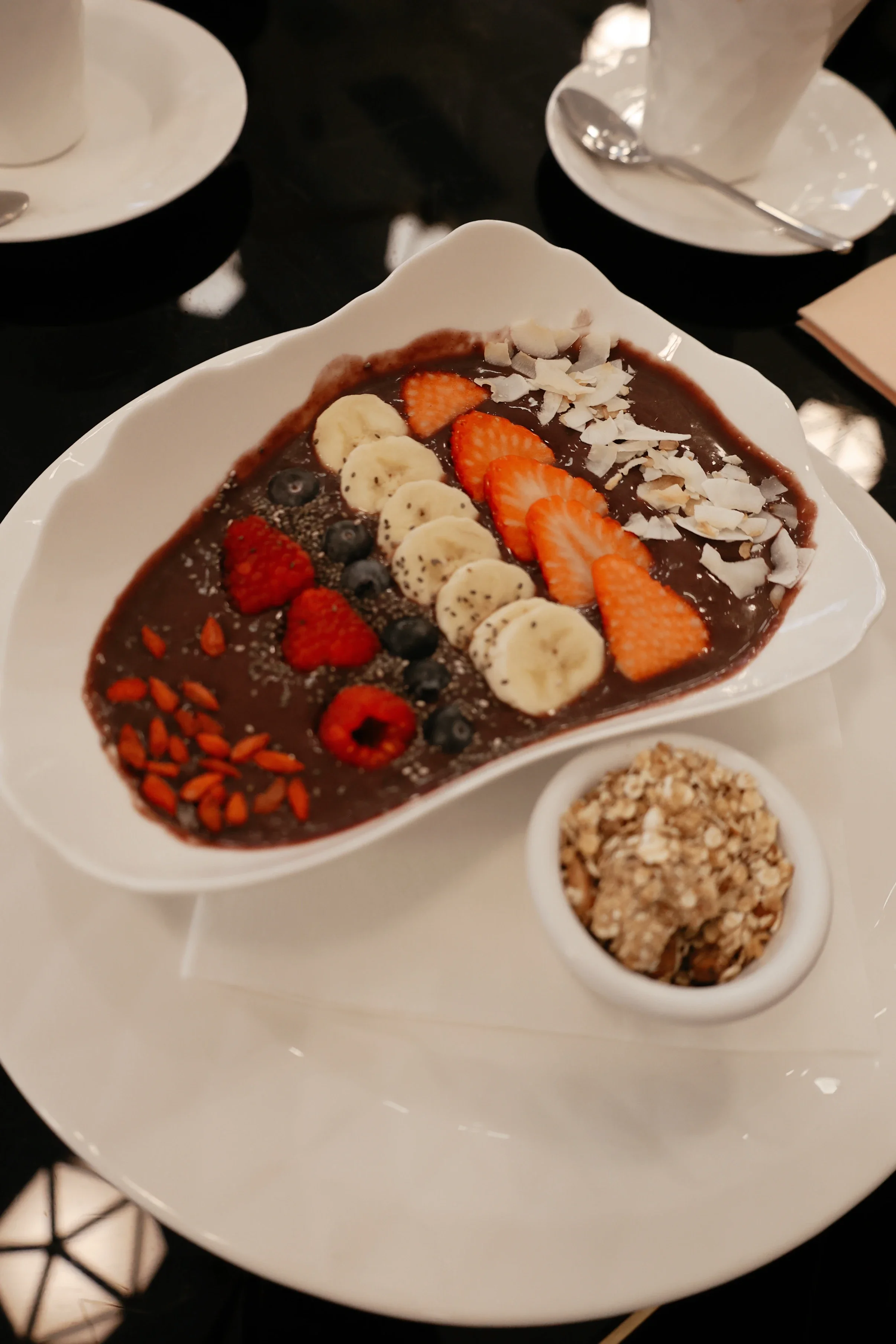
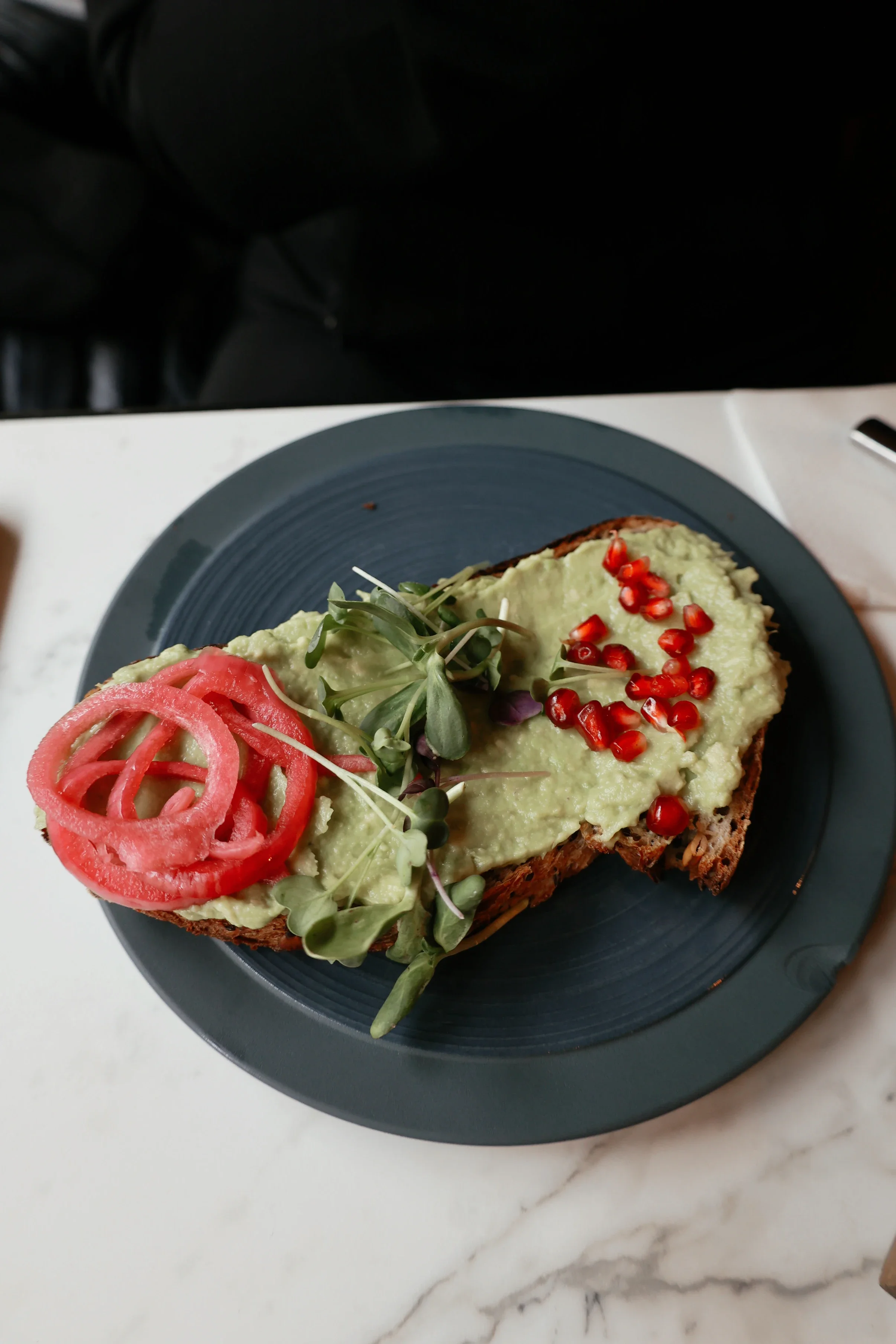
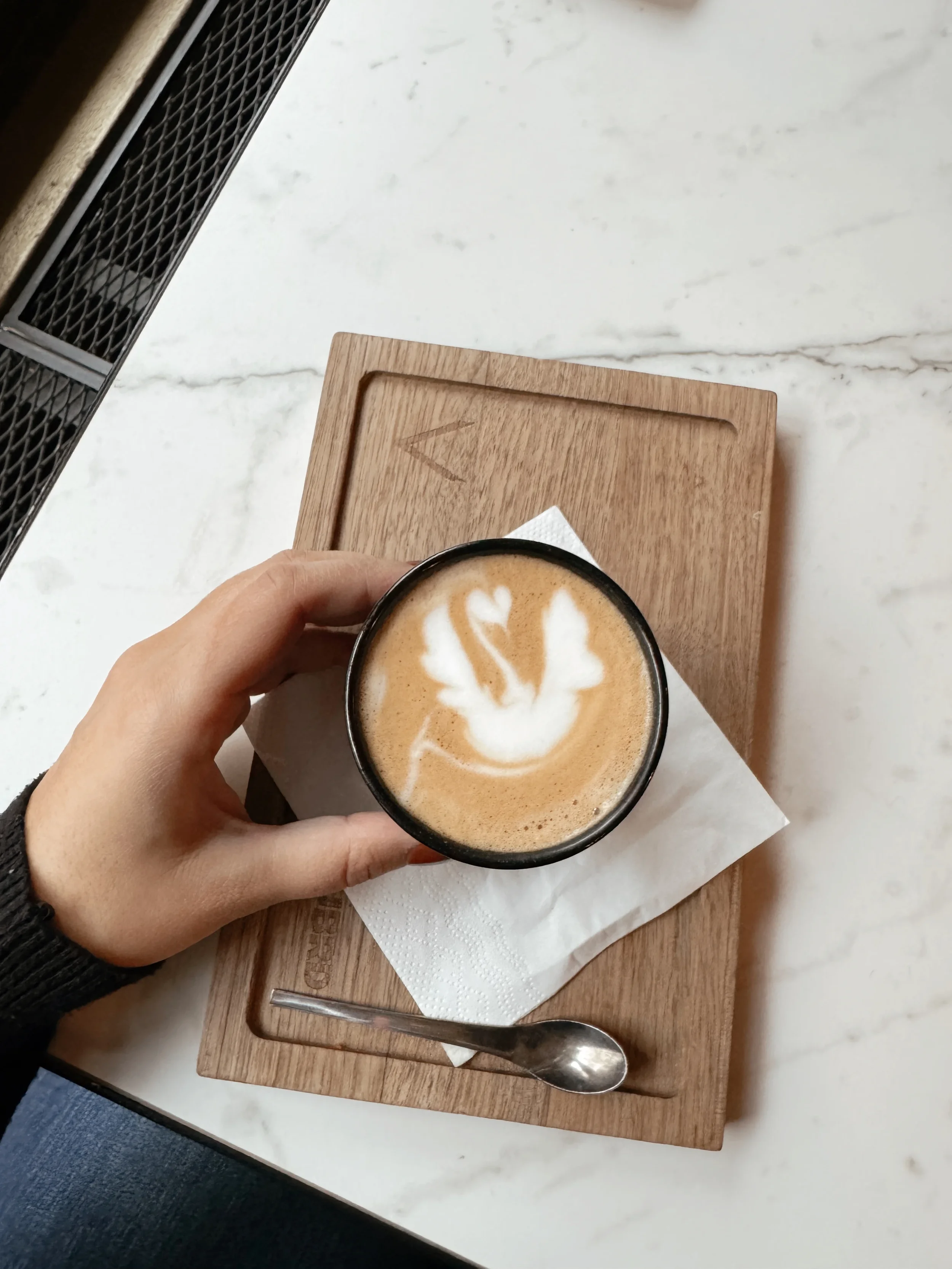
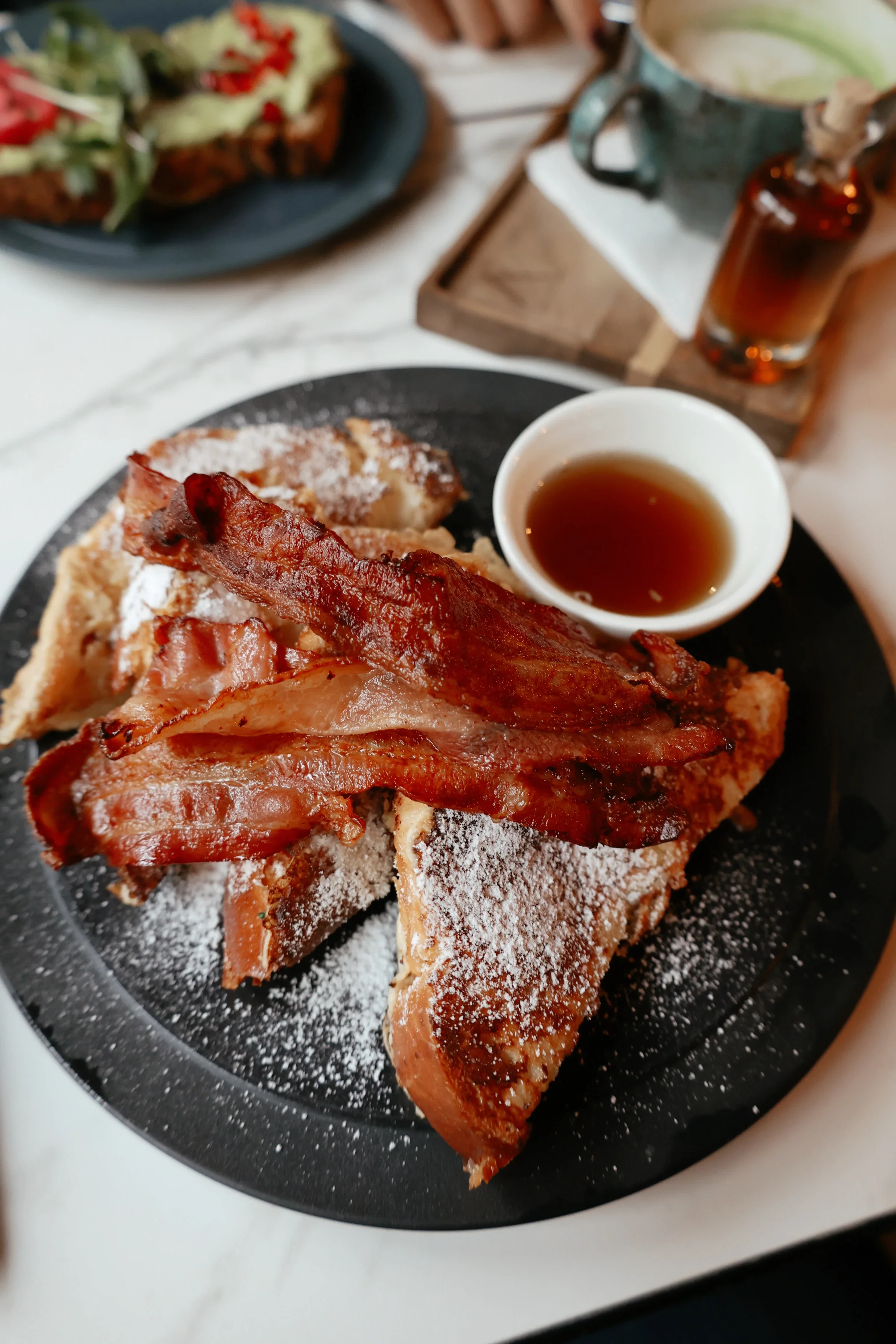
Venue has a bright, modern feel that immediately makes it a great spot for brunch. It’s relaxed but polished—the kind of place you want to ease into your morning. I couldn’t resist the bacon French toast, and it did not disappoint. The pan-fried brioche was dipped in a light, semi-sweet batter, topped with crispy bacon, with maple syrup served on the side. The balance of sweet and savory was spot on—rich without being heavy. A perfectly made cappuccino tied everything together and made it an ideal brunch stop before heading back out to explore the city.
Baraqa Georgian Cuisine
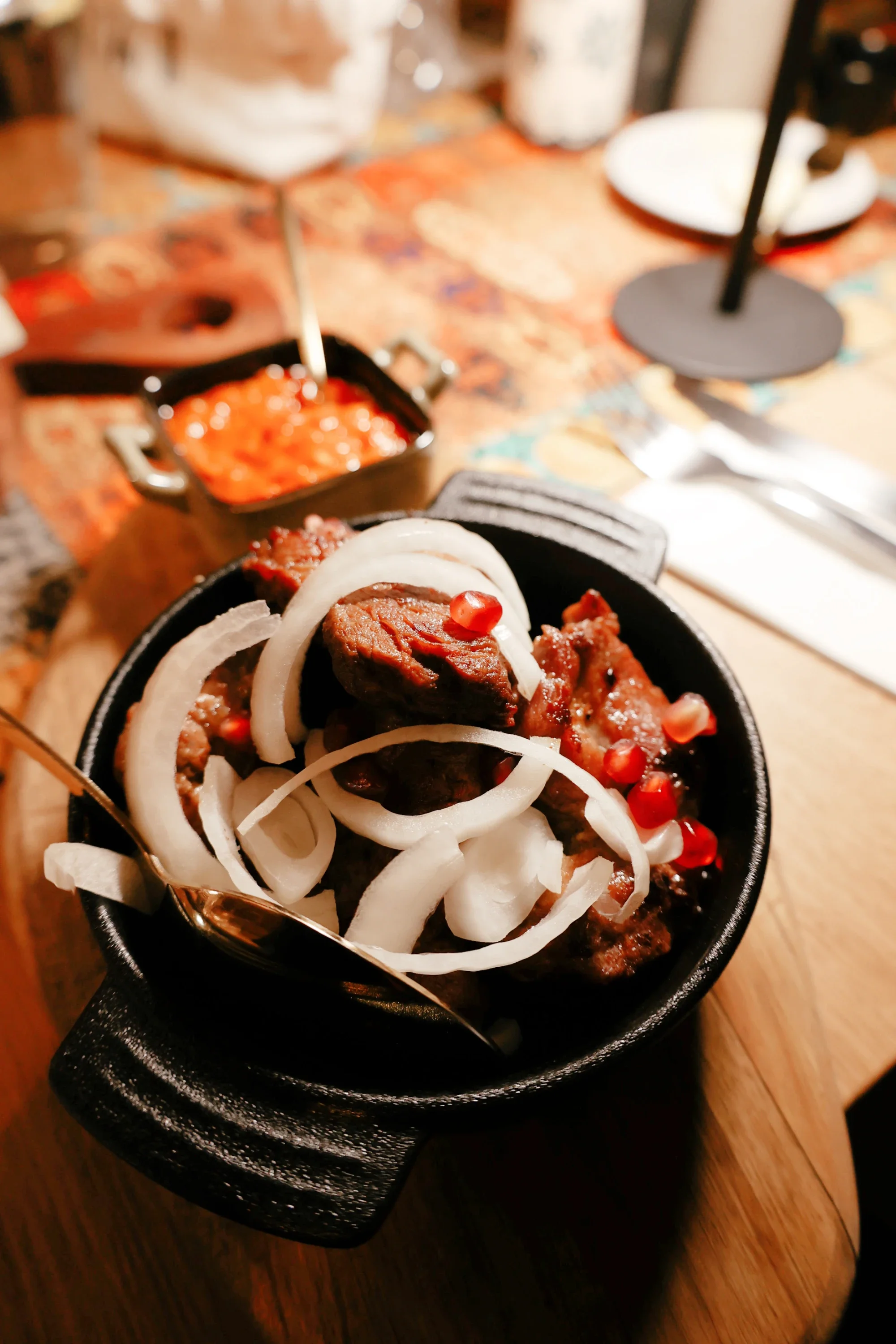
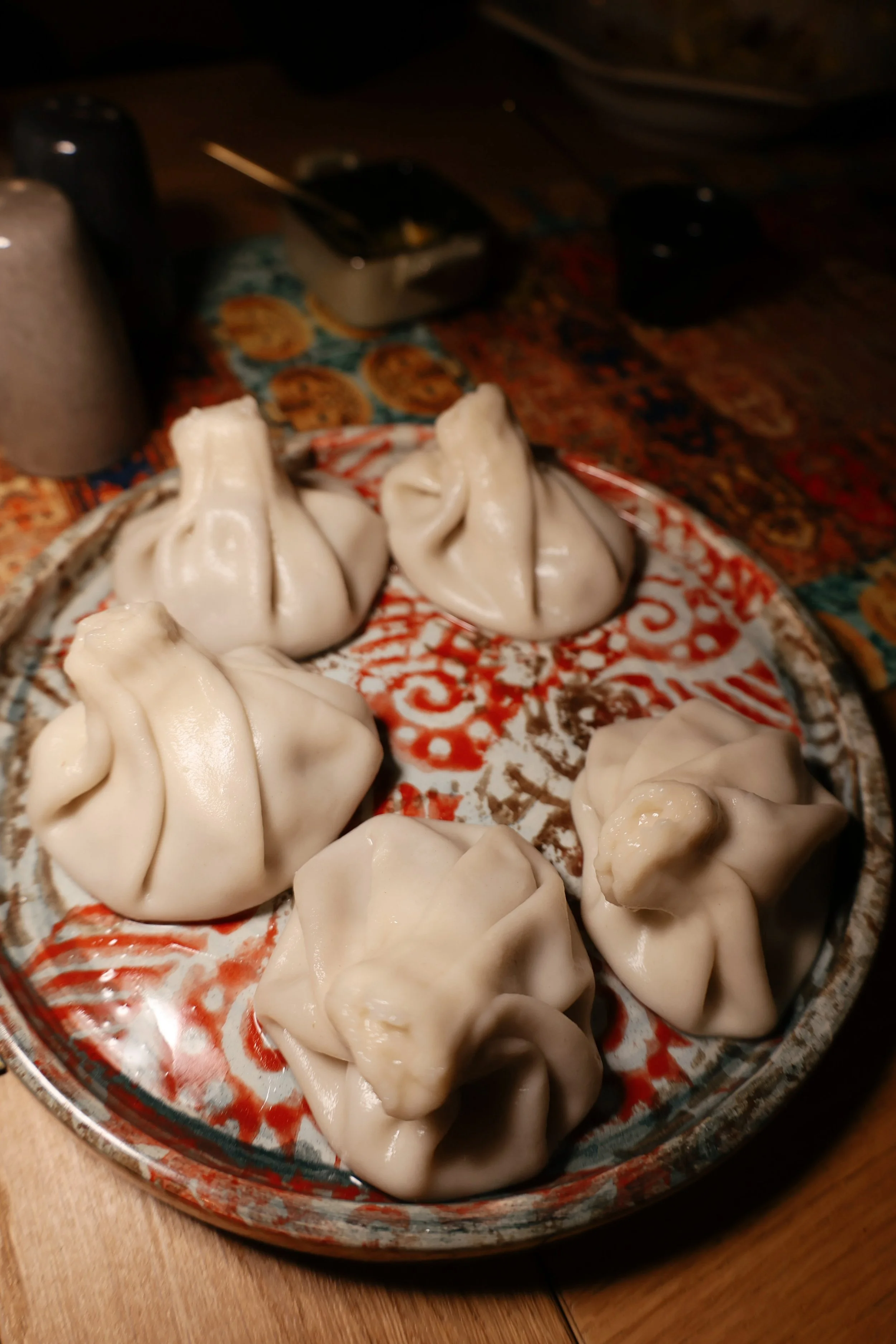
Trying Baraqa was a delicious introduction to Georgian cuisine and a nice change of pace from traditional Czech fare. The flavors here are bold, comforting, and incredibly satisfying. I started with Kalakuri khinkali—large dumplings filled with seasoned meat. They were hearty, juicy, and full of flavor, the kind of dish that instantly makes you slow down and enjoy every bite. For my main, I ordered ojakhuri with pork, a rustic dish made with tender pieces of pork, potatoes, and warm spices. The portions were generous, and the flavors felt rich and deeply comforting—perfect after a long day of walking around the city.
Each place I ate in Prague offered something different and memorable, reflecting just how diverse the city’s food scene really is. From classic Czech comfort dishes to international flavors, Prague has a way of surprising you at the table just as much as it does in its streets.
Takumi
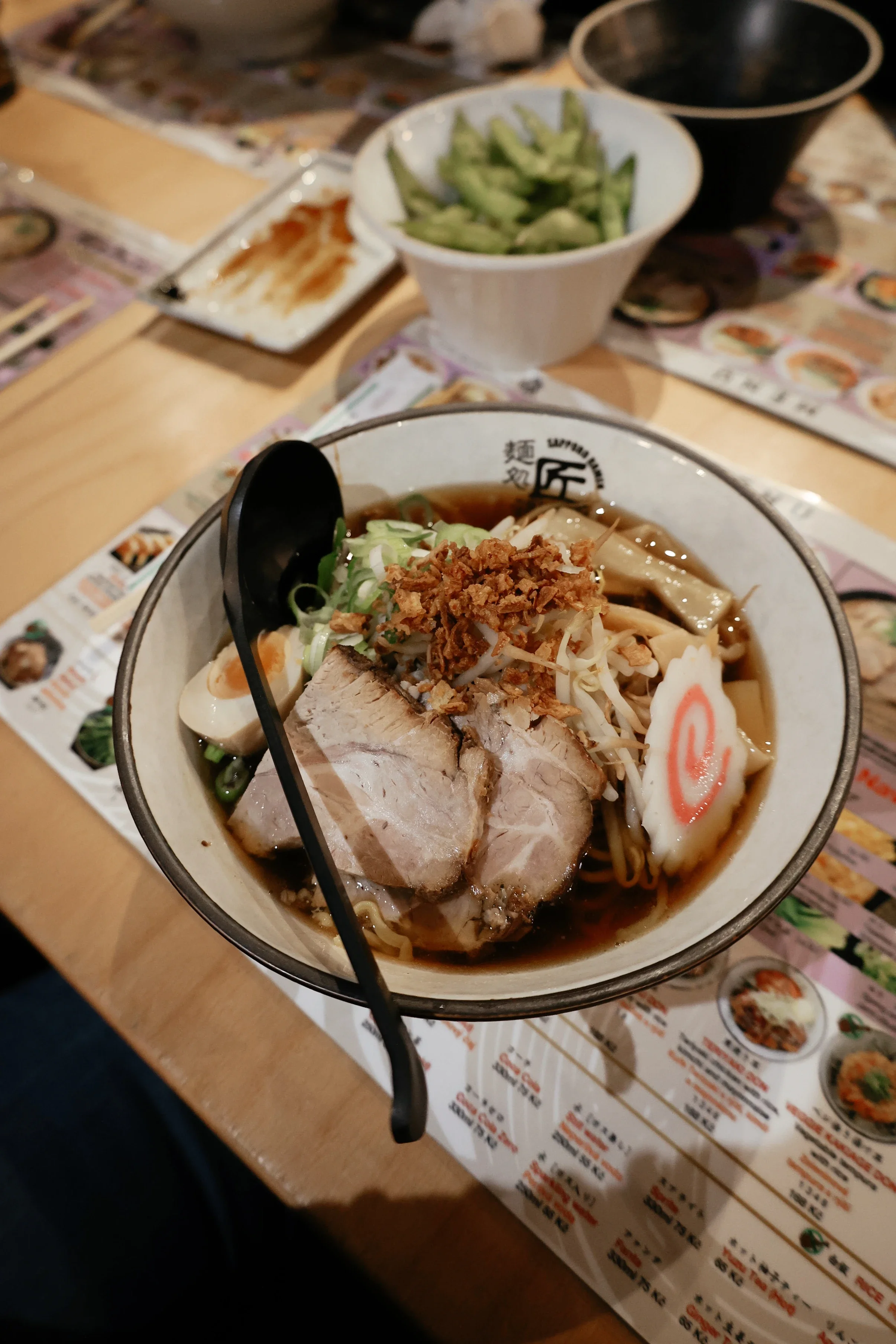
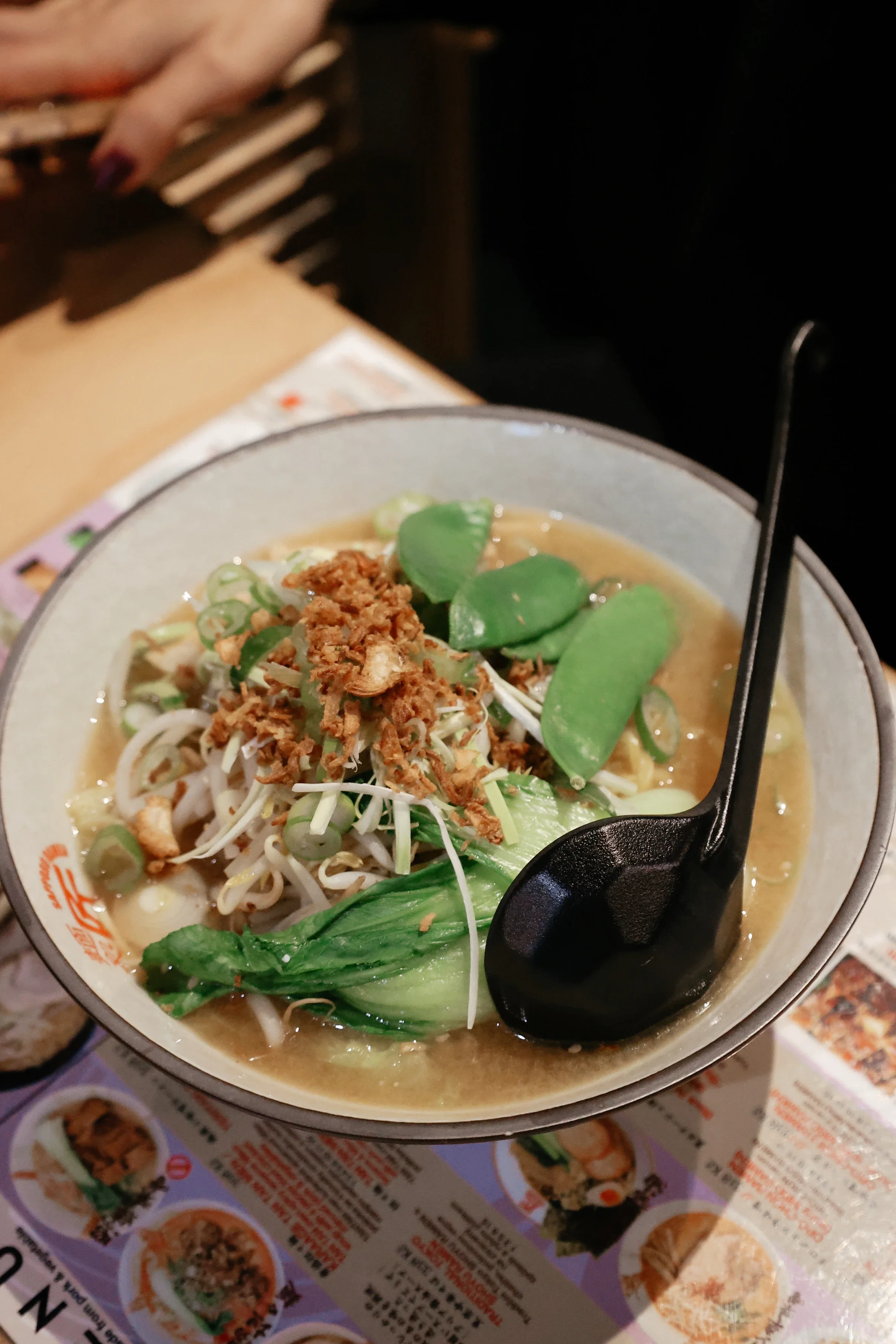
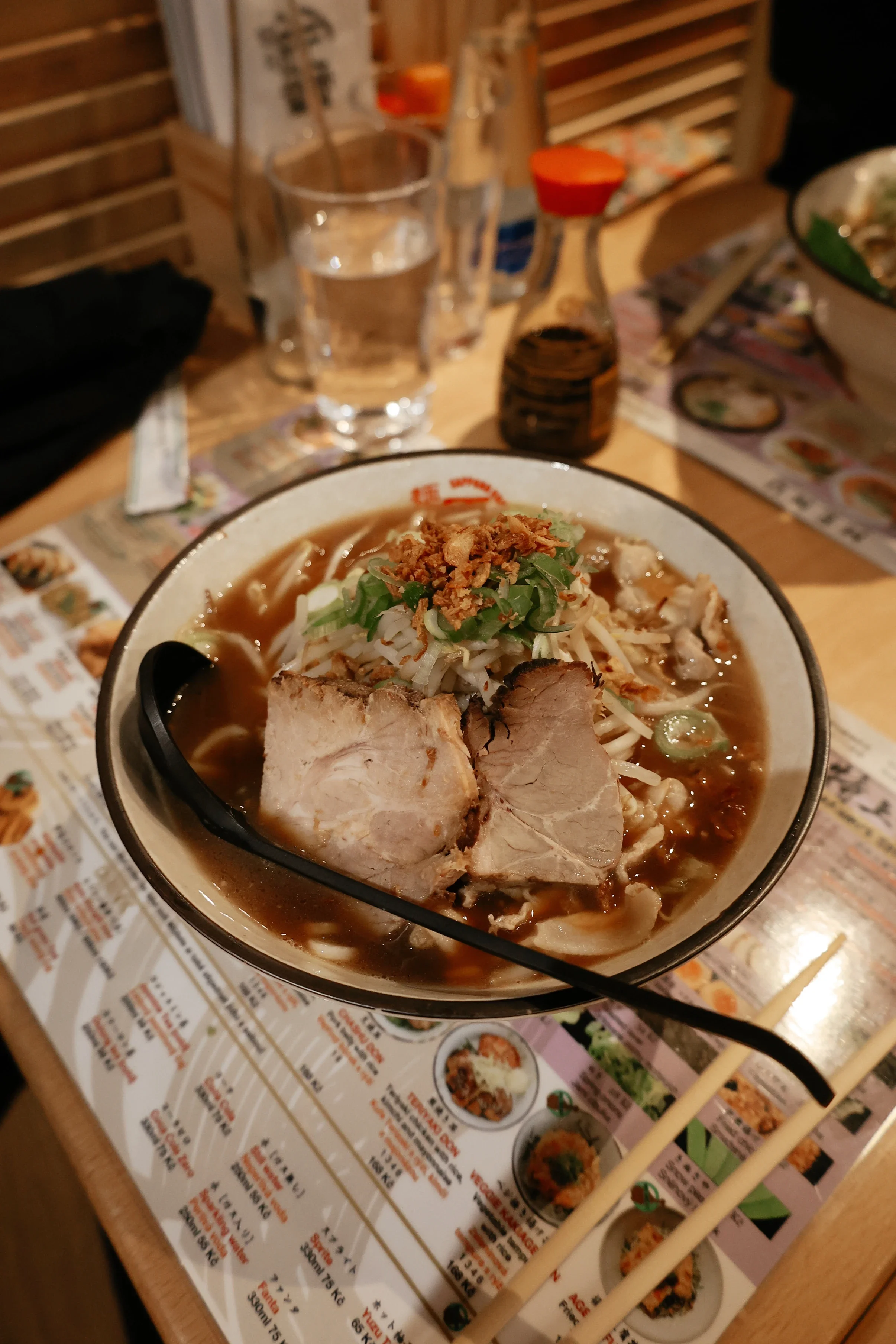
When I was craving something warm and comforting, Takumi absolutely hit the spot. If you’re looking for authentic Japanese ramen in Prague, this is the place to go. I ordered the Traditional Tokyo Ramen, a rich shoyu-based broth topped with cha siu pork, Chinese cabbage, bok choy, bamboo shoots, spring onions, fried onions, naruto fish cake, and a perfectly marinated egg. The broth was deep and full of umami, the noodles had that ideal chewy texture, and the toppings were generous without feeling overwhelming. It’s the kind of bowl that instantly warms you up, especially on a cold day, and leaves you already thinking about when you’ll come back for another round.
Cafes + Bakeries in Prague, Czech Republic
EMA Espresso Bar
Stepping into EMA Espresso Bar, I was immediately struck by its minimalist and sleek design. The baristas here are true artisans, crafting each cup with precision. I opted for their flat white, and it was an experience—smooth, rich, and velvety. For those who appreciate high-quality, no-nonsense coffee, EMA is a must-visit.
Coffee Room
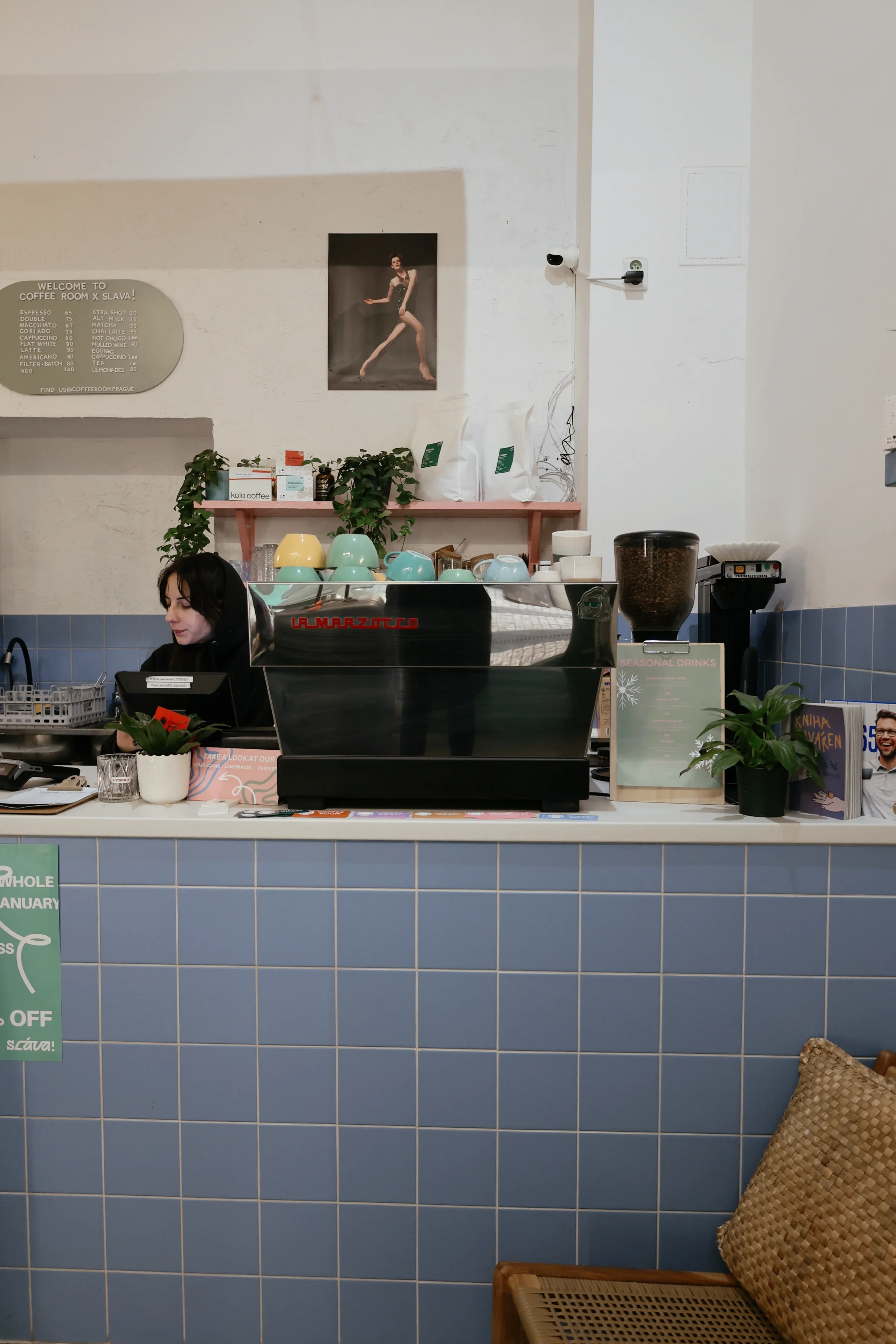
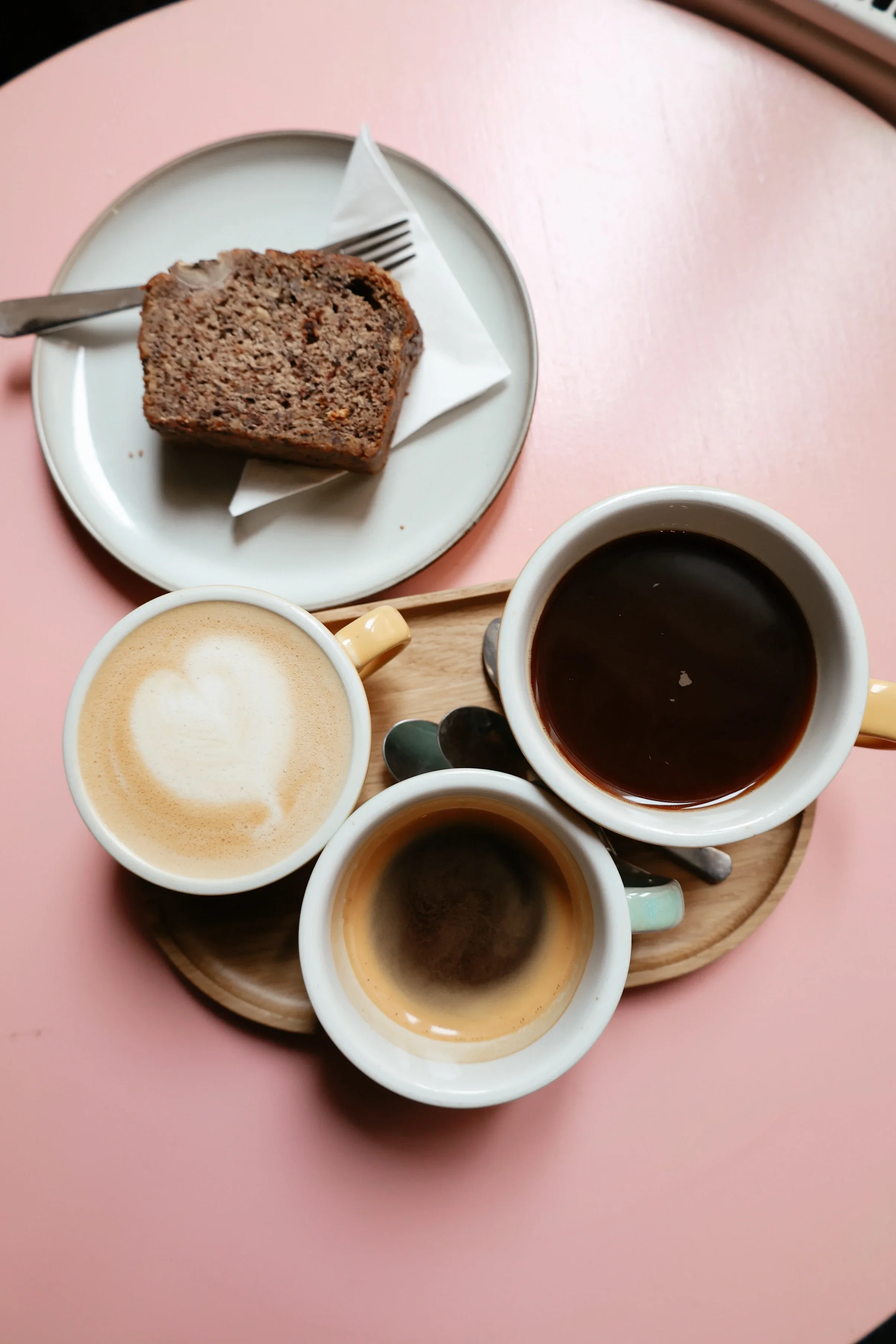
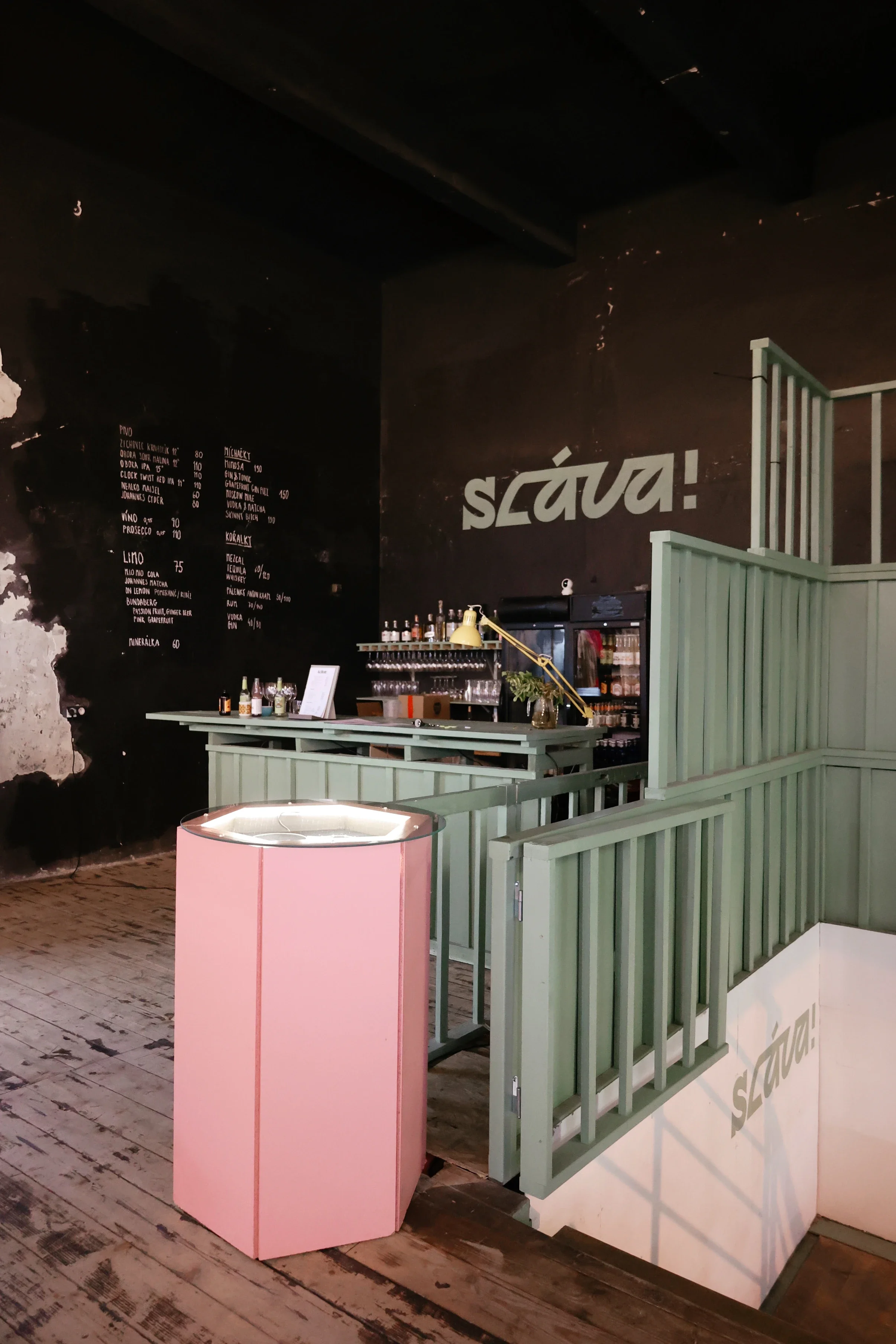
Tucked away in the Vinohrady district, Coffee Room has such a cozy, welcoming feel that it’s easy to linger longer than planned. It’s the kind of place that feels perfect for a slow morning, whether you’re easing into the day or taking a break from sightseeing. I ordered a latte, and it was simple and really well done—smooth, comforting, and exactly what I wanted. The atmosphere is effortlessly cool and relaxed, without trying too hard, which makes it a great spot to unwind and just enjoy being in the moment.
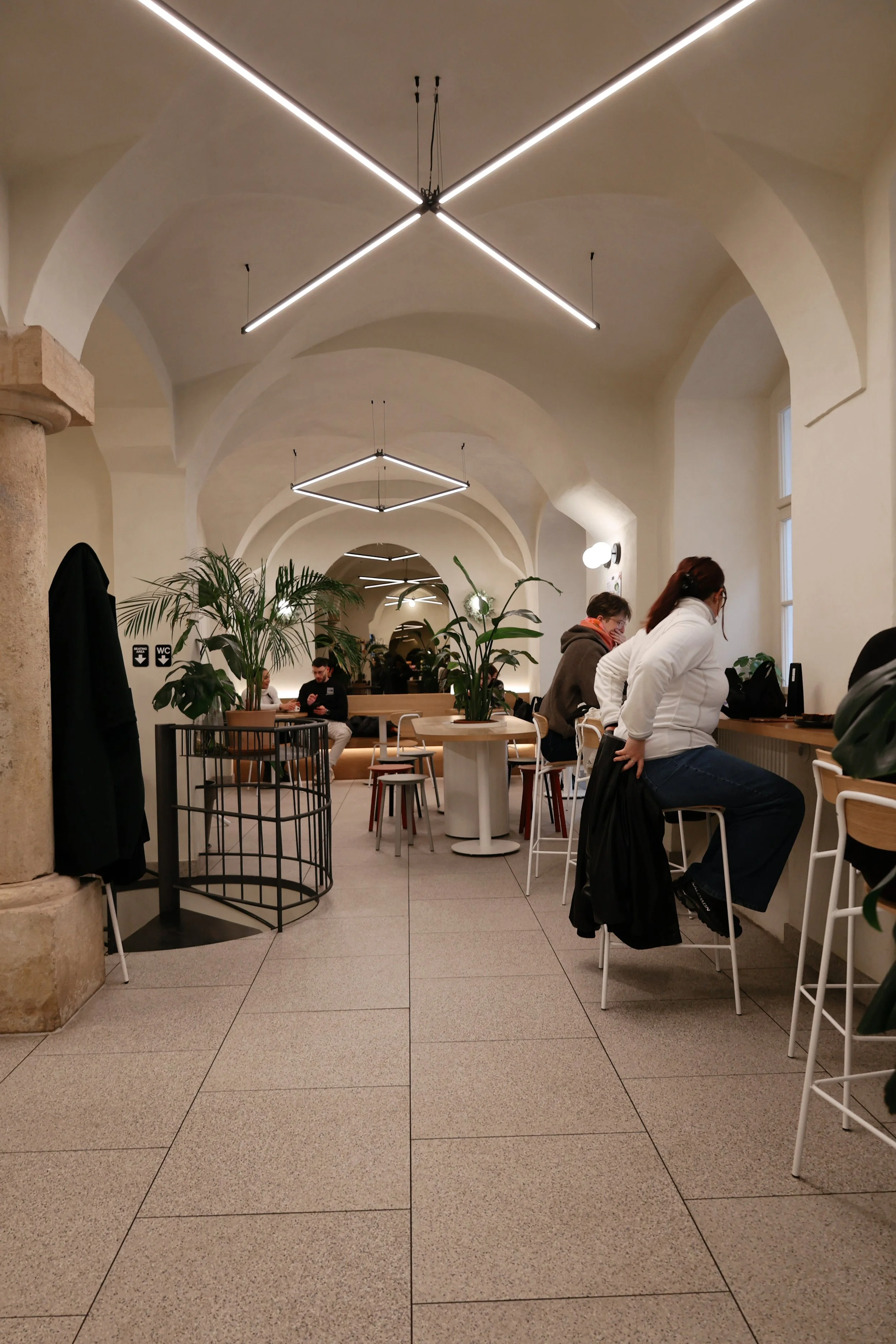
The Miners Coffee & Characters
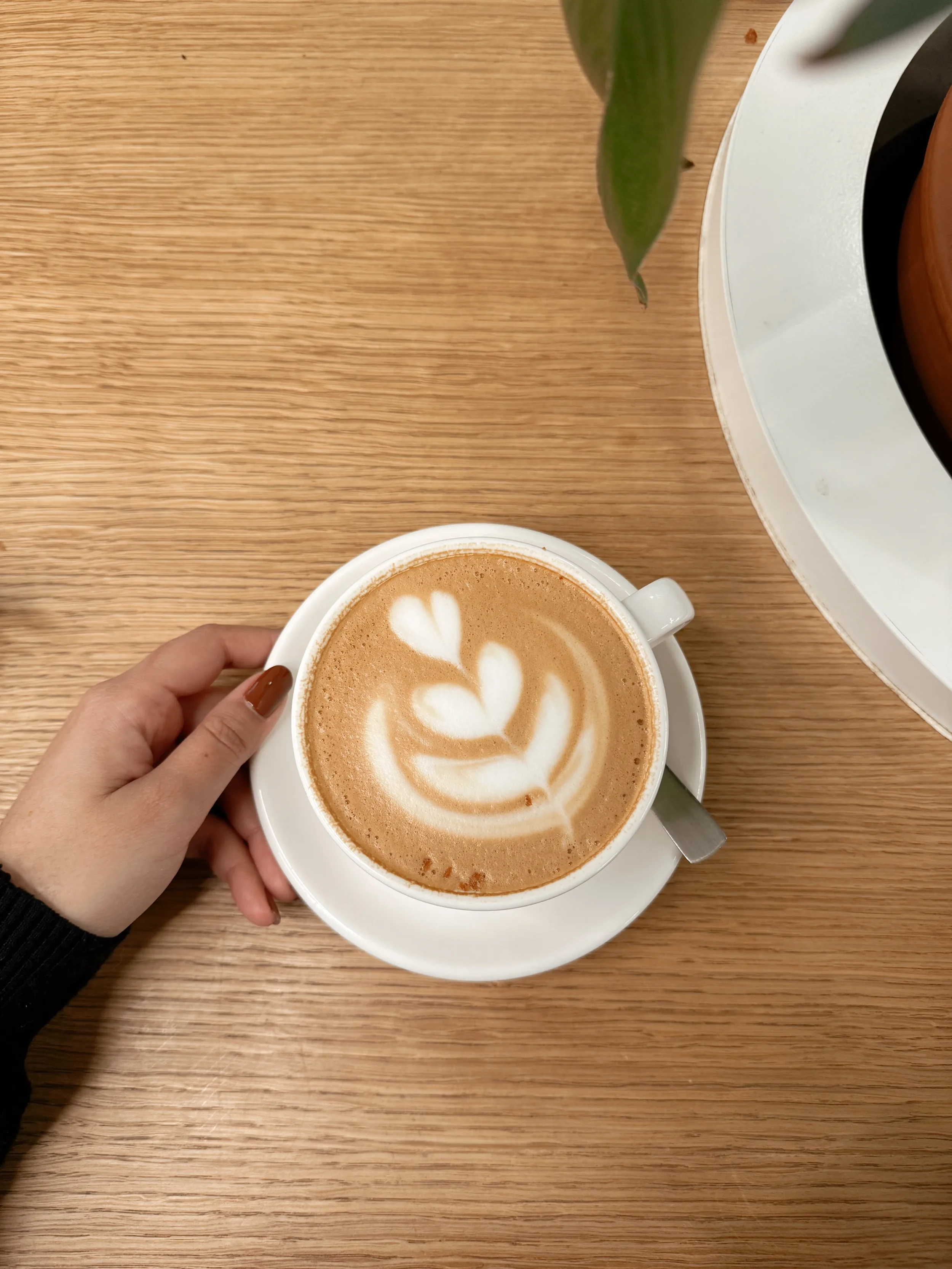
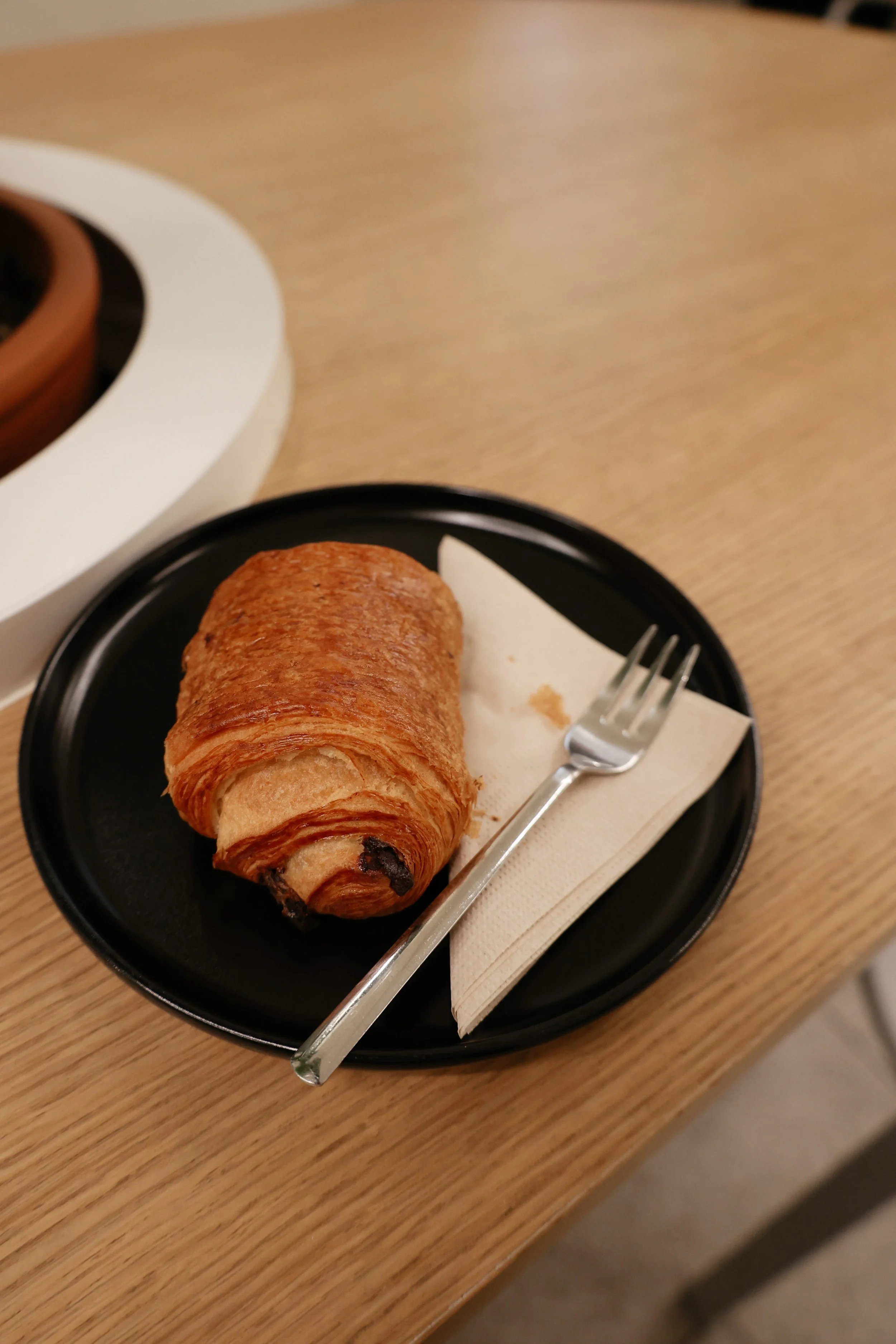
Modern and stylish, The Miners Coffee & Characters is a great stop if you appreciate really well-made coffee. They’re known for smooth espresso and carefully prepared pour-over brews, and everything feels thoughtfully done without being fussy. I went with a cappuccino and a croissant, and it was the perfect pairing—rich, balanced coffee alongside something simple and satisfying. If you like your coffee strong but smooth, this café definitely deserves a spot on your Prague list.
Pauseteria
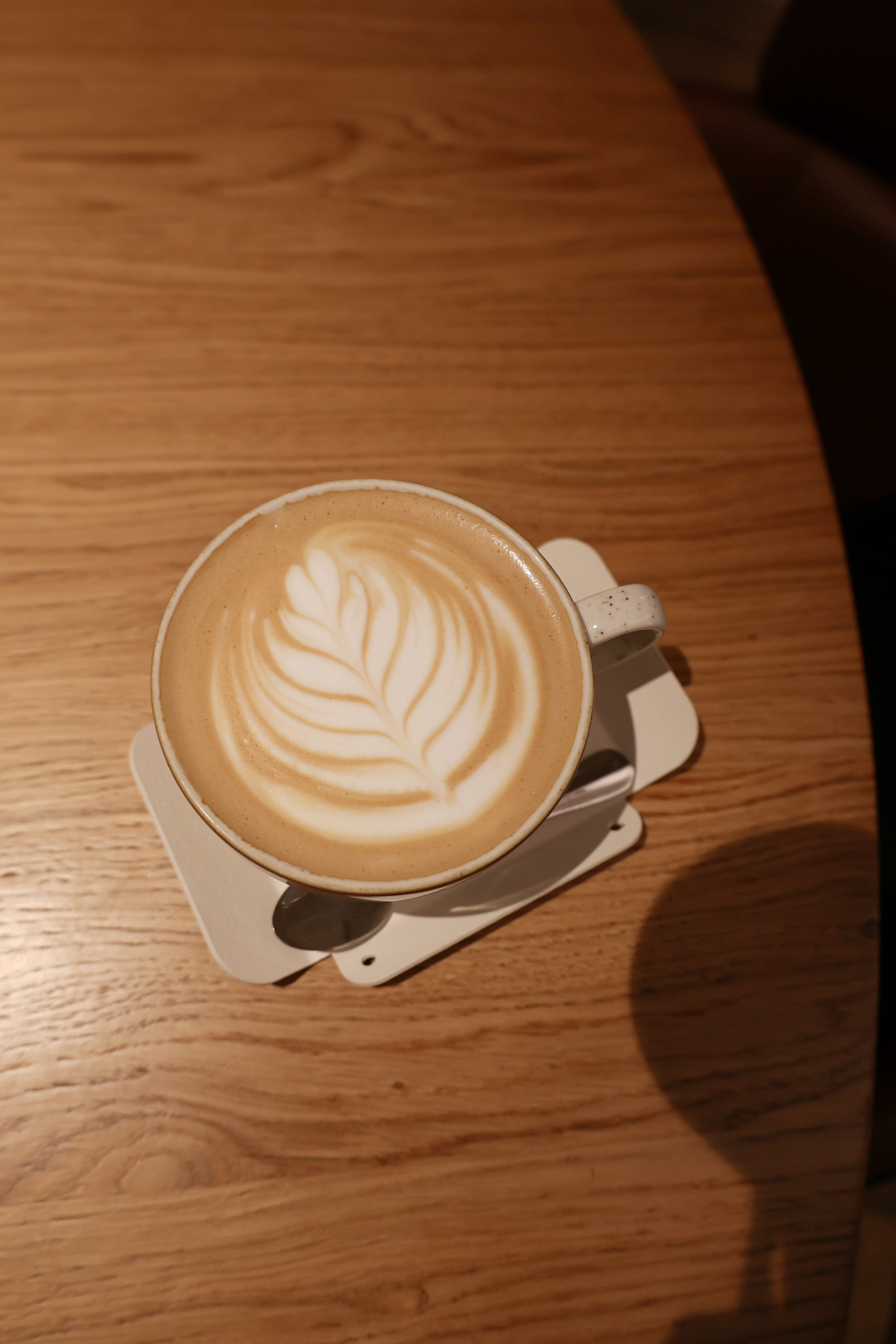
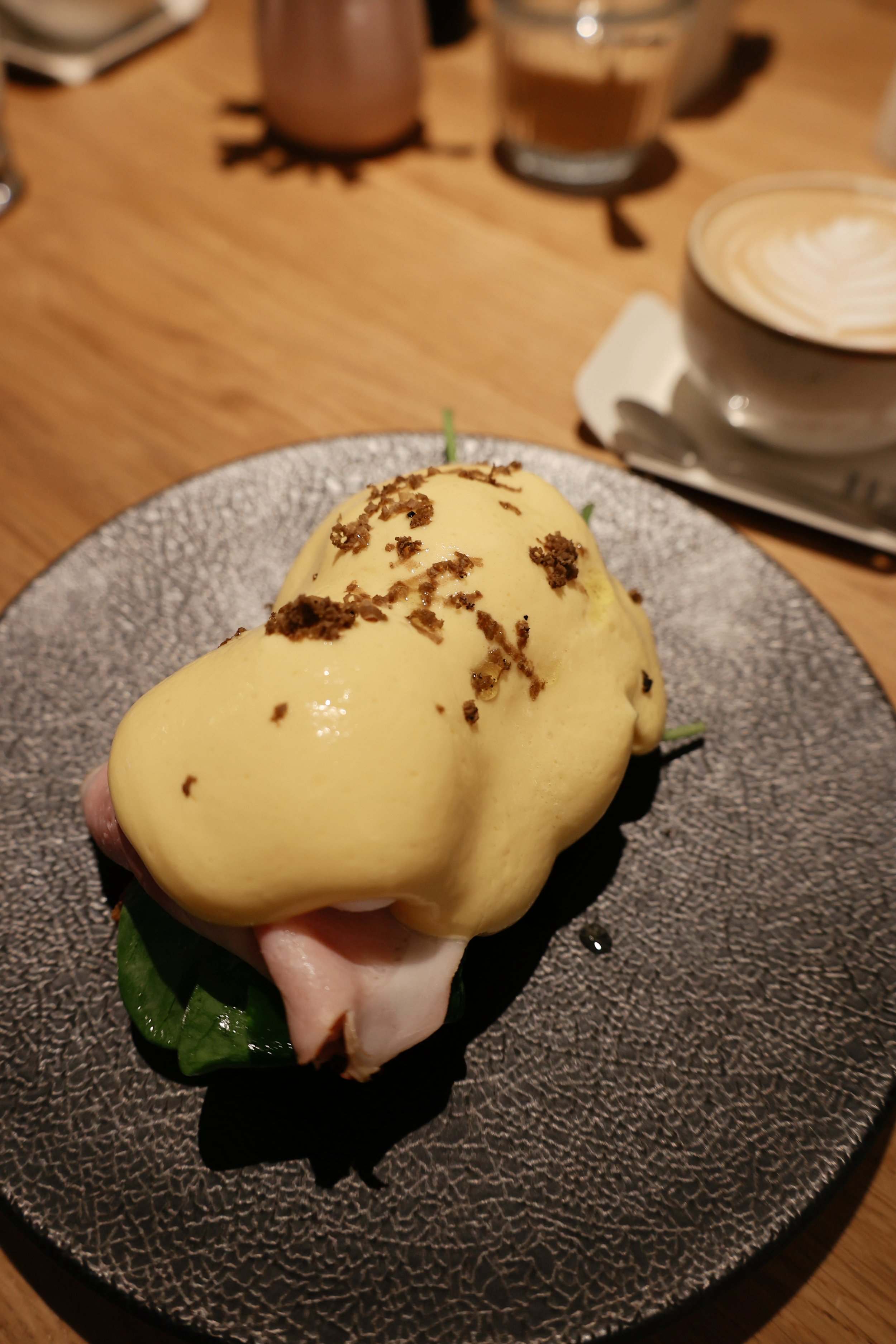
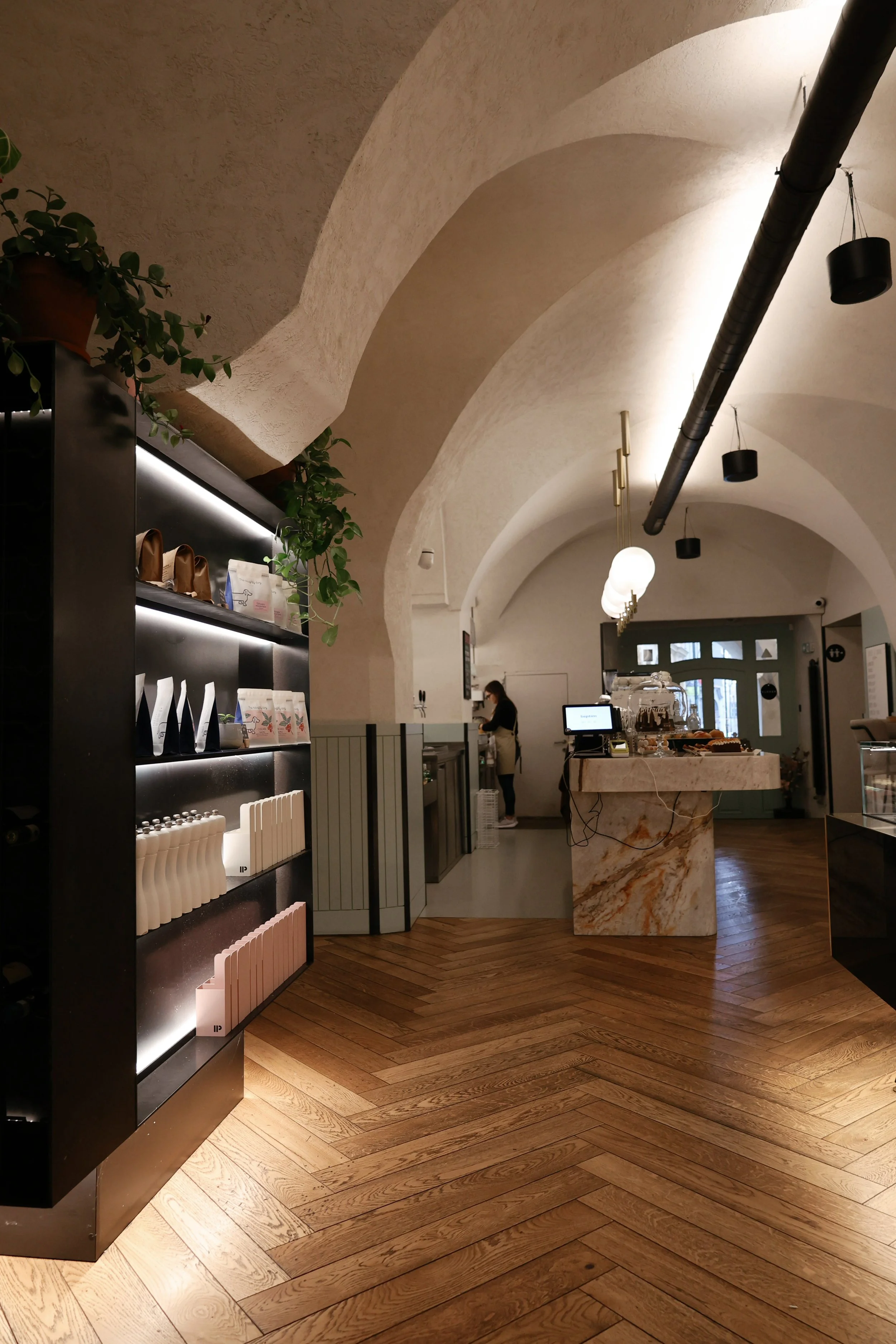
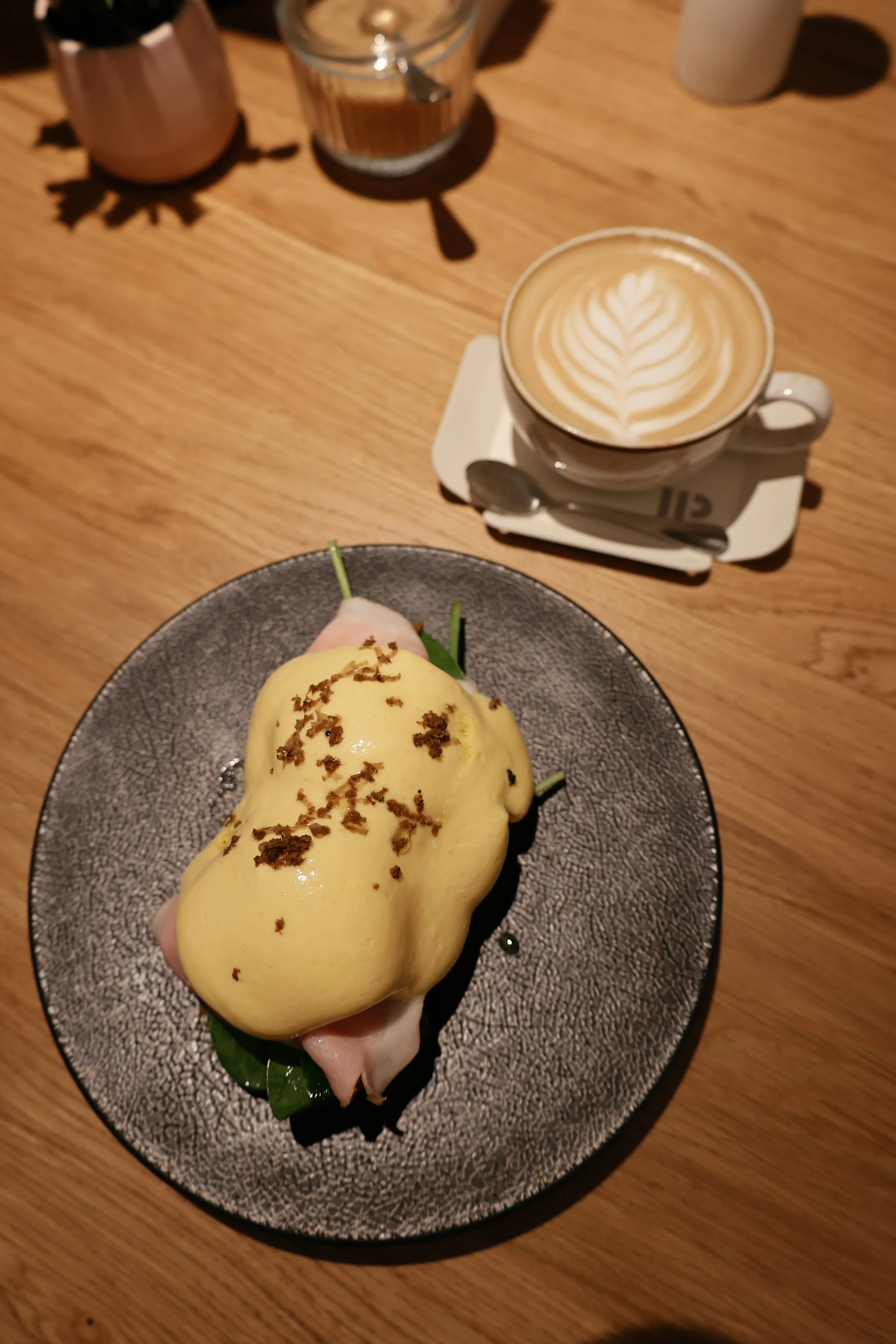
Tucked away from Prague’s busier streets, Pauseteria feels like a little pause in the middle of the day. The atmosphere is calm and cozy—exactly the kind of place you go when you want to slow down and reset. I ordered a cappuccino and the eggs Benedict, and both were really well done. They’re also known for their matcha and specialty coffee, all prepared with clear care and attention to detail. It’s a lovely spot to recharge, whether you’re stopping in for brunch or just need a quiet moment between exploring the city.
Republica Coffee
Located in Old Town, Republica Coffee somehow manages to keep a local, laid-back feel without slipping into touristy territory. It’s the kind of place you stumble into and immediately feel like you made a good choice. The coffee was robust, smooth, and full of flavor, and the service genuinely stood out—friendly, attentive, and welcoming without being overbearing. In a busy area of the city, Republica feels like a solid go-to spot when you want great coffee and a relaxed atmosphere right in the heart of Prague.
Alf & Bet
If you love great coffee and have a serious weakness for pastries, Alf & Bet is hard to resist. The space feels cozy and welcoming, and everything about it invites you to slow down and stay a while. Between the smell of fresh pastries and the steady flow of good coffee, it’s a dangerous place for anyone with a sweet tooth—myself included.
A little tip I learned quickly in Prague: if you’re a coffee lover, try a different café each morning. The city’s coffee scene is too good to settle for just one favorite.
Where to Stay in Prague, Czech Republic
Prague is a city best explored on foot, so staying somewhere central makes all the difference—especially if you want to wake up, grab a coffee, and step right into cobblestone streets and historic sights. I booked an Airbnb in Old Town, which was perfect for that, but if you’re thinking about splurging on comfort and convenience, here are some lovely luxury hotel options within walking distance of the city’s best attractions.
Mandarin Oriental, Prague
Set inside a former monastery in Malá Strana, this hotel feels like a peaceful retreat tucked away from the crowds while still being incredibly central. The rooms are serene and refined, the spa is one of the best in the city, and the overall atmosphere feels calm and restorative. It’s ideal if you want luxury that feels quiet and intentional, just a short walk from Charles Bridge and Old Town.
The Mozart Prague
Located right along the Vltava River, this historic hotel blends classic elegance with modern comfort. Many rooms offer river views, and the location couldn’t be better—steps from Charles Bridge and within easy walking distance of Old Town Square. It’s a great choice if you love old-world charm paired with five-star service.
Hotel Paris Prague
If you’re drawn to history and architecture, Hotel Paris is a standout. This Art Nouveau gem sits right in Old Town and feels incredibly grand, from its ornate interiors to its elegant dining spaces. Staying here feels like stepping into another era, while still being perfectly positioned to explore the city on foot.
The Emblem Prague Hotel
Stylish, modern, and very well located, The Emblem is a boutique luxury hotel just a few minutes from Old Town Square. It has a more contemporary feel than the others, with beautifully designed rooms and a rooftop terrace that’s perfect for winding down after a day of sightseeing. This is a great option if you want luxury that feels current and relaxed.
Best Time to Visit Prague, Czech Republic
No matter when you go, Prague has its own kind of magic. Each season brings a completely different mood, so the best time to visit really depends on the experience you’re craving. I visited in January as part of my 30th birthday trip, and it ended up being absolutely perfect—cold, yes, but in a way that made everything feel more romantic and atmospheric. The city was quieter, more intimate, almost as if I’d slipped into another era where time moved a little slower.
Spring (April–May) Spring is when Prague gently comes back to life. Parks start to bloom, the air feels fresh, and the city hasn’t yet reached its summer peak. It’s an ideal time for wandering without feeling rushed—long walks, outdoor cafés reopening, and a calm energy that makes sightseeing feel effortless and enjoyable.
Summer (June–August) Summer in Prague is lively and energetic. The streets buzz with people, beer gardens are full, and festivals seem to be happening everywhere. Long daylight hours make it easy to pack a lot into your days, from sunset walks across Charles Bridge to rooftop drinks overlooking the city. The downside is larger crowds and higher prices, but if you love a vibrant atmosphere, summer delivers.
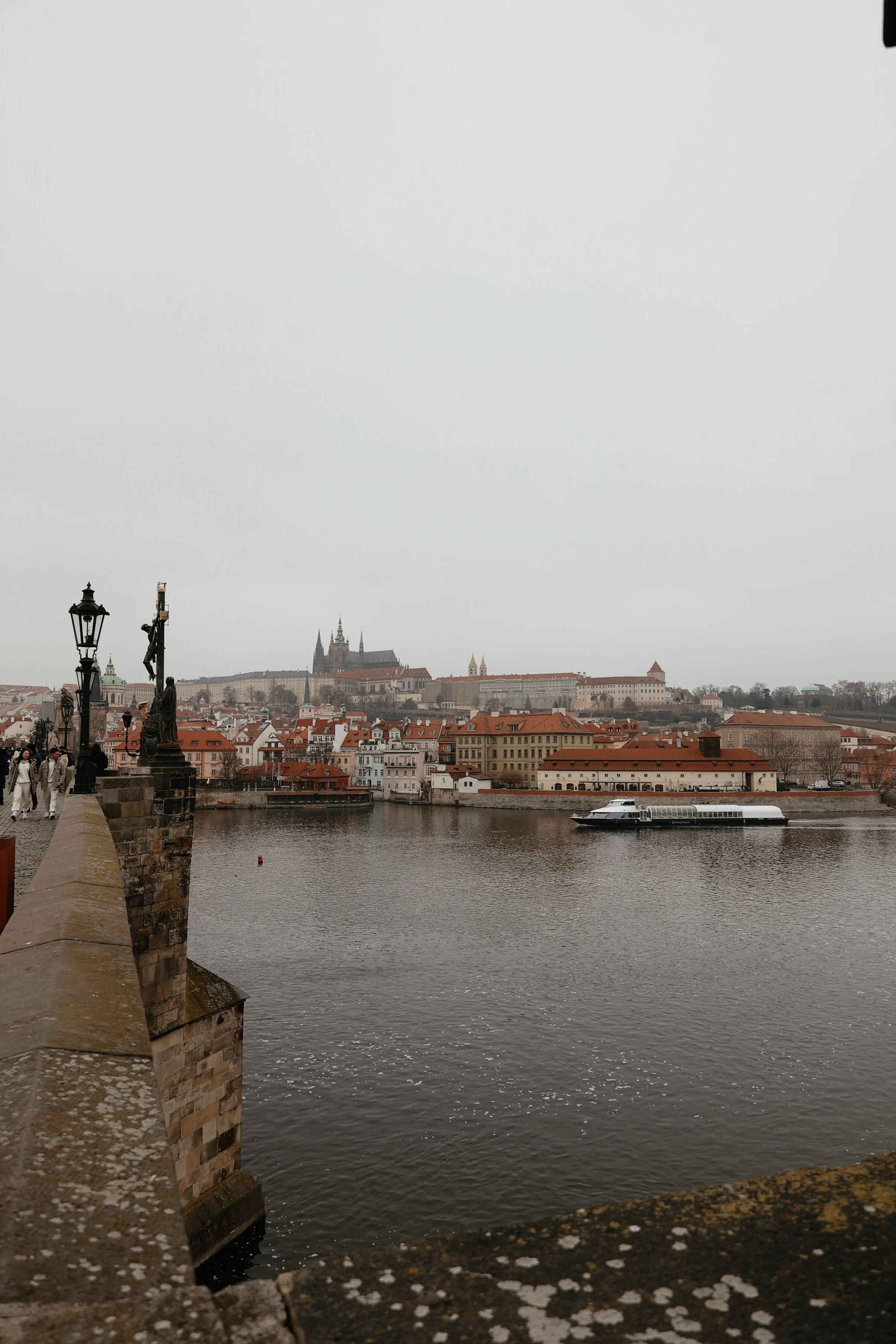
Autumn (September–October) If I had to choose a second favorite season, this would be it. The air turns crisp, crowds thin out, and the city takes on warm, golden tones. Walking through Letná Park or Petřín Hill in the fall feels almost cinematic, and cozy cafés become even more inviting. It’s a beautiful time for a slower, more relaxed visit. Winter (November–February) Cold—but incredibly magical. Prague’s medieval streets feel straight out of a fairy tale, especially when dusted with snow. January was ideal for me: fewer crowds, no long lines at major sights, and peaceful walks through Old Town Square. Evenings were spent warming up in candlelit cafés or enjoying mulled wine. December is especially special thanks to the Christmas markets, with twinkling lights, festive music, and the smell of roasting chestnuts filling the air.
Pro tip: If you want to avoid peak crowds while still enjoying great weather, aim for early spring or late fall—you’ll get the best balance of atmosphere, accessibility, and charm.
Prague is the kind of city that stays with you long after you leave. Whether you’re wandering across Charles Bridge at sunrise, sipping coffee in a quiet café, or getting lost in centuries of history down a cobblestone street, there’s a softness to Prague that makes you want to slow down and really take it all in. It’s romantic without trying, rich in history yet full of creativity, and endlessly rewarding for those who explore it on foot.
#prague #czechrepublic #pragueczechrepublic #visitprague #visitczechrepublic #travel #travelphotography #travelgram #travelguide #travelholic #traveltheworld #traveler #traveltoexplore #travelon #traveldestination #traveldiaries #travelblogger #traveltheworld #traveler #traveladdict #traveldestinations #travellover #womenwhotravel #womenwhoexplore